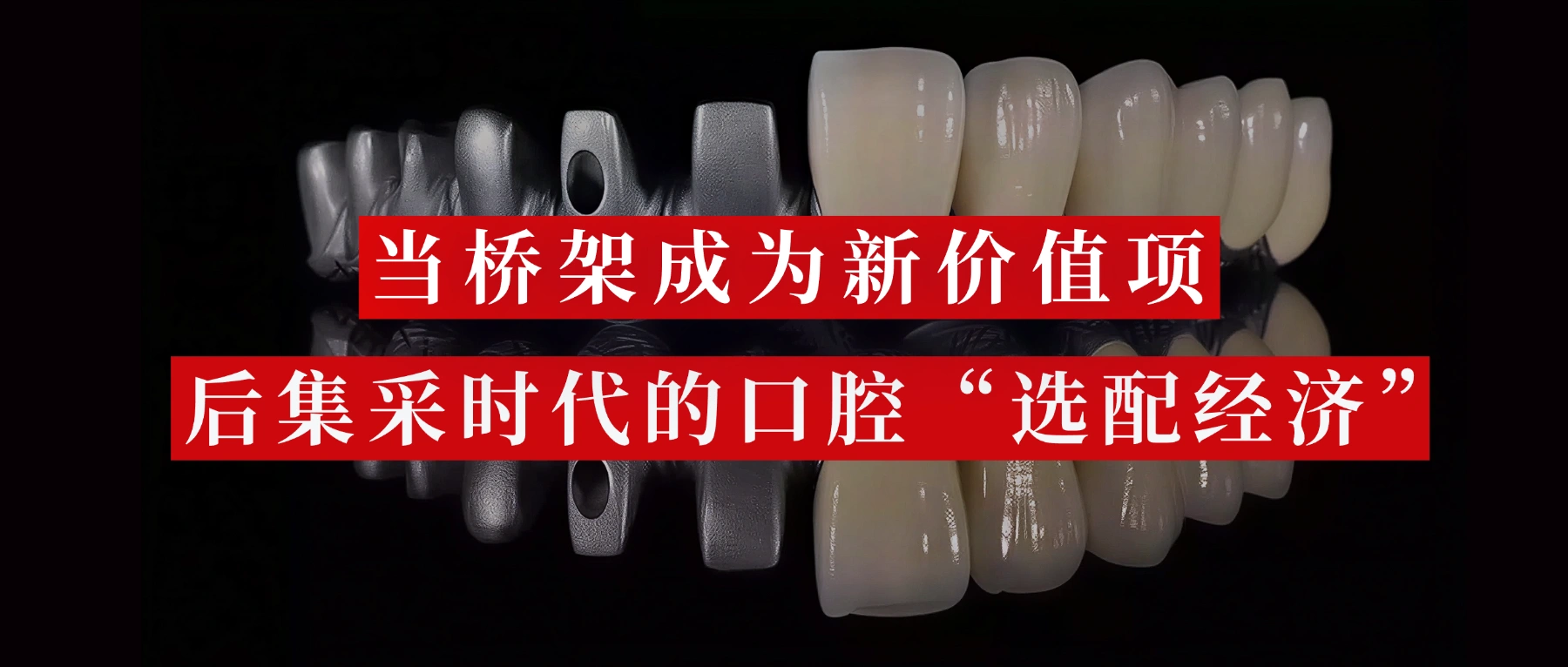
When Bridge Frameworks Become a New Value Proposition — The "Optional Upgrade Economy" in Post-VBP Dentistry
 |
# Preface
An interesting coincidence: the automotive industry and the dental industry encountered the same problem at almost the same time — when the price of "standard configuration" is leveled by competition, what will consumers pay for?
The changes in the automotive industry have already pointed the way. A few years ago, consumers with a budget of 300,000 yuan were more inclined to buy an entry-level model of an imported luxury brand — the badge was for others to see, and the features were for themselves to endure. In recent years, the same group has begun to shift toward mid-to-high-end configurations of domestic new energy vehicles. Data from the China Passenger Car Association shows that the average retail price of domestic passenger cars has risen from 151,000 yuan in 2019 to 186,000 yuan in January 2026, and the share of domestic brands in the high-end market above 300,000 yuan is expected to exceed 50% for the first time in 2026. Consumers' willingness to pay has shifted from the car badge to seat comfort, intelligent driving smoothness, and chassis quality — things they use every day.
The dental industry is undergoing a similar examination.
With the full-year financial reports for 2025 finalized, some listed dental chains primarily focused on dental services saw year-on-year revenue declines of 16% to 17%. Among them, the year-on-year decline in revenue from dental implantation was even deeper, with some institutions exceeding 25%. Notably, some institutions attributed the revenue decline in their annual reports to "a significant drop in the average patient spending per visit." This set of figures has made "patients only care about price after VBP" a popular interpretation.
But in Guangzhou, Suihua Dental feels differently. After the first quarter of 2026 concluded, Suihua's assessment was: "The market feels a bit better than the first quarter of last year." Suihua has 10 clinics in Guangzhou, serving over 3 million patient visits cumulatively. This is not optimism — the implementation of VBP is more like a changeover whistle: the old competitive model is no longer effective, but the market itself has not disappeared.
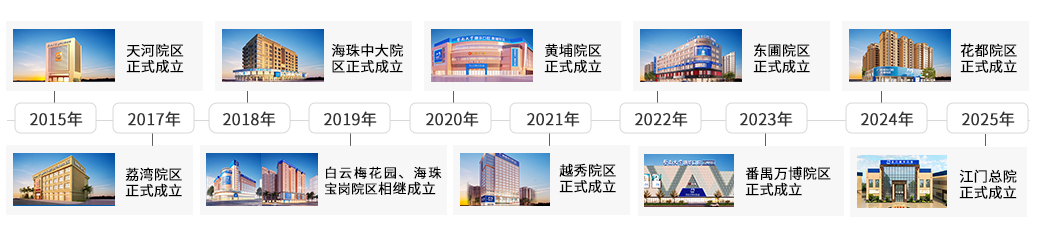 |
1. Founded in 2015 in Guangzhou, Suihua Dental now operates 10 clinics, with over 3 million patient visits cumulatively. The hospital integrates clinical practice, teaching, research, and prevention, boasting more than 20 overseas-returned experts with master's or doctoral degrees and over 230 dentists. It features seven specialized departments including Dental implantation, Orthodontics, and Dental Restoration, along with three digital specialty centers, making it a well-known regional dental chain in South China.
So, in an environment where the prices of Dental Implants and Crowns are being driven down by VBP, how does Suihua stabilize its operational foundation for Partial Arch Restoration and Full-arch Restoration?
Part of the answer lies in a product long overlooked by the industry — the Prosthetic Framework.
## 01 The Blind Spot in the Dental Restoration Chain
Partial-arch/Full-arch multi-implant restoration consists of four components: Dental Implant, abutment, Prosthetic Framework, and Crown. In the past, the Dental Implant, as the most discussed element, attracted almost all the attention. After VBP, the price transparency of Dental Implants has greatly increased, and other components have gradually come into the industry's view: the overall Dental Implant market is moving towards cost-effectiveness, with the market share of domestic brands continuously rising; the other components also have their own evolutionary paths.
Scanning around, one finds that there is one link almost universally overlooked — the Prosthetic Framework.
The Prosthetic Framework is the most homogenized and easily overlooked link in the restoration chain. Unlike Dental Implants, which are well-known to patients, it receives little attention during clinic procurement, and almost no manufacturer has engaged in public brand building. The result is that most institutions use frameworks from similar sources and at similar prices, all made from domestically milled titanium.
When Suihua conducted an internal product review, it noticed this situation: "For the Prosthetic Framework category, other institutions in the market basically use domestic materials. So at this point, we need to choose an imported material framework."
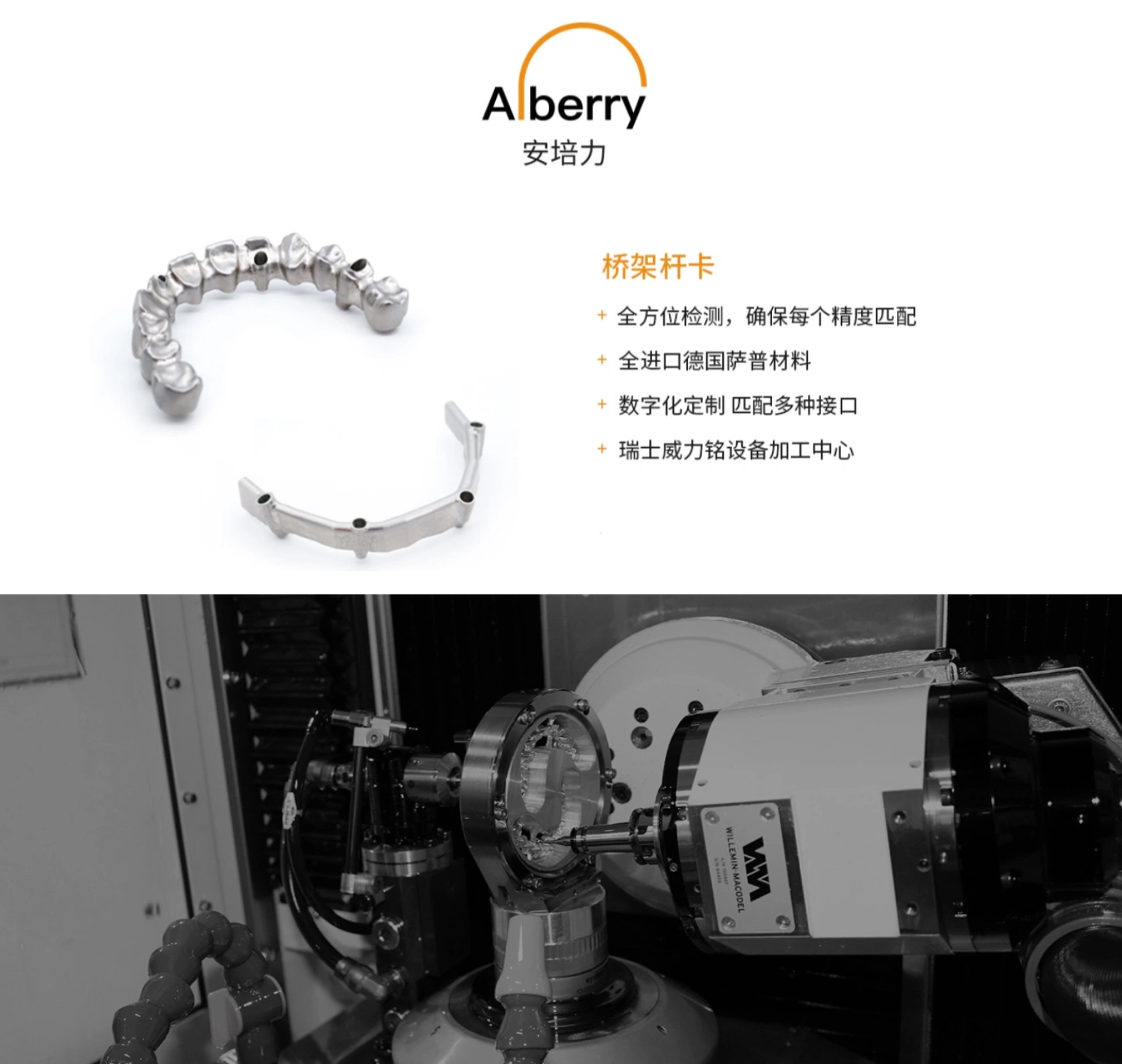 |
This judgment points to a gap in Prosthetic Framework options — most clinics offer only one configuration, and patients don't even know other materials exist to consider.
Why is this link worth noting? There is a reference logic: when core products in a system are leveled by competition, those "connectors that you don't feel in daily use but can't avoid if something goes wrong technically" often become key to long-term experience — the real cost of a printer lies in the ink cartridges, and the taste watershed of a capsule coffee machine is in the capsules. In implant restoration, the Prosthetic Framework plays a similar role: functionally essential, precision-sensitive, but patients are almost unaware of its existence before surgery.
What Suihua needs to do is not complicated: provide an option for patients who don't want to stop at the standard configuration, allowing them to make their own judgment.
## 02 A Multiple-Choice Question in the Clinic
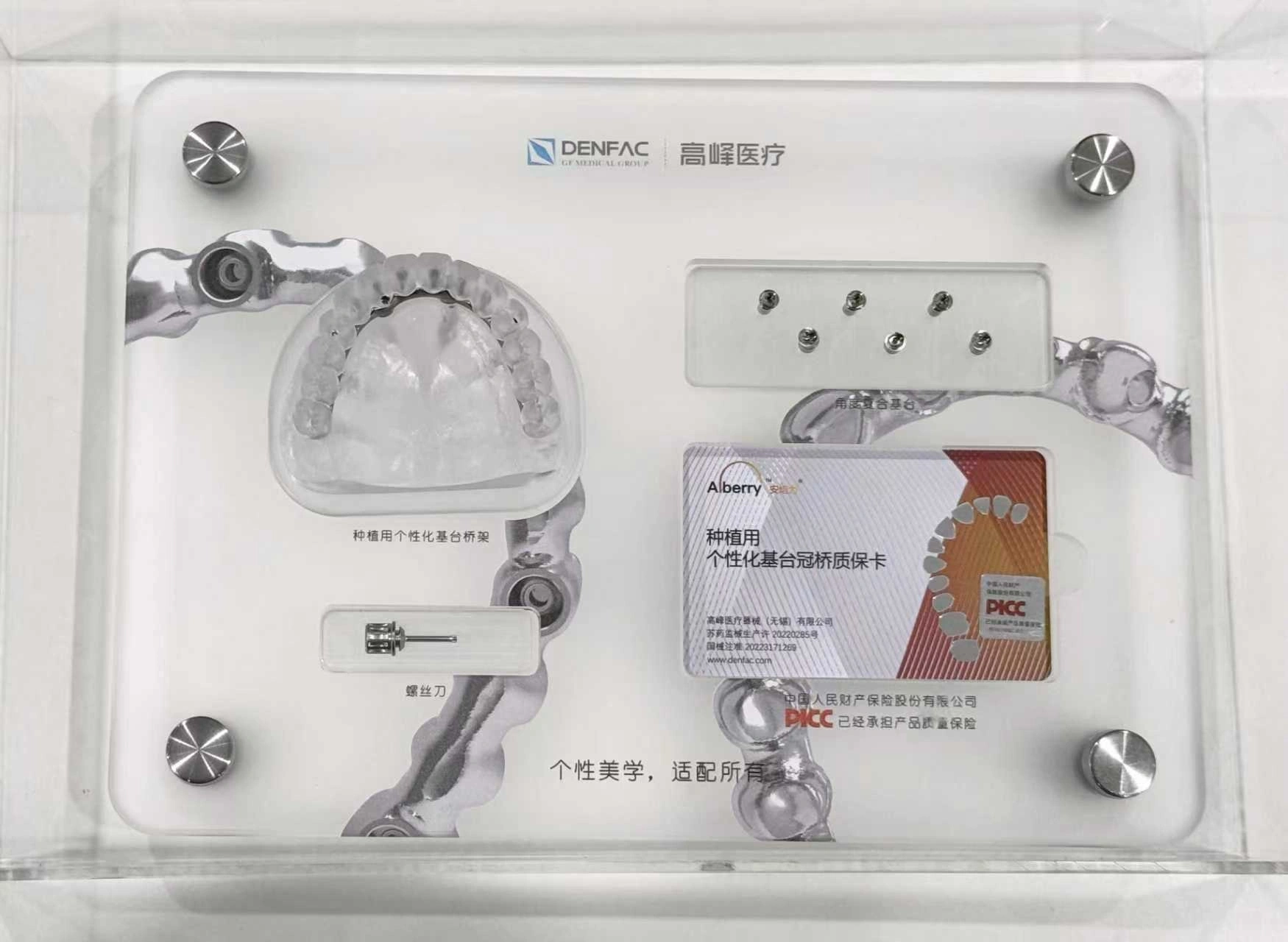
The partner Suihua chose is Alberry — a brand of implant restoration accessories under GF MEDICAL GROUP. GF MEDICAL GROUP has over 30 years of accumulation in precision manufacturing, starting as an OEM for multinational dental equipment manufacturers and gradually transitioning to its own products. As early as 2022, GF MEDICAL GROUP obtained the first Class III Medical Device Registration Certificate for Customized abutment and crown-bridge solution for dental implantation in China.
The partner's background is just the starting point. What truly determines "whether this option can be accepted by patients" is whether it can clearly explain the differences and present the evidence.
Alberry's Prosthetic Framework has two noteworthy points. First, data source: the interface geometric data of the framework comes from the original manufacturer's data authorization, not reverse-engineered copies. The practical impact of this distinction is that the baseline for processing accuracy does not introduce additional errors from the reverse engineering step. Second, full traceability: each product comes with a Unique Device Identifier (UDI) upon leaving the factory, the material is German-imported Sapphire medical-grade titanium, and the supplier's qualifications are clear and verifiable. This traceability system is the insurance for product quality.
 |
After translating the product differences into "explainable and verifiable" terms, the next step is to bring it into the clinic.
Suihua's 10 clinics in Guangzhou began offering this option. The pricing structure is straightforward: on top of the standard titanium framework, patients can choose to upgrade to the Alberry framework for an additional 4,000 yuan; the default Crown is a mainstream domestic all-ceramic crown, and patients who wish can further opt for imported ceramic blocks.
At this point, a more practical question emerges: in the clinic, will patients actually pay extra for an unfamiliar component? Suihua's answer comes from the concerted effort of three forces.
First, look at the patients. During consultations, Suihua noticed a simple fact: patients coming for partial or full-arch restoration care about different things. Some repeatedly ask about the material's origin and processing precision, others care more about the doctor's experience and post-operative guarantees, and some ask about the price right away. If only one framework configuration is offered, it essentially uses one solution to respond to all different needs. Introducing Alberry provides a verifiable response for those patients who inquire further about materials.
Second, consider the payment psychology. The average spending per visit for Suihua's Partial Arch Restoration is between 40,000 and 60,000 yuan. A patient who has already made a decision at this level has a different psychological state from someone who just walked in asking for a price — they have already mentally completed the "I want to do this" step, and now face the "what material to use" question. The 4,000 yuan upgrade cost, placed within an already determined payment framework of 40,000 to 60,000 yuan, carries far less psychological weight than a separate 4,000 yuan expense.
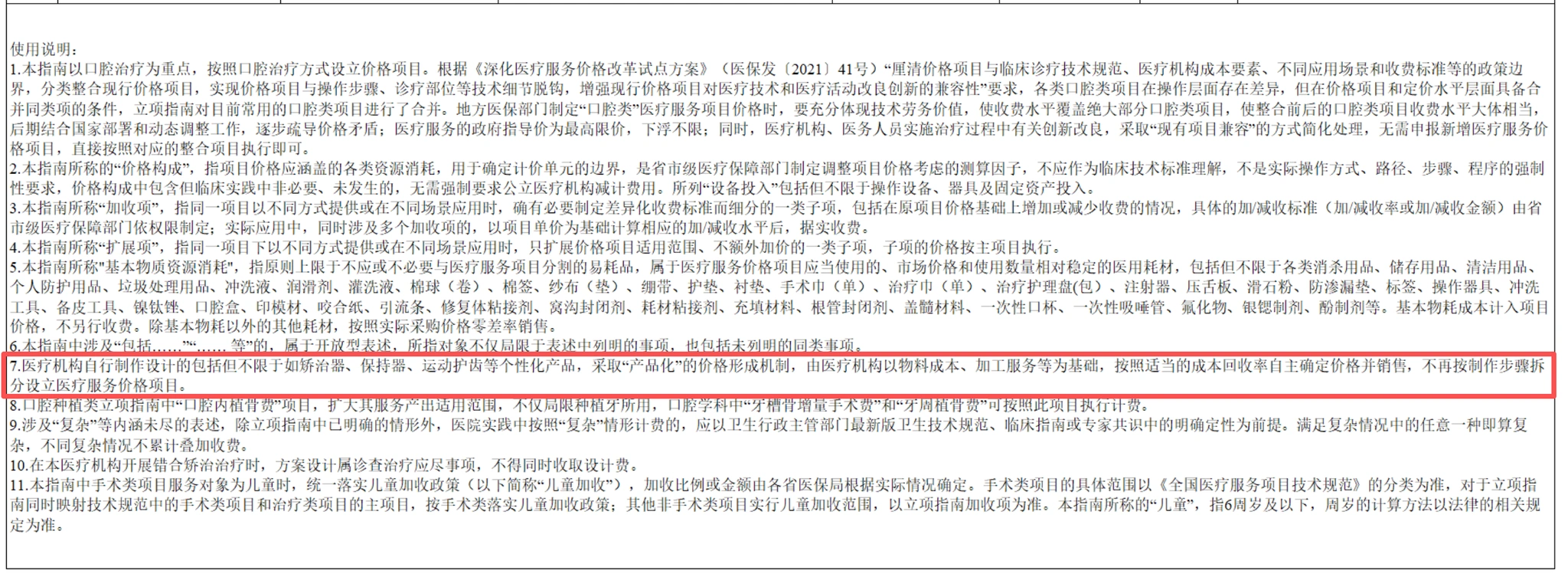 |
| Source: "Guidelines for Pricing Dental Medical Services (Trial)" |
Finally, there is the "permission" from the policy level. The "separation of technical service fees and consumable costs" reform promoted by the NHSA separates the service fee and consumable cost for dental implantation. Building on this, the "Guidelines for Pricing Items of Oral Medical Services" further clarifies that for personalized products like Prosthetic Frameworks that are "tailor-made," a "one-price" model is adopted, with prices independently determined by medical institutions, no longer linked to VBP prices. Personalized products now have a formal place at the policy level — provided that prices are transparent and patients are informed.
With these three conditions combined, Suihua conducted verification for over four months. Its internal statistics show that patients choosing the Alberry framework now account for 20% to 30% of partial/full-arch orders. Moreover, according to Suihua's internal assessment, this proportion still has room to grow.
20% to 30% validates something more important than the numbers: when patients have access to verifiable information, a significant portion will make their own judgment and be willing to pay for what they consider worthwhile. For clinics, this means there is another dimension to discuss with patients besides price.
## 03 Pausing in the Inertia
Before Suihua started offering the Alberry option, "patients willing to pay for framework material" was just an industry hypothesis. After over four months and 10 clinics, it has become a discussable real proportion — 20% to 30%. This number answers a question: when material differences are verifiable, do patients still only use price to make decisions? The answer is that some people will make their own choice.
But this option also faced skepticism at Suihua initially: the market is already so competitive, why give patients a more expensive choice? This reaction is understandable — when the entire industry is discussing price reductions, introducing a higher-priced option intuitively feels like going against the grain. Recognition wasn't achieved through internal meetings; it was the patients in the clinic, one after another making their own choices, that slowly helped the team understand the significance of this matter.
This hides a deeper question: why, when the industry is under pressure, is the first reaction of most people to reduce options and lower prices?
A reasonable explanation is that the benefit of contraction is immediate. Cutting a product line or lowering a price shows results the next day. But adding an option to the list and spending time introducing a new material to patients yields returns further down the line. The psychological weight of the two actions is unequal — the former provides immediate certainty, while the latter only offers future possibility. When anxiety is pervasive, most people choose the former.
When the entire industry contracts in the same direction, some equally important links are collectively overlooked. Not because those links lack value, but because everyone's attention is focused elsewhere.
What Suihua did, in essence, was to pause in this collective inertia. When most peers defaulted to "domestically milled titanium is enough for the framework," Suihua noticed during its internal product review that this link had almost only one configuration. It didn't follow the inertia; instead, it placed an imported material option in this overlooked corner. This wasn't a procurement action but a directional judgment — Suihua believes that above the price level flattened by VBP, there still exists a quality space patients are willing to pay for. This judgment wasn't mainstream at the time, but it gave everything that followed a starting point.
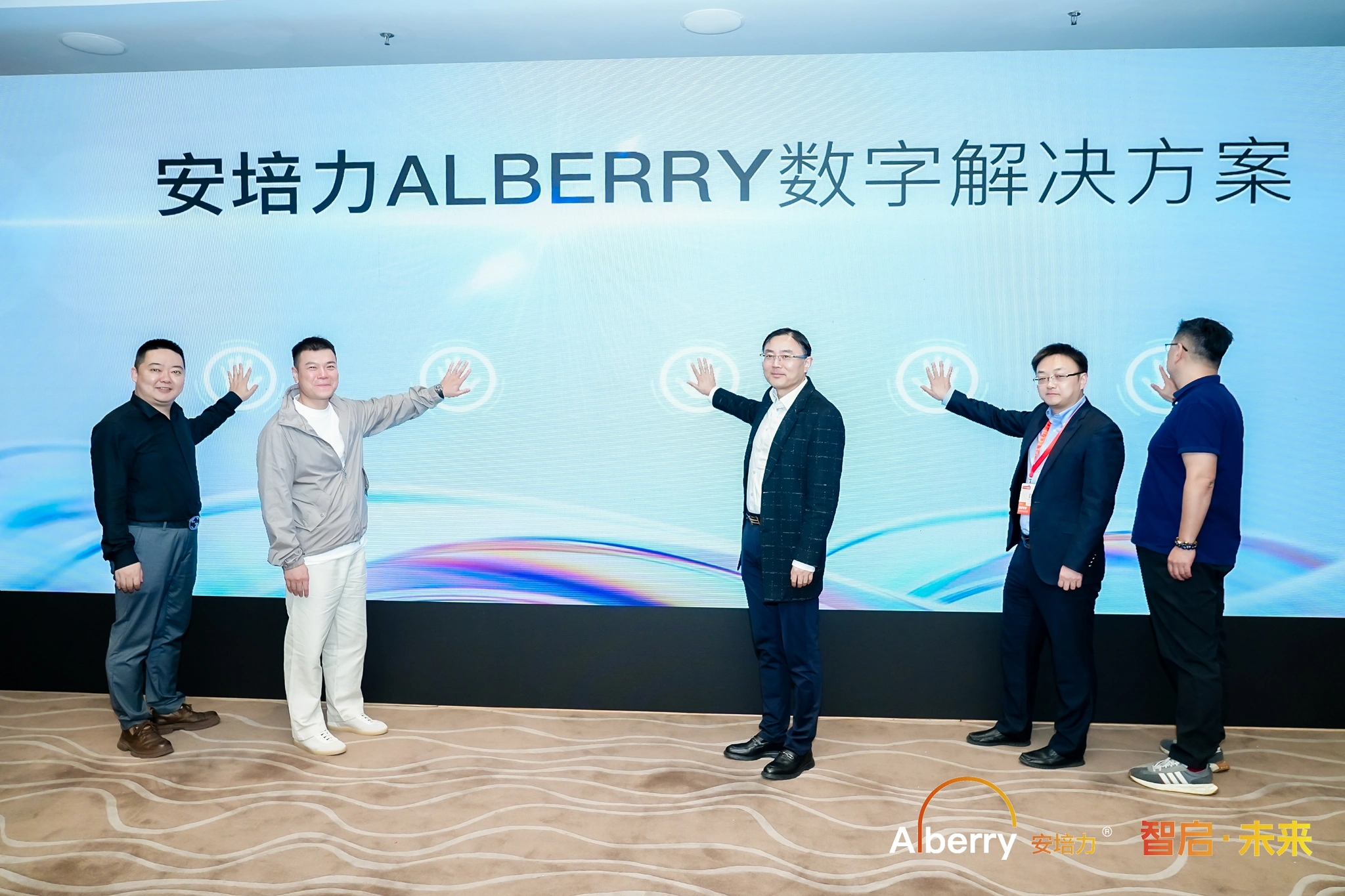 |
Ampere Power has renewed contracts with four global leading precision machining suppliers: Switzerland's ROLLOMATIC, Switzerland's KKS, Germany's Zapp, and Switzerland's WILLEMIN-MACODEL. |
And Suihua's choice happened to meet the right product. The material origin, processing precision, and supplier qualifications of the Alberry framework — every detail is verifiable. The fundamental reason patients choose it after learning about it is that the option itself withstands scrutiny. What Suihua did in this process was to ensure patients could access this existing information before making a decision — explain what's different about the material, what the specification differences mean, and then let the patients judge for themselves.
Suihua's strategic judgment answered "why do it," and Alberry's product strength answered "why it can be done." The former is the vision to discover a blank space, and the latter is the confidence for that blank space to be recognized by patients. Both are indispensable — vision without product means the option can't stand; product without vision means the option would never appear on the patient's list.
The inspiration from this case is bidirectional. For medical service institutions, it suggests what kind of dialogue space might be hidden in a collectively overlooked link. For upstream manufacturers, it validates one thing — verifiable product differences have the opportunity to be identified and chosen by patients in the clinic. The cooperation between Suihua and Alberry is a mutual recognition between a judgment and a product within a specific time window.
# Afterword
When the market generally believes that patients only care about price after VBP, the reality is richer. Just as automotive consumers shifted from chasing imported base models to choosing domestic high-end configurations, when product strength catches up and information is transparent, consumers' decision-making focus naturally shifts from "price" to "long-term use value." Similar changes are occurring in the field of Dental Restoration.
Policy trends are also echoing this direction. The implementation of separating technical service fees from consumable costs and allowing independent pricing for personalized products shows that decision-makers recognize a simple fact: medical consumption is not just about "cheapness"; patients' right to choose between different qualities and price points is equally worthy of respect and protection.
What Suihua validated with the Prosthetic Framework is not just the selection rate of high-quality frameworks. It validates that even in the VBP era, clinics and patients can still engage in dialogue around quality — and this, precisely, is the signal that the "optional configuration economy" is beginning to grow in the dental field.
| About DGN:DentalGoodNews (DGN) is a trusted professional media platform dedicated to the global dental industry. We deliver in-depth coverage of corporate news, policy & regulation, investment & funding, and clinical frontiers — serving dental institutions, device manufacturers, investors, and industry researchers worldwide. Contact us: haodeya@dongxizixun.com |

;)