I Photographed People at the South China Dental Show — An "Outsider's" View of a Dental Exhibition
 |
I do portrait photography. I photograph people, all kinds of people—ordinary people, families, commercial portraits. What the dental industry is, I don't really know; VBP for Dental Implants, I have no concept at all. The team from DENTALGOODNEWS (Leading Dental Industry Media, DGN) approached me, saying they wanted to do a flash shoot at their booth during the dental expo, and asked if I could take it on. I asked, is it shooting products? They said, no, shooting people, capturing industry memories. I said, okay.
How do I work?
Over two days, I photographed about 243 people. For every person who approached, I would do the same thing in my mind first: before clearly seeing a person, don't rush to shoot.
There's a logic behind this, which I had thought through before entering the exhibition hall. Industry exhibition photography usually follows a fixed logic: ribbon-cutting by leaders, handshake group photos, product displays, crowd panoramas. This type of shooting has a professional term: PR photography—its purpose is to "archive proof that this event happened," not to "make this event felt." There is an essential difference between the two.
When I studied photography, my teacher talked about Henri Cartier-Bresson's theory of "the decisive moment": everything in the world has a point in time when form and content simultaneously reach their most complete and powerful state. Miss it, and it's gone forever. I entered the Dental South China Expo with this framework.
The lighting used a "clamshell" structure: a large octagonal softbox above to illuminate the face, a fill light below shining upwards, with the main light coming from about 45 degrees to the left. Natural light from outside the hall's glass walls was used to fine-tune the lighting ratio in real-time throughout, ensuring consistent exposure across different times of day. The output went through a tethered system; from pressing the shutter to the image appearing, it took 4 to 5 seconds.
 |
But technique is the baseline, not the ceiling. For photographing people, 90% of the work happens before the shutter clicks. What I was really doing with my eyes was observing each person who approached—what they were looking at before walking over, where their eyes landed first as they neared, whether their body's center of gravity leaned forward or back.
My partner comes from a wedding photography background and is skilled at handling "defensive smiles": chatting, asking what exhibits they came to see today, letting them choose between props like "平安" (peace) or "大吉大利" (great fortune and prosperity). Before the sentence is even finished, the shutter has already been pressed. When the photo lights up on the screen, there's usually a brief moment of silence, then someone says: "So good-looking, no need for retouching." I heard this phrase many times over the two days.
What Happened On-site
The technique set the stage. What really stayed with me were the individuals who stepped up.
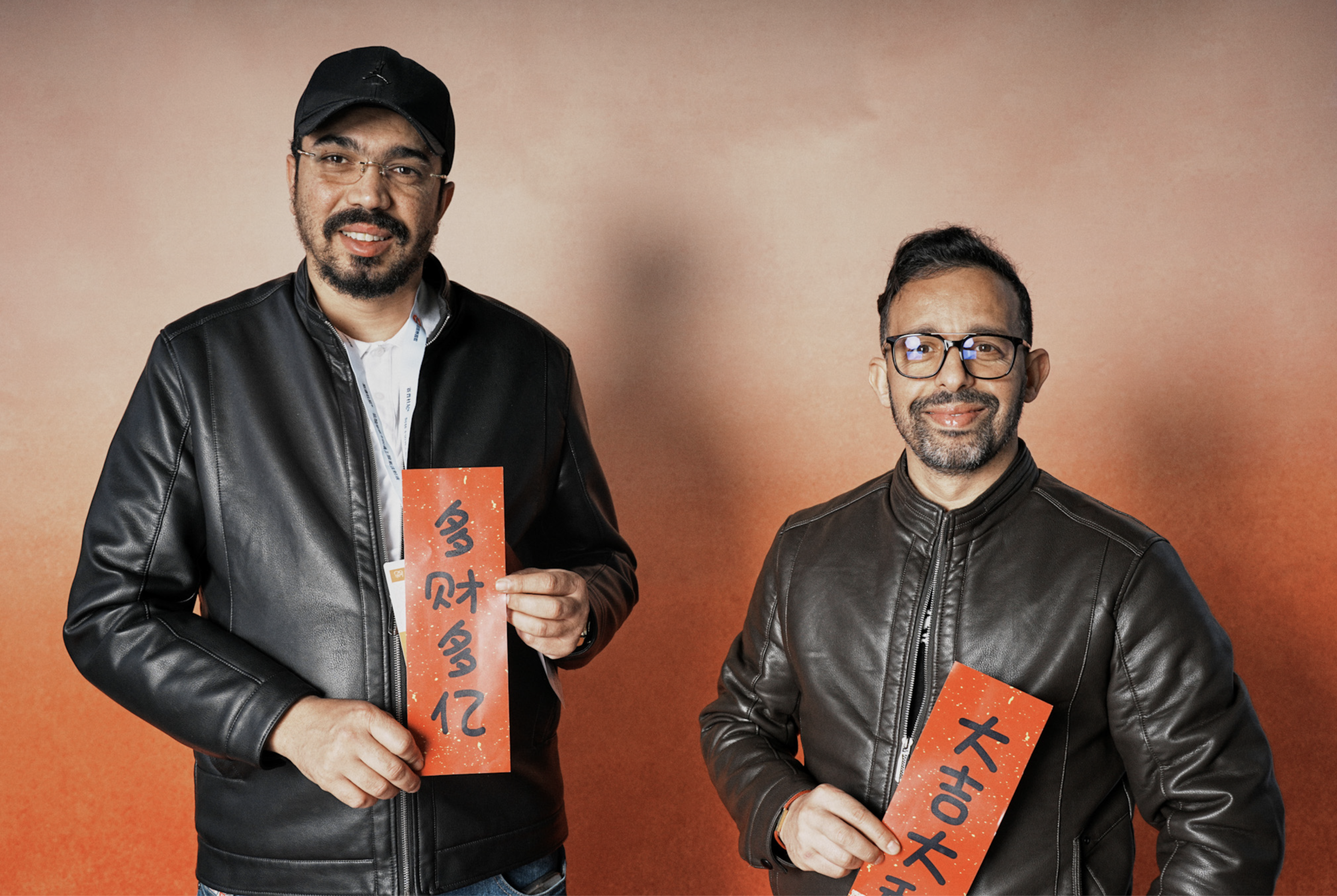
An exhibitor from Southeast Asia, who didn't speak much Chinese. He chose the "喜乐" (joy) spring couplet and asked me what the characters meant. I said: happy. He thought for a moment, switched to "多财多亿" (abundant wealth), and asked seriously: more money? We both laughed. After the photo, he carefully placed the printed paper into a folder, meticulously protecting every corner. That item would travel home with him.
 |
Then there was a father-daughter pair—the daughter a dentist, the father a retired worker accompanying her to the expo. The father had zero interest in the exhibits, but standing in front of the lens, holding the "平安" (peace) spring couplet, he smiled earnestly. When the photo came up, the daughter screenshot it and sent it to her mom. This photo has nothing to do with Dental Implants, but it recorded something real that happened: a practitioner in China's dental industry and her father, on the Lantern Festival in 2026, at the world's most important dental expo, took a photo together.
As the event was winding down, two foreign guests, after having their photos taken, handed us some loose change. We didn't know whether to accept it or not. In that moment, we were all caught off guard.
 |
Later I thought, this was probably, in the context they were familiar with, the most natural way to express appreciation for a good service. Not out of politeness, but genuinely feeling it was worth it. There were also people who came back the next day wearing makeup, specifically to retake a photo.
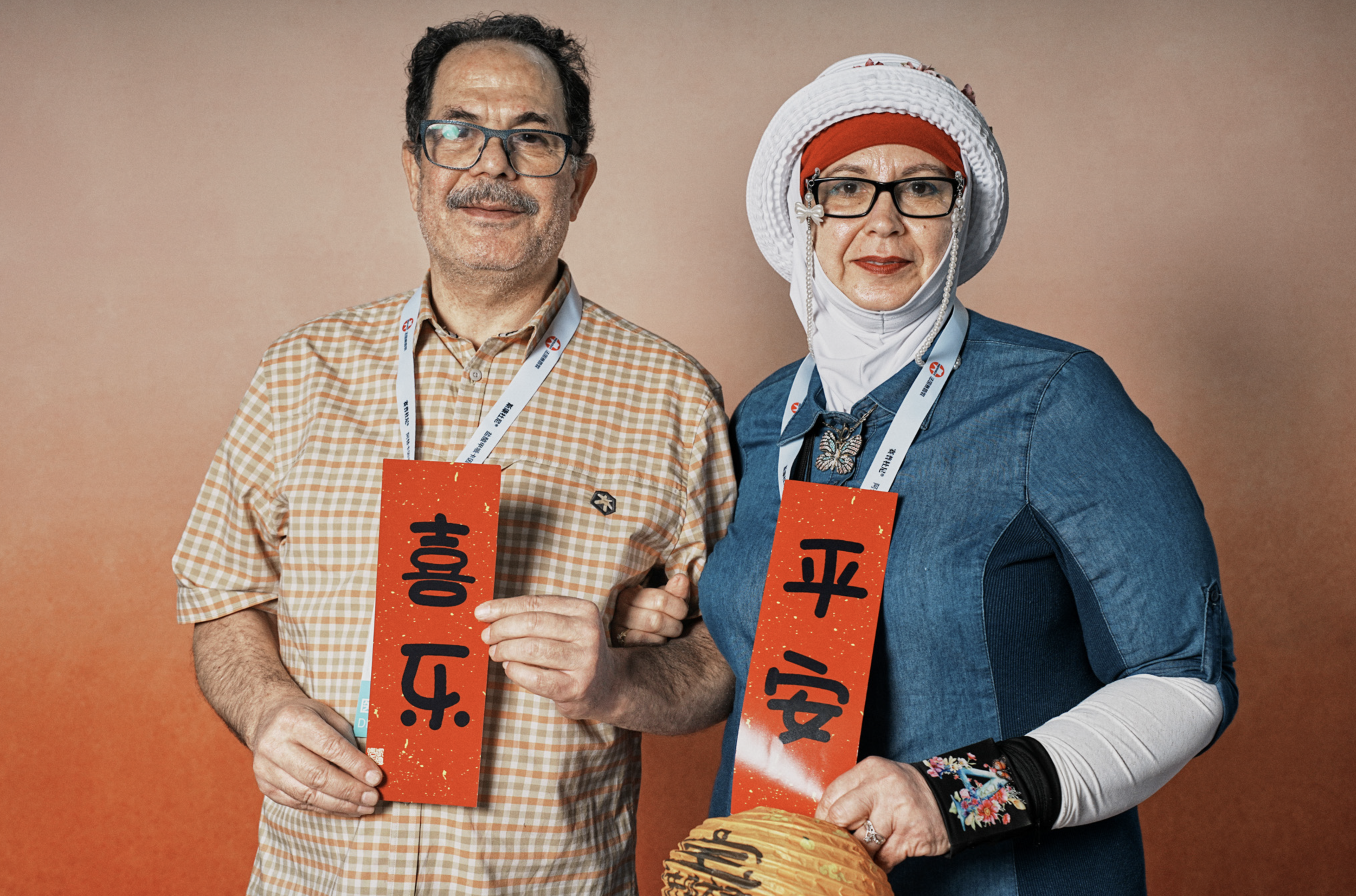 |
Whether a photo has communication value isn't decided during post-processing retouching; it's decided in every choice made before the shoot. What lighting to use, how fast the output is, what the guidance method is, what emotion the props convey—all these combined determine whether a person, upon seeing the final image, politely says "thanks" and walks away, or pauses in front of the screen and lets out a genuine "wow."
To Photograph a Person, First See That Person
During these two days on-site, I kept doing the same thing: see the person first, then photograph the person. This judgment was confirmed from an earlier shoot.
The DGN team once booked me to shoot a series of portraits of Dr. Ge Mengke—quite famous in Hunan's dental circles, young, handsome. That shoot made me realize one thing: what is most worth recording about a person is often not their most obvious aspect.
When Dr. Ge Mengke walked in, my first reaction wasn't "this will be easy to shoot," but "this will be hard to shoot."
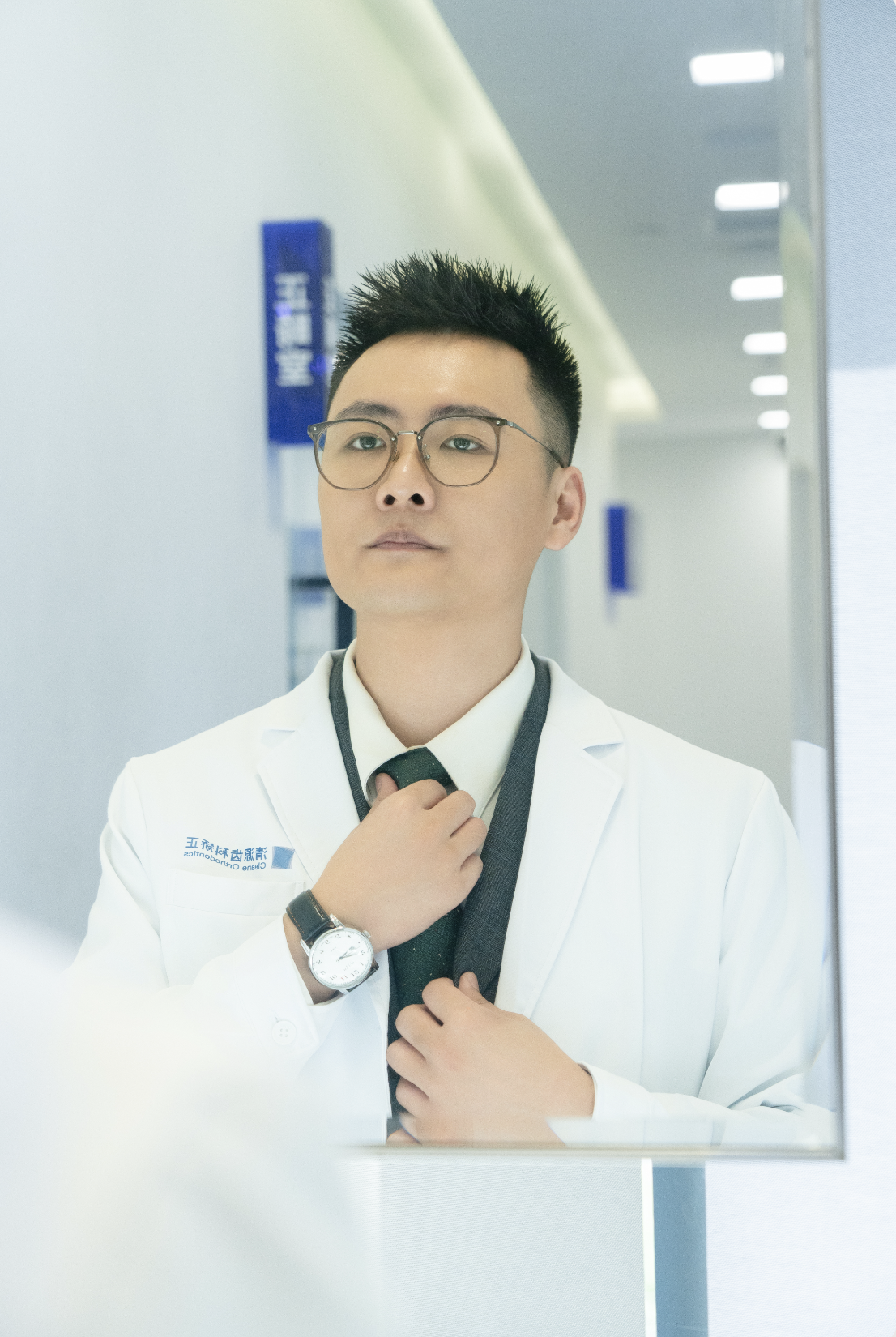 |
Young, handsome, white coat, good posture. Any camera pointed at him and pressing the shutter could produce a decent-looking photo. But "decent-looking" is precisely the most dangerous trap in portrait photography—when someone is naturally good-looking, the easiest thing for a photographer to do is stop at the surface layer, take a "standard photo of a young doctor," and call it a day.
As he approached, I observed him for about thirty seconds.
He walked fast, but not an anxious kind of fast—it was a habitual fast, fast was already his default speed. As he neared, his fingers subconsciously touched the edge of the table, confirming its position, before he stood still. This action took less than a second, and he probably wasn't aware of it himself. But it's the instinctive reaction of someone who works with their hands long-term: judge before touching, contact only after judging.
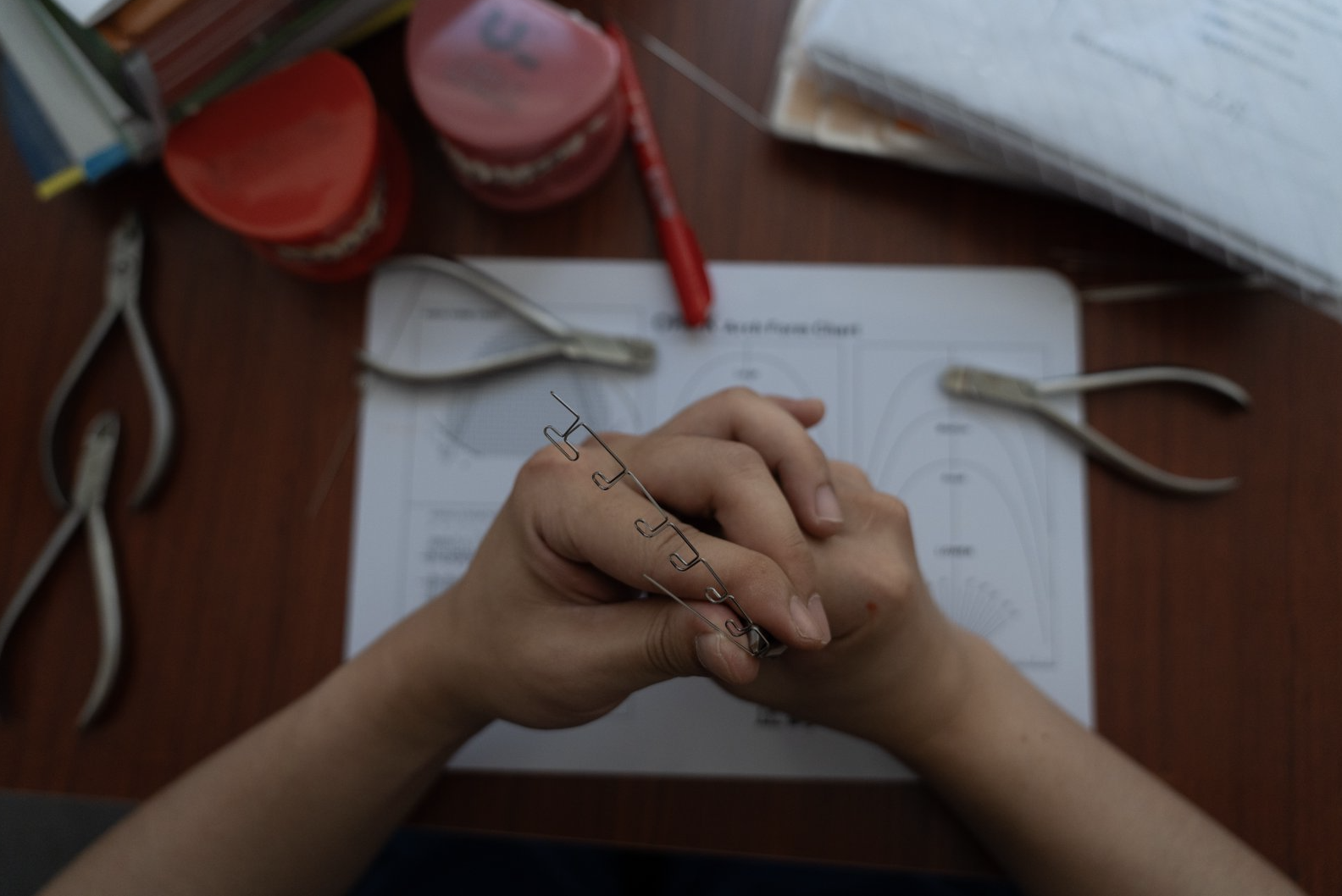
I decided not to photograph his handsomeness, but to photograph his "hands."
Not the literal hands, but the things conveyed through the hands—the judgment of details, the instinctive demand for precision, and the natural state formed after years of repetitive training of this demand. This is what truly allows a young doctor to stand firm in the industry, and it's also what is most worth capturing in a portrait photo.
 |
During the shoot, I deliberately reduced guidance. Usually when photographing people, I chat, ask questions, create a relaxed atmosphere; but Dr. Ge's own relaxed state came naturally, he didn't need to have his "defenses disarmed." What I needed to do instead was wait—wait for that moment before his gaze settled, wait for that moment when his center of gravity shifted as he adjusted his posture, wait for that brief blank space between hearing a question and thinking and responding.
In that blank space, a person is most real.
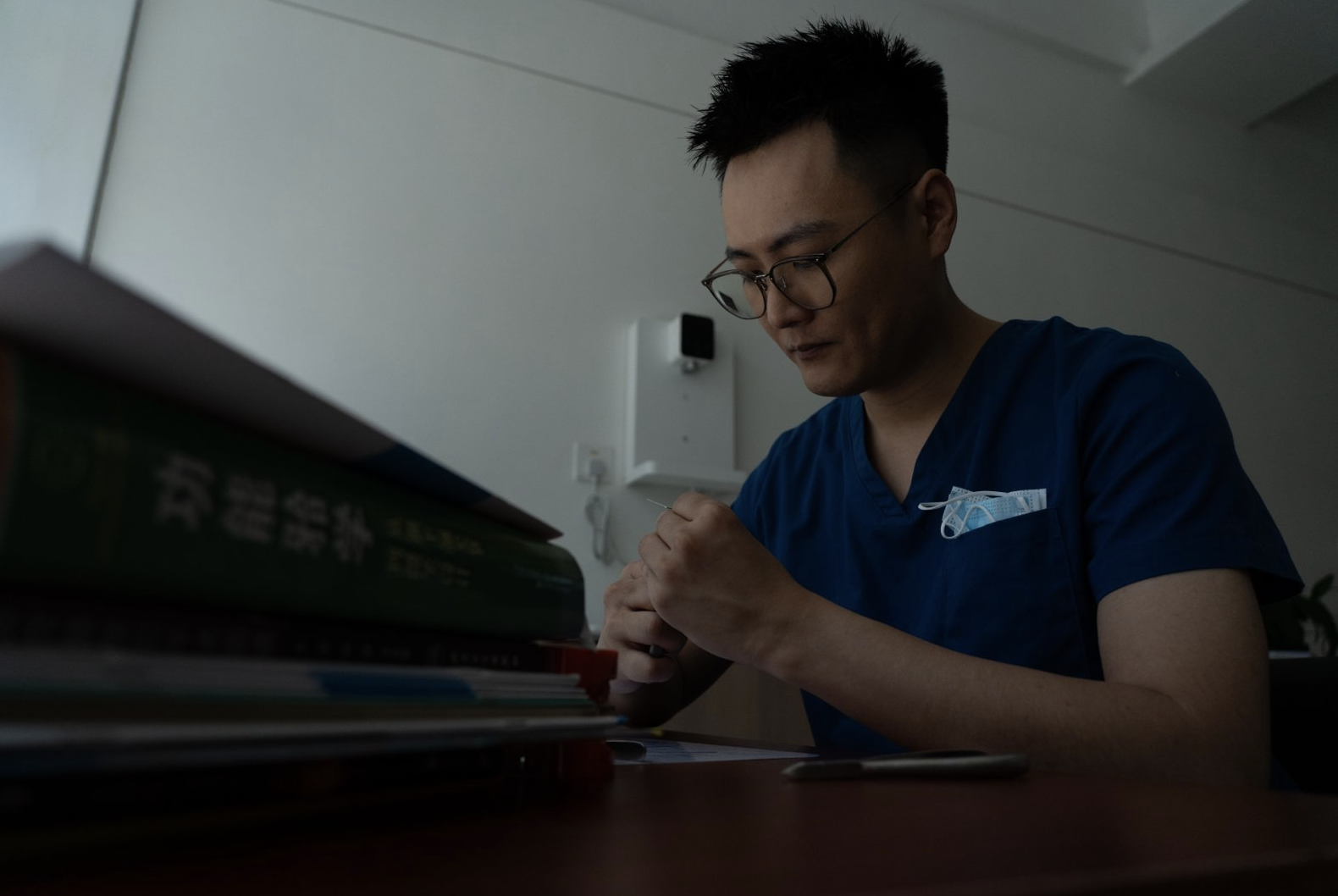 |
He later said something that made me feel my judgment was confirmed: "Even every curve of a single silk thread must be made as perfect as possible." When he said this, he didn't pause, nor did he add any performative emphasis—this wasn't him describing a pursuit, this was him stating a fact he considered理所当然 (a matter of course).
This tone, I hoped would appear in the photo.
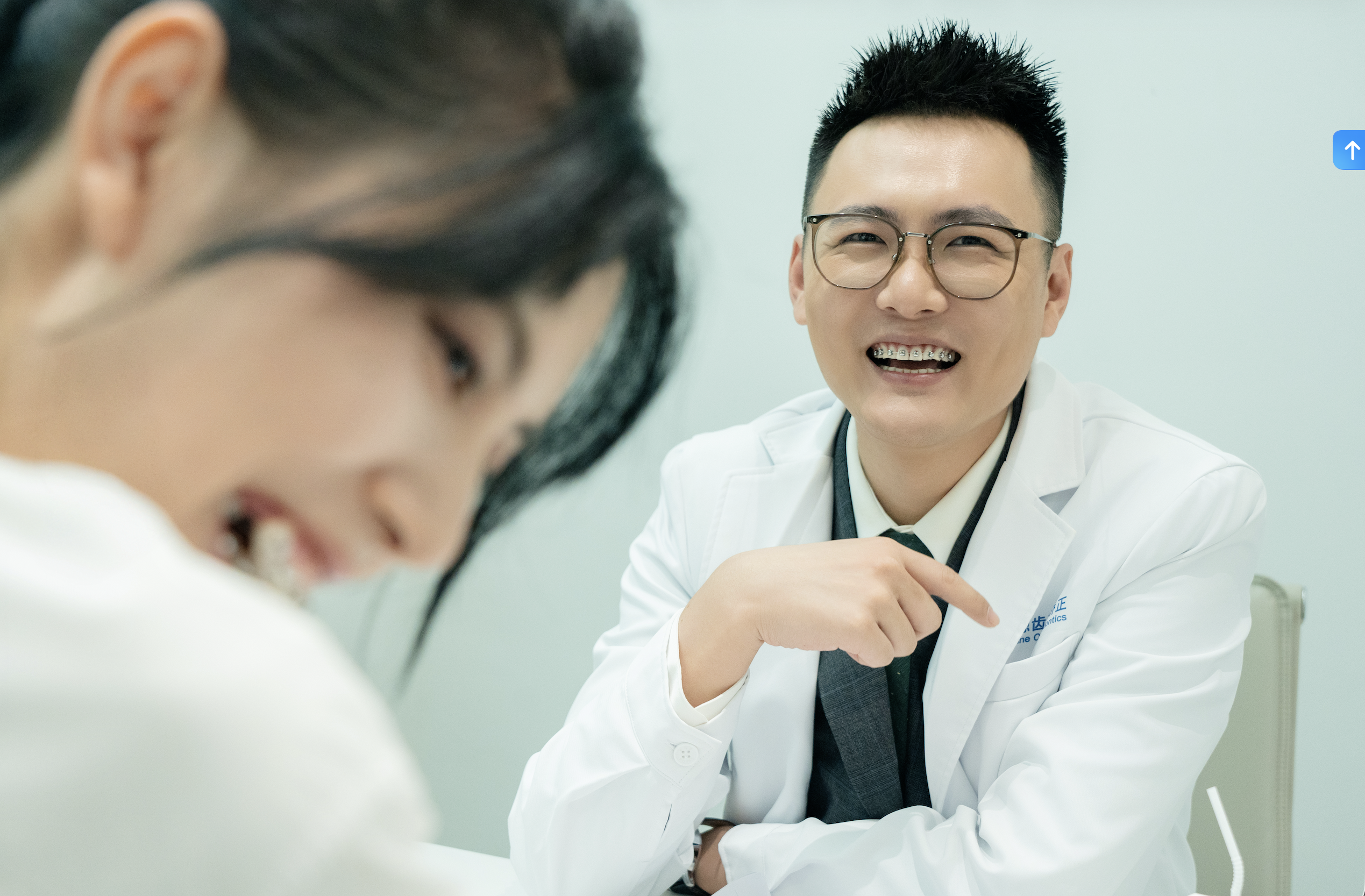 |
A truly good portrait photo doesn't make a person seem unattainably distant, nor does it make them seem "亲切自然" (approachable and natural)—what it should do is allow a person, at a certain moment, to be seen by their own true state. Dr. Ge's professionalism isn't a bestowed talent, but a natural流露 (outflow) after long, hard practice; what I wanted to capture was precisely this moment of "流露" (outflow), not a pose of "表演" (performance).
What a Good Photo Means for a Brand
Putting these two things together—the 243 people at the Dental South China Expo, and that shoot with Ge Mengke—I started thinking about a more fundamental question: what does a photo actually mean for an exhibiting brand?
In a venue the size of a dental expo, casual shooting acts are everywhere. But the final destination of these photos is, with high probability: post on a social media feed, enter the corporate cloud drive, never to be opened again. This isn't a problem with photography, it's a lack of clarity about "what a photo is."
The value of a photo has four levels.
Proof Value: It happened.
Narrative Value: Through composition, lighting, the selection of the moment, it conveys the texture of the event—even for a booth group photo, one is a standard standing pose, another is the moment of looking down while receiving a business card; the information conveyed is not on the same level at all.
Temporal Value: A photo taken in 2026, when opened in 2030, its emotional weight will only increase, not decrease. The image archive a brand accumulates in the industry is essentially its "visible history."
Communication Value: The moment a photo is shared, the person on the other end isn't just "seeing" you—they are saying I see you. The meaning of this line in Avatar isn't "I noticed you," but "I see you as a person." A well-taken photo allows the sharer to be truly recognized, not just scrolled past.
Most companies' logic for expo photography is "just take a quick shot, it's not an advertising campaign." But the cost is: spending significant resources to exhibit, yet leaving behind nothing worth looking at a second time.
Of course, I came in with an outsider's eyes, without industry baggage, without the inertia of "this is how it's always been done here." Precisely because of this, I could clearly see how significant the cost of this approach is.
Leaving the exhibition hall, I went over these two days. The conclusion was only one: most practitioners in this industry perhaps are rarely treated this way—illuminated by a seriously adjusted light, met with the full attention of someone whose only goal is to take this one photo well, and then seeing themselves "as they could be like this" after 4 seconds.
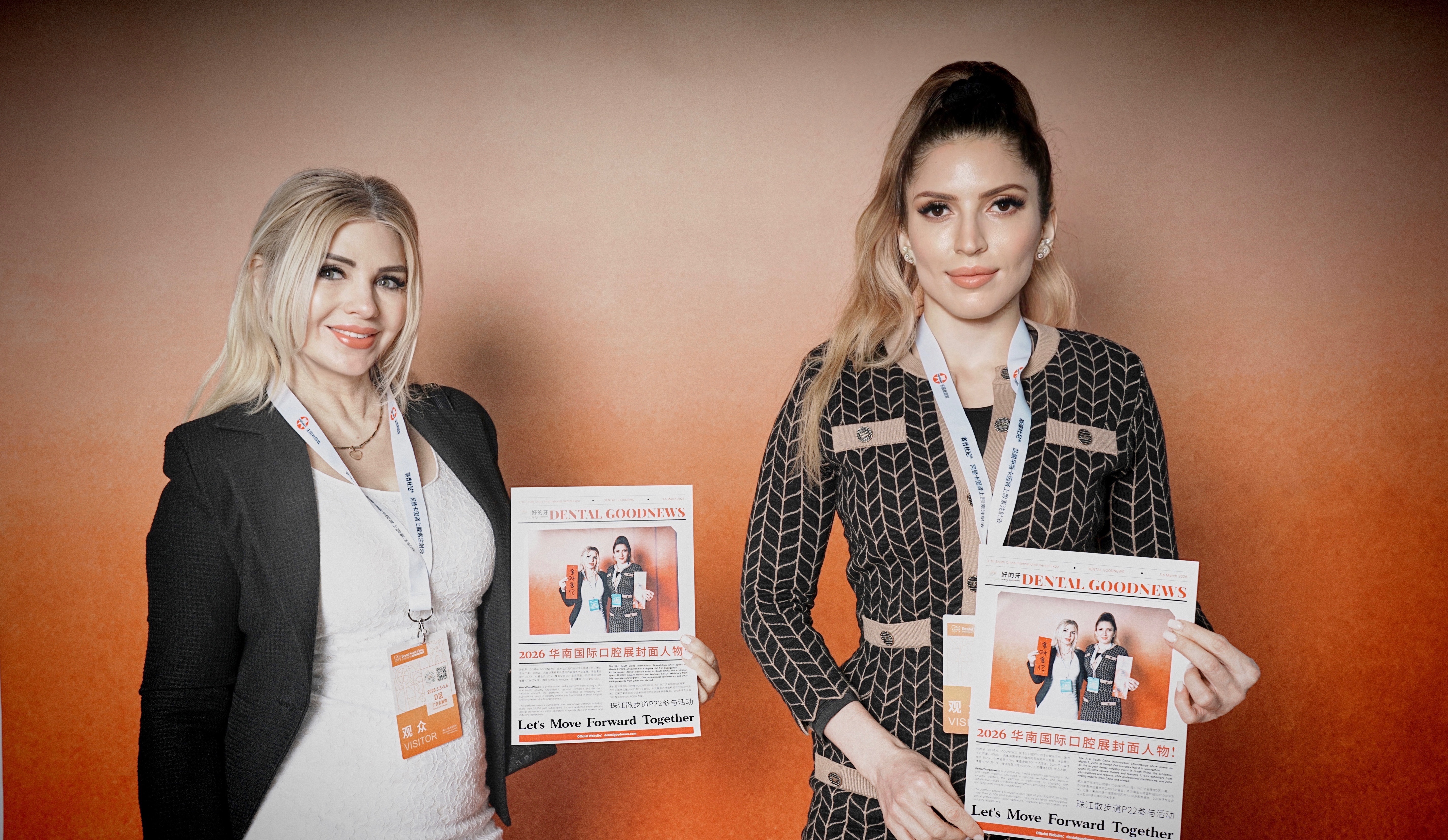
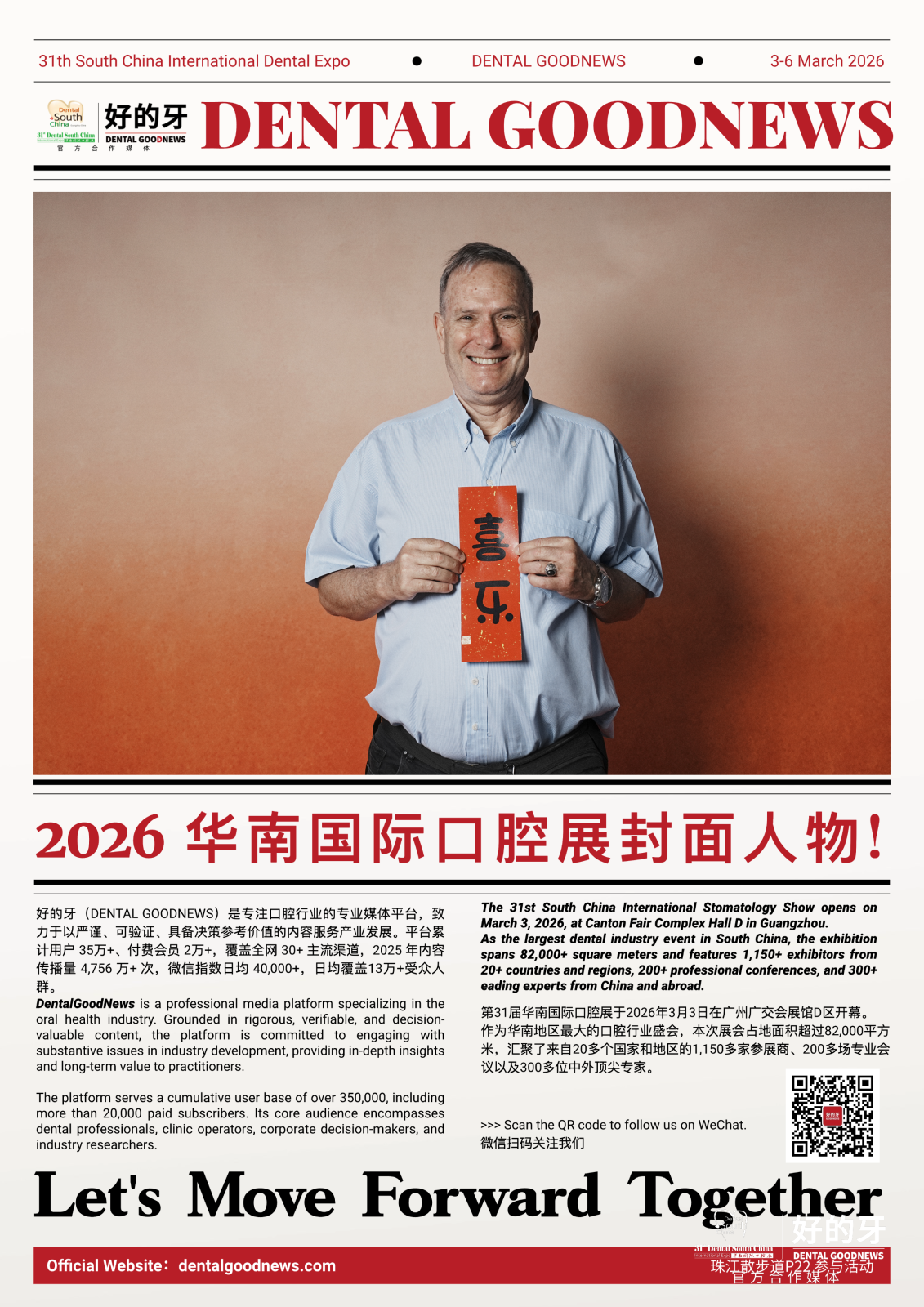
DGN calls this "Cover Character." I think this name is very accurate. Not because the layout looks good, but because: the moment each person stepped in front of that red background board, at that moment, they truly were the cover character. Not the cover character of any expo, but of their own day.
 |
A good photo ultimately does two things—it allows a person, at a certain moment, to be seen by themselves; and the moment it's shared, to be truly seen by others. This is the meaning of I see you: not being noticed, but being recognized.
This is true for individuals, and it's also true for brands. A seriously taken photo isn't just saying "we participated in this expo," it's saying: this is us, these are our people, this is how we do things. A brand that can be recognized, and a brand that is merely seen, ultimately do not walk the same path.
| About DGN:DentalGoodNews (DGN) is a trusted professional media platform dedicated to the global dental industry. We deliver in-depth coverage of corporate news, policy & regulation, investment & funding, and clinical frontiers — serving dental institutions, device manufacturers, investors, and industry researchers worldwide. Contact us: haodeya@dongxizixun.com |

;)