With an investment of approximately 354 million RMB, Nanyang Technological University in Singapore develops a nano-coating for dental restorations.
 |
| Image source: Nanyang Technological University, Singapore. |
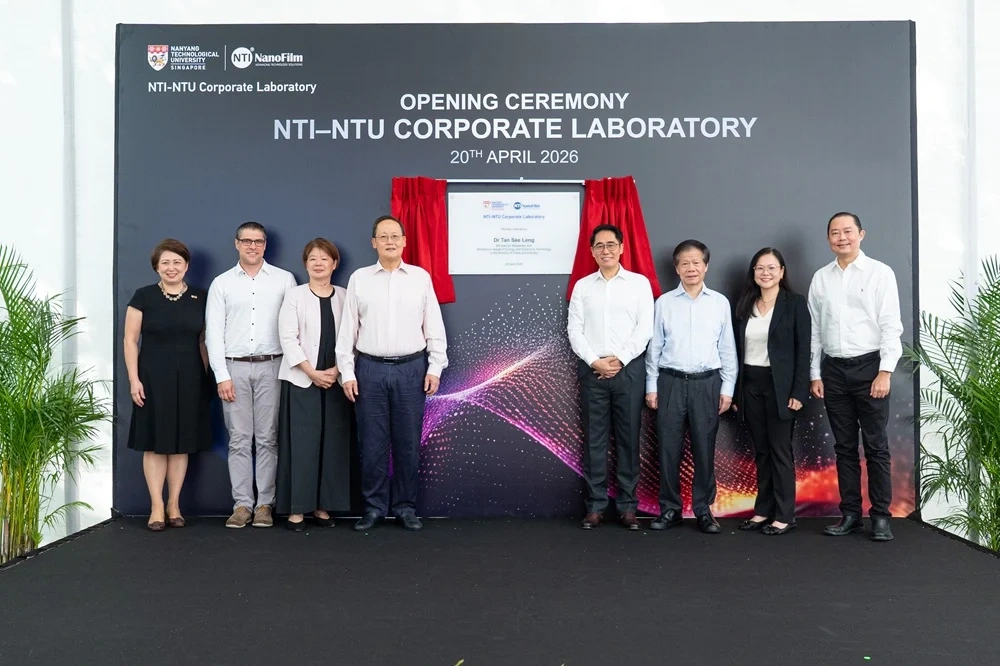
DentalGoodNews|On April 20, 2026, Nanyang Technological University, Singapore (NTU) and nanotechnology solutions company Nanofilm Technologies International (NTI) announced the official launch of the NTI-NTU Corporate Laboratory, with an investment of S$66 million (approximately RMB 354 million). The laboratory, in collaboration with Singapore's National Dental Centre (NDCS), will develop advanced nano-coating technologies designed to improve tissue integration of dental restorations and possess antibacterial properties, aiming to shorten patient recovery time and reduce infection risk.
According to reports, the carbon-based nanocomposite coatings developed by the laboratory are composed of a mixture of various nanomaterials, each with a scale only one-thousandth the diameter of a human hair. These coatings can strongly bond with the titanium surface of implants, enhancing durability. Furthermore, the coatings allow for the incorporation of materials such as phosphorus and magnesium to promote tissue healing. NDCS CEO Goh Bee Tin stated that the antibacterial properties of this technology are expected to reduce the risk of implant failure due to infection and decrease the need for implant replacement, thereby saving patients treatment costs. If subsequent research progresses smoothly, the related technology could achieve broader application within the next five years.
This collaboration aims to translate research findings into marketable solutions. Singapore's Minister for Trade and Industry, Tan See Leng, attended the ceremony and noted that the laboratory will help strengthen Singapore's position in high-growth sectors. Currently, the laboratory has submitted seven technology disclosure applications within two years, covering four core areas: semiconductors, healthcare, renewable energy, and nanomanufacturing. According to NTU Vice President Lam Khin Yong, nano-coatings are one of the most successful commercial applications of nanotechnology. It is projected that the global market demand for high-performance coatings will exceed $20 billion by 2030.
Regarding similar technology R&D in the industry, Hannover Medical School in Germany and its interdisciplinary research unit previously received funding of approximately RMB 34.7 million to advance research on the stability of personalized 3D-printed implants. Additionally, as previously reported by DGN, a research team from The First Hospital of Lanzhou University also proposed enhancing the osseointegration capability of implants by releasing strontium ions through a strontium titanate coating. Recently, Israel's NOVA Implant company has also been seeking Chinese buyers, intending to sell its "dual composite surface technology" which can achieve a 98% bone contact rate.
| About DGN:DentalGoodNews (DGN) is a trusted professional media platform dedicated to the global dental industry. We deliver in-depth coverage of corporate news, policy & regulation, investment & funding, and clinical frontiers — serving dental institutions, device manufacturers, investors, and industry researchers worldwide. Contact us: haodeya@dongxizixun.com |

;)