West China School of Stomatology and other teams develop biomimetic nanoparticles, expected to achieve antibacterial, anti-inflammatory, and periodontal tissue regeneration
 |
| Image source: A biomimetic nanoparticle coordinates antibacterial and immunomodulatory functions to promote periodontal regeneration |
DentalGoodNews|On October 26, 2026, an animal experimental study was published in the International Journal of Oral Science: the research team developed a biomimetic nanoparticle NMm@MINO, and found in in vitro experiments and a rat Periodontitis Model that this material can not only kill bacteria, but also regulate inflammatory responses, reduce Alveolar bone resorption, and improve periodontal soft tissue repair.
Periodontitis is not merely a "bacterial infection." If the inflammatory response caused by bacteria persists, it will further damage the gingiva, periodontal ligament, and alveolar bone. Therefore, in addition to controlling bacteria, the treatment of Periodontitis also requires minimizing excessive inflammation as much as possible and helping damaged periodontal tissues recover. The paper points out that current treatment approaches mainly target infection and still have shortcomings in controlling inflammation and promoting subsequent tissue repair.
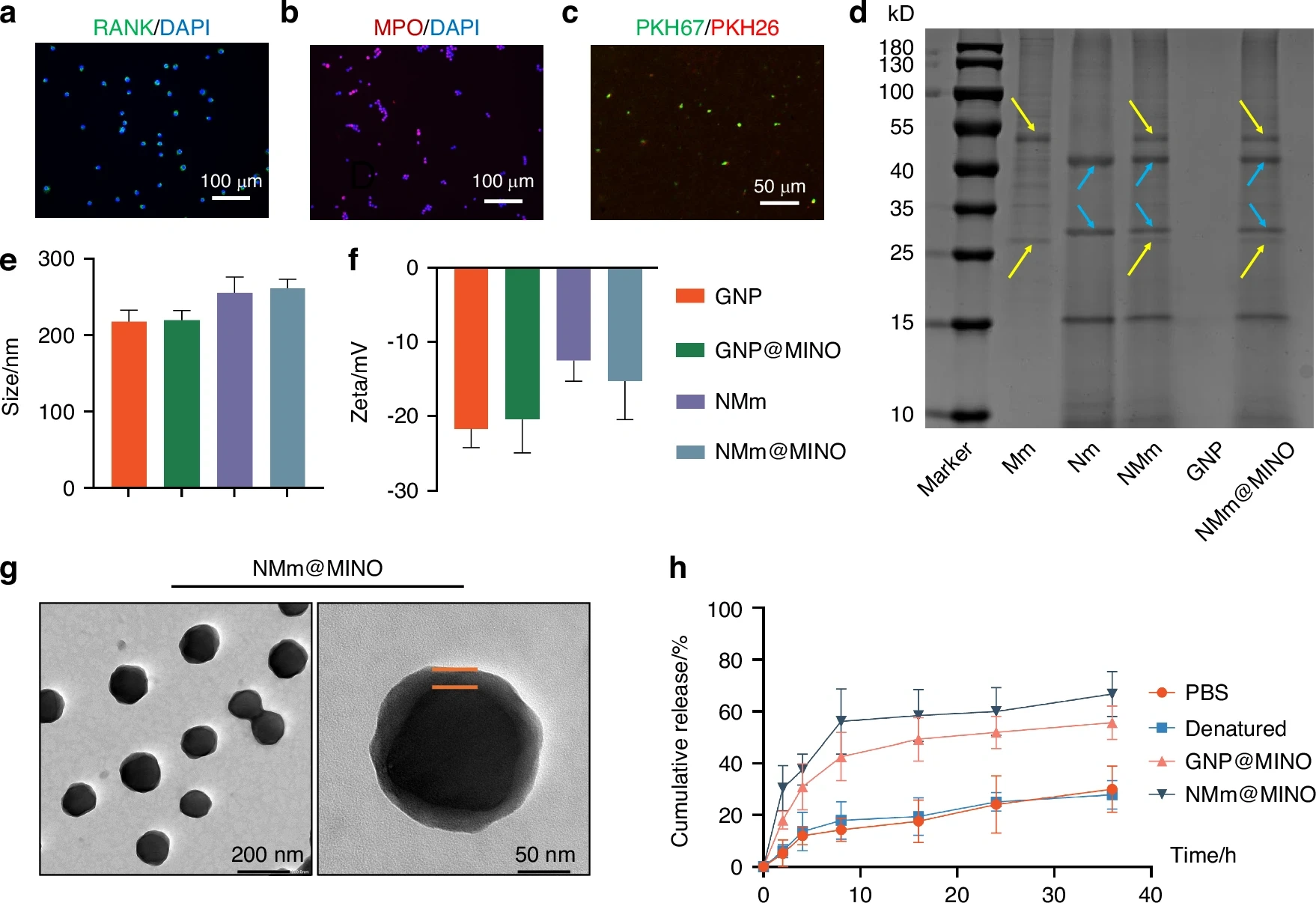
To address this issue, the research team designed NMm@MINO. Simply put, it can be understood as a "nano-drug with a biological camouflage coat": inside is a gelatin nanoparticle loaded with Minocycline (MINO), and outside is a "coat" composed of cell membranes from neutrophils and macrophages. Among them, Minocycline is an antibiotic used for the treatment of Periodontitis; gelatin nanoparticles can accelerate drug release under the action of related enzymes in the inflammatory environment. The entire particle has a diameter of about 262 nanometers, and the outer cell membrane layer is about 21 nanometers thick.
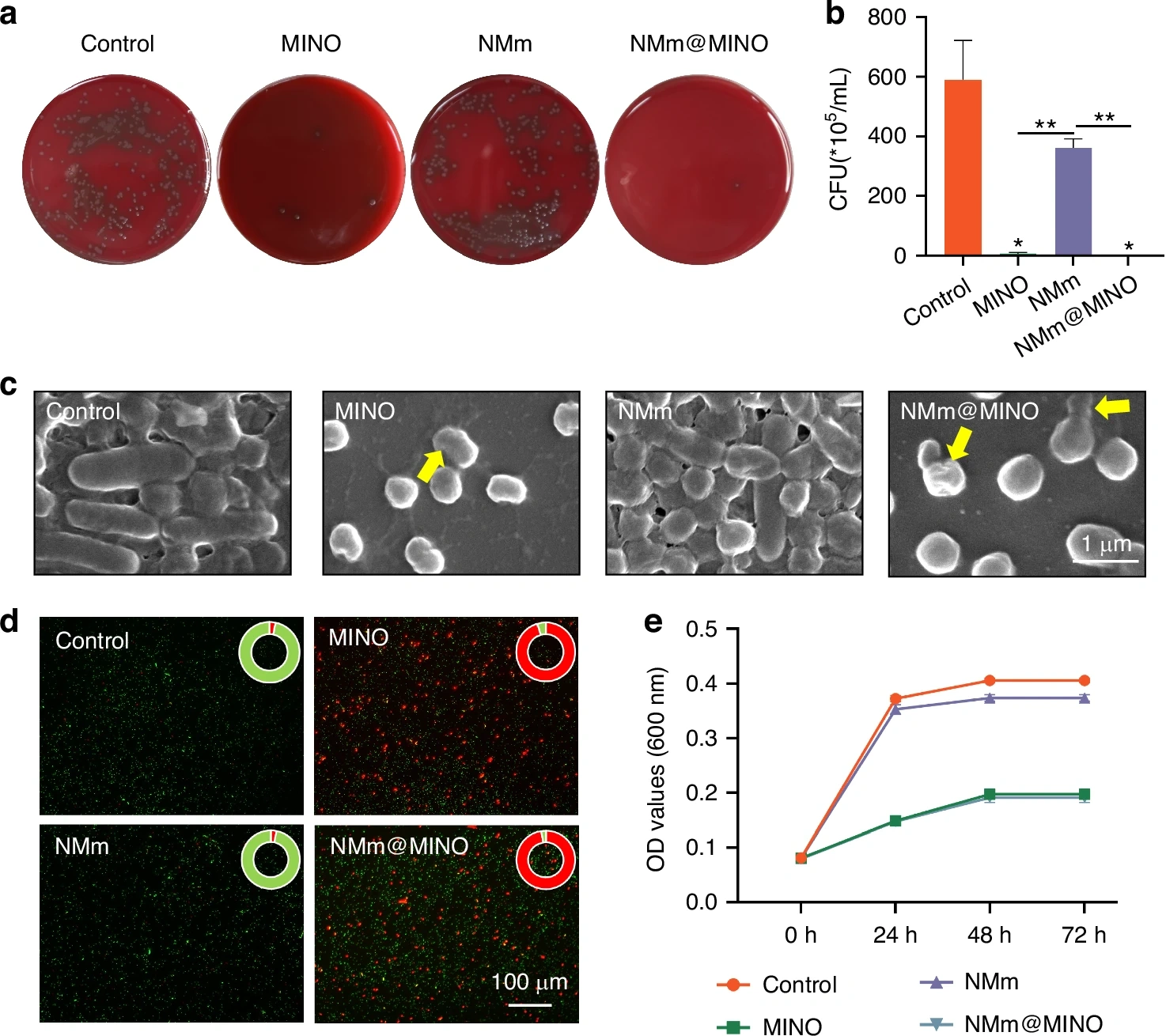
In in vitro experiments, NMm@MINO showed bactericidal efficiency exceeding 99% against both Porphyromonas gingivalis (P. gingivalis) and Staphylococcus aureus. The study also observed that treated bacteria exhibited changes such as cell membrane deformation and collapse, accompanied by increased reactive oxygen species, which to some extent indicates that the material can kill periodontal pathogens.
 |
| Image source: A biomimetic nanoparticle coordinates antibacterial and immunomodulatory functions to promote periodontal regeneration |
In addition, macrophages are important immune cells in the inflammatory response of Periodontitis. Under inflammatory conditions, macrophages exhibit a more "pro-inflammatory" state; during inflammation resolution and tissue repair, they shift toward a state with more "anti-inflammatory and reparative" characteristics. The study found that NMm@MINO reduced pro-inflammatory indicators such as Nos2, Tnf, and Il1b, while increasing indicators related to anti-inflammation and tissue repair such as Mrc1, Arg1, and Tgfb1. Simply put, the material caused macrophages in the experiment to exhibit a state more偏向 inflammation alleviation and tissue repair.
The research team also tested whether the nanoparticles act like "decoys" to adsorb inflammatory factors. They incubated IL-1β and IL-6, two typical pro-inflammatory factors, with different nanoparticles, and then measured the remaining amount in solution. The results showed that nanoparticles bearing neutrophil membranes (this group did not contain Minocycline) could significantly reduce these two factors; after fusion with macrophage membranes, this ability was still retained.
In the rat Periodontitis Model, researchers used ligature wire to induce Periodontitis, with ligation maintained for 3, 7, and 14 days respectively to simulate early, middle, and late stages of disease. After removing the ligature, local injection was administered into the periodontal ligament space (PDL space). Testing showed that in the NMm@MINO group, the expression of inflammation-related IL-6, CRP, and IL-1β in periodontal tissues was reduced. Staining observation showed that the area of collagen fibers in the gingiva and periodontal ligament in this group was higher than that in the untreated group, the Minocycline-only group, and the cell membrane-only group, indicating better indicators related to soft tissue repair.
 |
| Image source: A biomimetic nanoparticle coordinates antibacterial and immunomodulatory functions to promote periodontal regeneration |
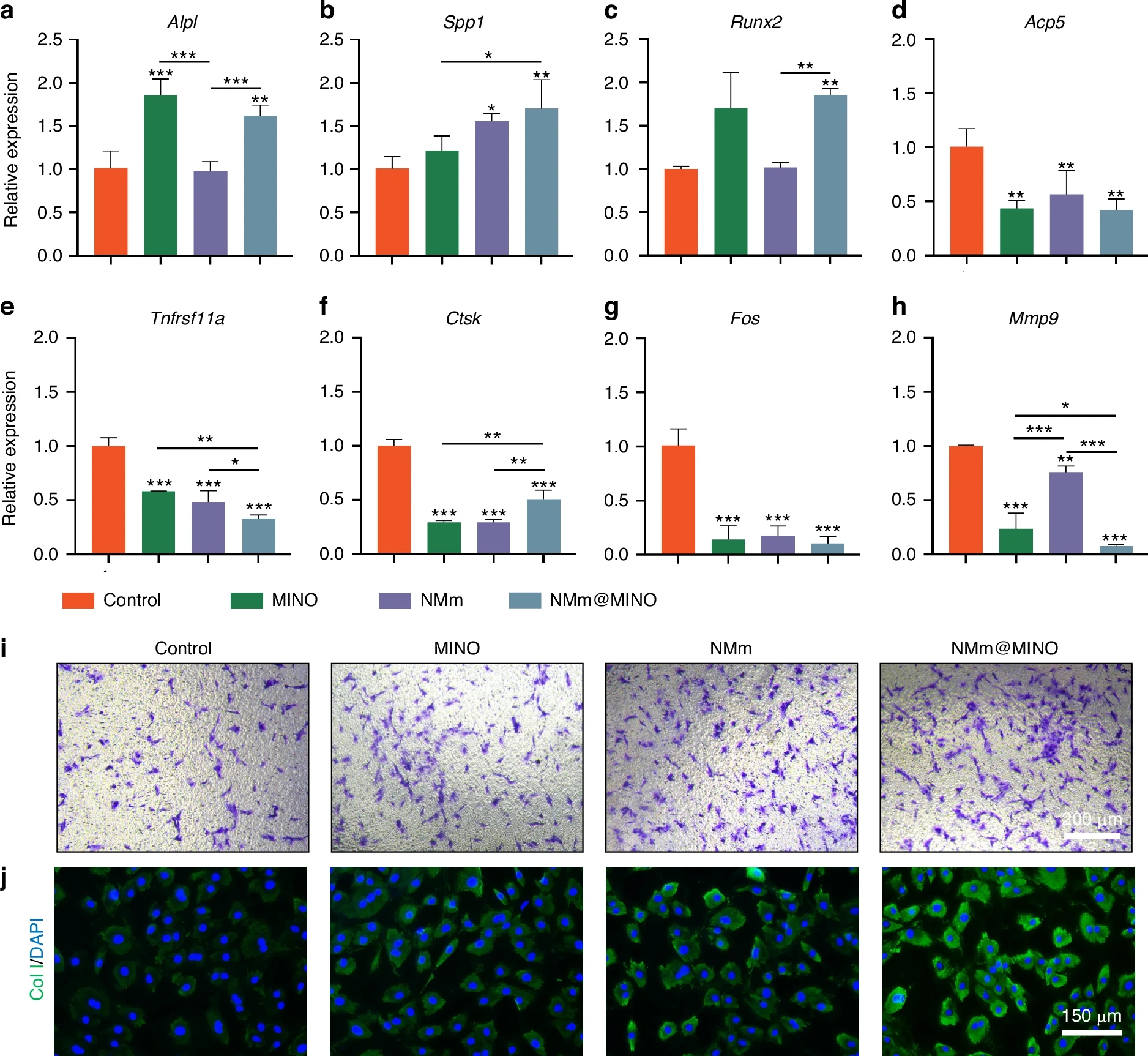
Regarding bone tissue, micro-CT (a three-dimensional imaging examination) showed that the distance from the cementoenamel junction (CEJ) to the Alveolar crest (CEJ-ABC, where a larger distance indicates more bone resorption) was shortened, and indicators such as bone volume fraction (BV/TV) and trabecular number, thickness, and separation were improved. Histological testing also showed a reduction in osteoclasts responsible for bone resorption (TRAP-positive cells); in in vitro experiments, osteogenesis-related indicators were upregulated, and osteoclast formation was also inhibited.
However, this study is still at the animal experiment stage. The researchers pointed out that the study has not directly measured how long the nanoparticles remain in the Periodontal pocket in vivo, how they are distributed in the body, or whether they can actively locate inflammatory sites; relevant statements are currently still at the stage of conceptual design or hypothesis. The material contains antibiotics, and the risk of drug resistance after repeated use and changes in oral microbiota also need to be examined; large-scale preparation and batch consistency of cell membrane materials remain to be resolved. Its long-term performance in humans, pharmacokinetics, and clinical efficacy still require validation through clinical trials.
The study mainly comes from the team at the State Key Laboratory of Oral Diseases, Sichuan University West China Hospital of Stomatology, the National Center for Stomatology, and the National Clinical Research Center for Oral Diseases, with participation from the team at the Institute of Biotherapy, West China Hospital, Sichuan University, the Affiliated Stomatological Hospital of Chongqing Medical University, the Chongqing Key Laboratory of Oral Diseases and Biomedical Sciences, and the Chongqing Municipal Key Laboratory of Oral Biomedical Engineering of Higher Education.
| About DGN:DentalGoodNews (DGN) is a trusted professional media platform dedicated to the global dental industry. We deliver in-depth coverage of corporate news, policy & regulation, investment & funding, and clinical frontiers — serving dental institutions, device manufacturers, investors, and industry researchers worldwide. Contact us: haodeya@dongxizixun.com |

;)