New Study: Dental Floss May Deliver Vaccines, with Immune Efficacy Comparable to Nasal Delivery
 |
| Source: North Carolina State University |
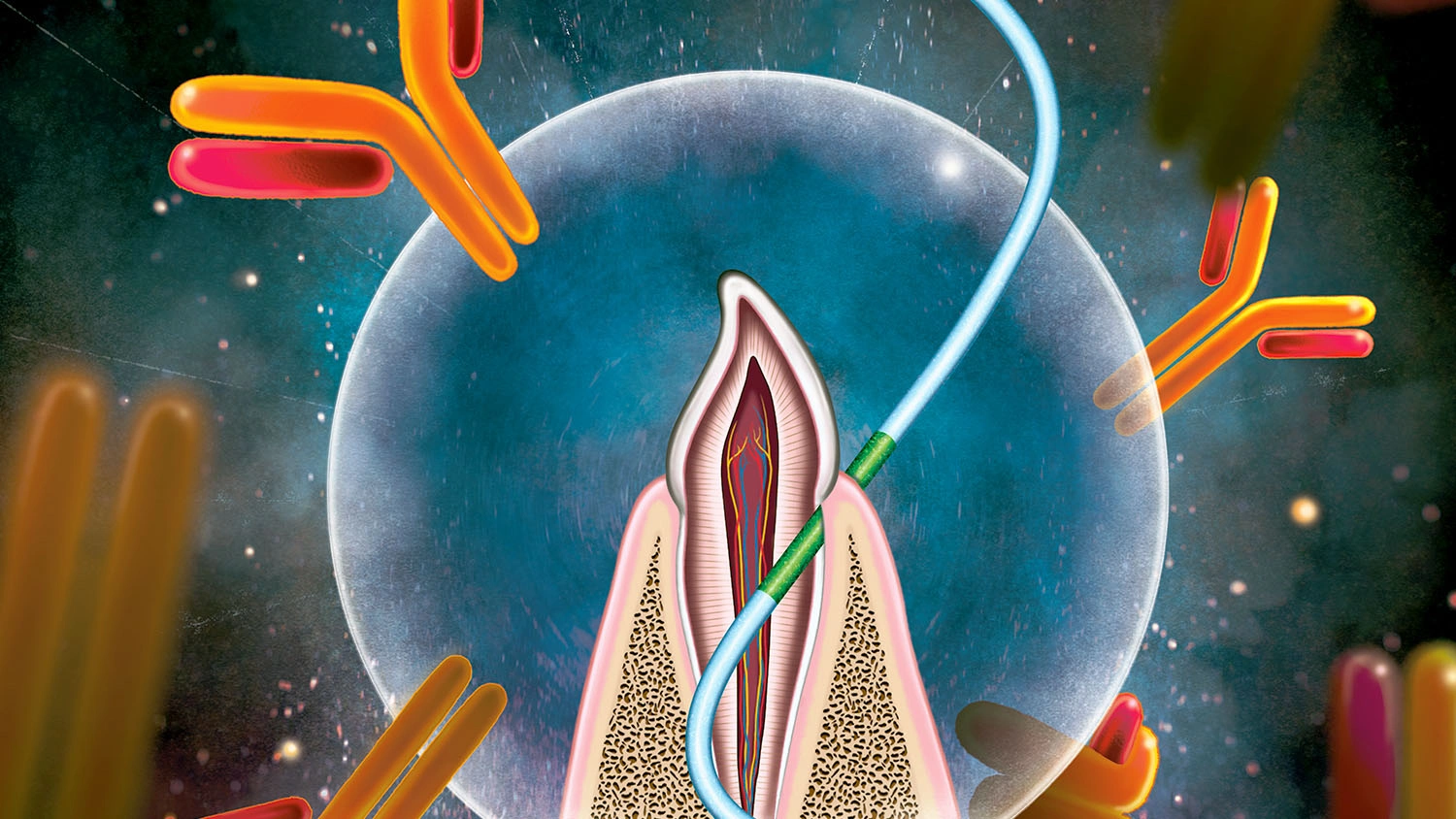
DentalGoodNews|A recent study published in Nature Biomedical Engineering, involving animal experiments and a preliminary human trial (n=27), showed that delivering a vaccine via dental floss to the junctional epithelium at the base of the gingival sulcus—leveraging the tissue's natural high permeability—can effectively induce robust mucosal immune antibodies. The study, led by Professor Harvinder Gill's team at North Carolina State University (NCSU), offers a simple, low-cost alternative for needle-free vaccination.
Mucosal surfaces are primary entry points for pathogens such as influenza and COVID-19. Professor Harvinder Gill noted that traditional needle-based vaccination primarily generates antibodies in the blood, with relatively fewer antibodies at mucosal surfaces. In contrast, mucosal vaccination stimulates antibody responses in both blood and mucosal surfaces, establishing a first line of defense before pathogens enter the body.
The study's target—the junctional epithelium—is a thin tissue layer located at the deepest part of the periodontal pocket between the tooth and gum. Unlike epithelial tissues in the lungs, stomach, or intestines, the junctional epithelium lacks a tight physical barrier, allowing immune cells to traverse it to combat bacteria. This high permeability presents a unique opportunity for vaccine delivery.
In mouse experiments, the research team coated unwaxed dental floss with influenza peptide vaccines, protein vaccines, inactivated viruses, and mRNA vaccines, respectively. Results showed that floss-based delivery induced robust and sustained immune activation in mice, with mucosal antibody levels significantly exceeding those achieved by the current "gold standard" for oral vaccination—sublingual administration. Moreover, its protective efficacy was comparable to intranasal vaccination.
Notably, while intranasal vaccination can induce mucosal immunity, most vaccine formulations face barriers to effective absorption, and there are potential safety risks of formulations entering the brain. In contrast, gingival sulcus vaccination not only avoids the risk of brain entry but also demonstrated that immediate eating and drinking after vaccination does not affect immune efficacy, offering exceptional operational simplicity. In the human trial phase, participants used floss picks, achieving a 60% deposition rate of fluorescent dye in the gingival sulcus, validating clinical feasibility.
According to previous reports by DGN (Leading Dental Industry Media), dentists—operating in oral care settings where patient trust is high—may help improve vaccination rates through vaccine education. This study, from a physiological pathway perspective, may provide indirect evidence supporting the trend of "dental clinics serving dual public health functions."
However, the researchers also acknowledged limitations: the technique relies on the recipient's tooth structure and is therefore unsuitable for infants who have not yet developed teeth. Additionally, whether gum disease or oral infections could alter the pathway's permeability or safety requires further evaluation. The current findings are primarily based on animal models and necessitate larger-scale clinical human trials for validation.
| About DGN:DentalGoodNews (DGN) is a trusted professional media platform dedicated to the global dental industry. We deliver in-depth coverage of corporate news, policy & regulation, investment & funding, and clinical frontiers — serving dental institutions, device manufacturers, investors, and industry researchers worldwide. Contact us: haodeya@dongxizixun.com |

;)