In the dental industry, embarking on a journey of “on-site assets”.
 |
# Preface
In the year of AI eruption, some people shut themselves in to build "shrimp", while others meticulously calculate tokens. People this year have started cramming lessons on how to communicate with AI. But anyone who has used AI deeply will eventually hit a boundary: AI can optimize your output, but it cannot replace your first-hand input.
In China's dental industry, this boundary is manifesting in a concrete way: clinical judgment, intraoperative decision-making, and non-standard selection in the supply chain—these core links almost entirely rely on first-hand input that has not yet been verbalized, which happens to be the part AI finds hardest to touch. First-hand input is becoming increasingly scarce in this industry.
These first-hand inputs are not data, not papers, not press releases. They are the casual half-sentence uttered during a coffee break after a lecture ends; they are the momentary hesitation of a chain owner the first time they pick up a yet-unnamed instrument in a lab. These signals will gradually be verbalized, organized, and archived later. But by the time you get them, it will be months too late.
From June 9 to 12, 2026, Sino-Dental® the 30th China International Dental Exhibition will be held at the China National Convention Center in Beijing. Taking this exhibition as an example, let's break it down: when AI has taken over all judgments that can be verbalized, what exactly do people go to the scene to capture?
## 01 The Part Not Yet "Verbalized"
Before the shift, everyone generally believed AI would first "eat up" repetitive clinical work—Cone Beam Computed Tomography (CBCT) reading, Orthodontic treatment planning, Dental implantation planning. Later, it was discovered that what AI eats first is not clinical actions, but judgment—especially those judgments that can be reverse-engineered from public data.
Competitor comparisons, policy summaries, new product parameters—AI can integrate a scannable draft in minutes, taking over a large amount of work that "once required dedicated personnel to organize." A common working method now is that many institutions have reduced the manpower sent to "industry conferences" to half of the original, leaving the rest of the conference content to be organized by AI. But strangely, in the observations of many practitioners, the two or three people who stay on-site bring back a higher density of judgment than the previous "full attendance."
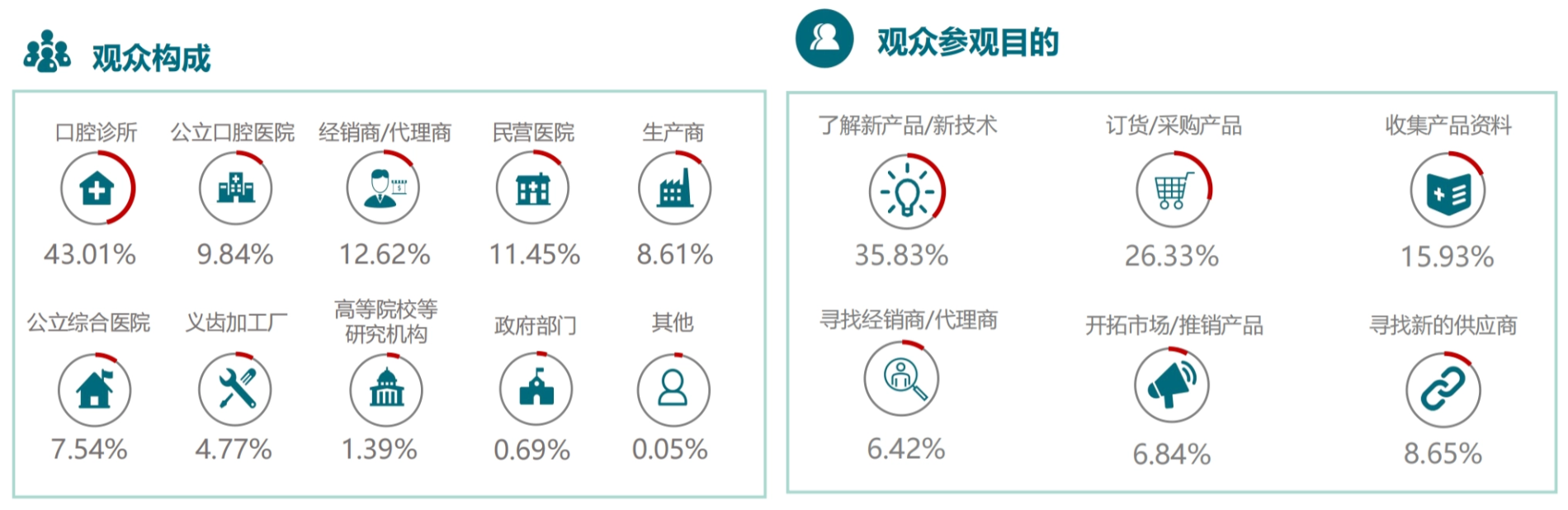 |
| Source: Sino-Dental® 2025 Post-Show Report |
The counter-intuitiveness of this lies in overturning a widespread expectation: the more advanced AI becomes, the lower the marginal value of people being on-site should be. What actually happens is the opposite—when AI takes over all "signals that can be verbalized," what remains for people on-site is only "the parts not yet verbalized." And the concentration of this part is at a higher level than in the past decade.
What are "signals not yet verbalized"? They come in at least three forms.
One is early signals: an instrument not yet on the procurement list, a new surgical technique not yet reported by any media, an operational method just privately mentioned by a few chain executives. Before these things are verbalized and publicly organized, they mainly exist in physical presence; by the time they are reported, the small group of sharp-sighted pioneers in the industry have already been acting for months.
Another is relationship density: a chain owner and a technical director of a material factory stand in front of the same booth, exchange three sentences each, and reach a judgment that would otherwise require months of business processes—this density cannot be replicated by remote meetings because it requires body language, contextual environment, and a trust anchor endowed by a "sense of presence."
There is also the decision window: at the same time, in the same physical space, representatives from production, research, academia, and application are all present; this "synchronous presence" only occurs a few times a year, opening a decision window that is difficult to open at other times.
In the past dental industry, this physical coordinate combining "early signals + relationship density + decision window"—these are all concrete forms of "first-hand input" in physical presence—can be given a name: on-site assets.
Its characteristic is expiration—miss it once, wait for the next time, and it cannot be fully reconstructed afterward.
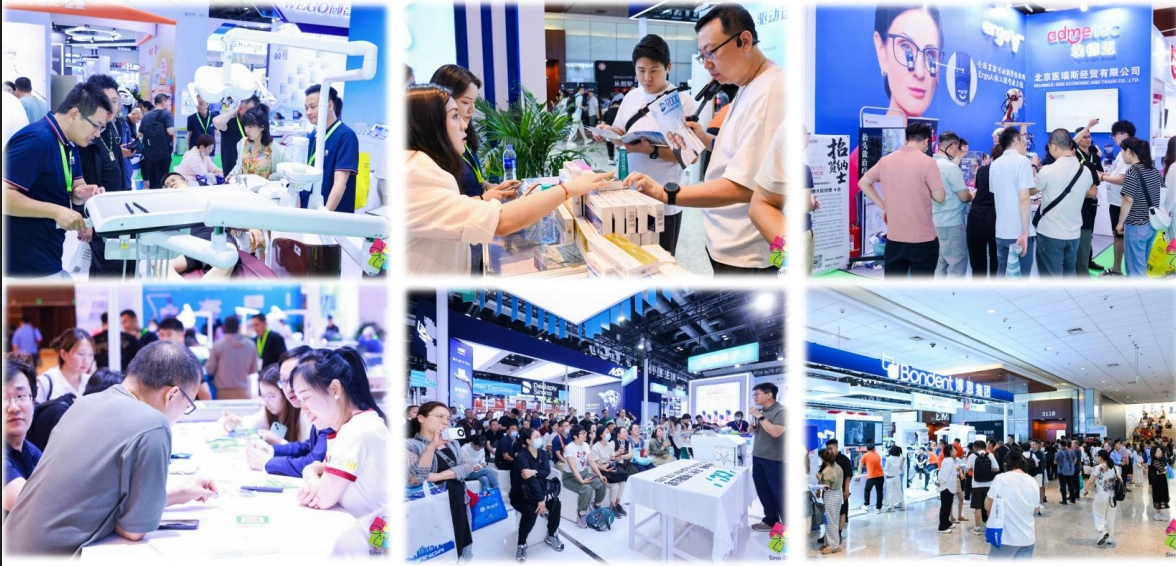 |
| 2025 Exhibition Site |
Why can't AI handle this "part not yet verbalized"? From another angle—AI's training corpus is encoded and verbalized; the human brain, on the contrary, makes judgments based on raw multimodal corpora: smell, body language, emotional density, unverbalized hesitation, a pause in someone's gaze in the corridor.
At least from an individual perspective, in the AI era, the intake of second-hand corpora is exploding, while the collection of first-hand corpora is declining. On-site assets are scarce because they supply the kind of corpora that AI cannot process but the human brain must absorb.
But on-site assets are not rain; they do not fall evenly on every attendee. They require the cognitive reserve of the receiver—at the same Q&A session, a first-time exhibitor and a veteran practitioner attending for the tenth time may have a considerable gap in the density of on-site assets they obtain. The difference between "attending every year" and "coming occasionally" is often greater than people's intuitive expectations.
In China's dental industry in 2026, which occasions can still stably produce on-site assets?
## 02 Three Types of "On-Site Assets"
This question needs to start with the differentiation of exhibition forms. Different forms of exhibitions produce different on-site assets. Exhibitions focusing on a specific category or region are good at producing "narrow and deep" assets—intense exchanges within sub-sectors, technical comparisons of a single category. Comprehensive national exhibitions are good at producing another form—"broad and dense" assets across categories, roles, and regions: juxtaposed perception of technical paths across different categories, synchronous presence of decision-makers from different positions. The two forms do not replace each other; together, they constitute the annual on-site coordinate system for practitioners in a mature industry.
Sino-Dental® 2026 Beijing International Dental Exhibition—50,000 square meters of exhibition space, nearly 900 enterprises, six national pavilions, over a hundred academic activities—is a complete sample of the "broad and dense" type, allowing us to break down three specific manifestations.
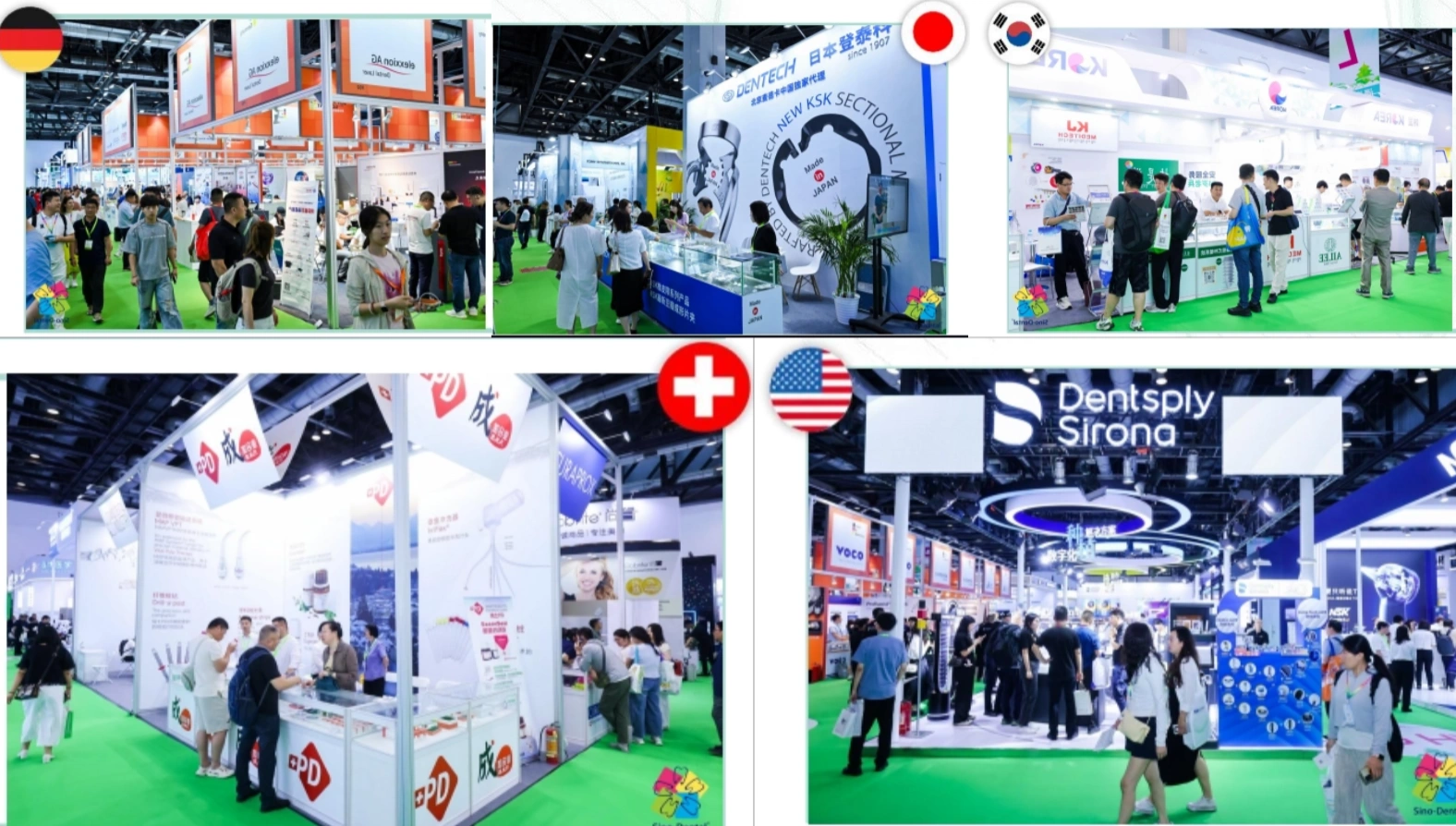 |
| 2025 National Pavilions from Five Countries |
The first type is cross-cultural narrative density. Six national pavilions stand side by side—Germany, Japan, South Korea, the USA, Switzerland, Russia—each bringing not just products, but six different narrative modes of the dental industry. A chain procurement director who walks through the six national pavilions in one morning gains not six product brochures—which AI can provide—but a juxtaposed perception of "six engineering solutions for the same clinical problem." This perception will repeatedly play a role in his supplier negotiations over the next year, but it cannot be replicated by any research report.
The second type, and the densest in this edition, is unencoded judgment. This edition concurrently hosts over a hundred activities: International Innovation Symposium—Pacific Top University Alliance Academic Seminar, International Dental Industry Exchange Conference, Swiss Day Series Activities, Japan Dental Day, Beijing Stomatology New Progress Report Conference, Hot Topics in Stomatology Special Lectures, Oral Medical Imaging Technology Academic Seminar, Digital Implantology Full Process Center Activity, the 9th Healthy China Dental Implant Restoration Debate, Oral Multidisciplinary Joint Seminar...
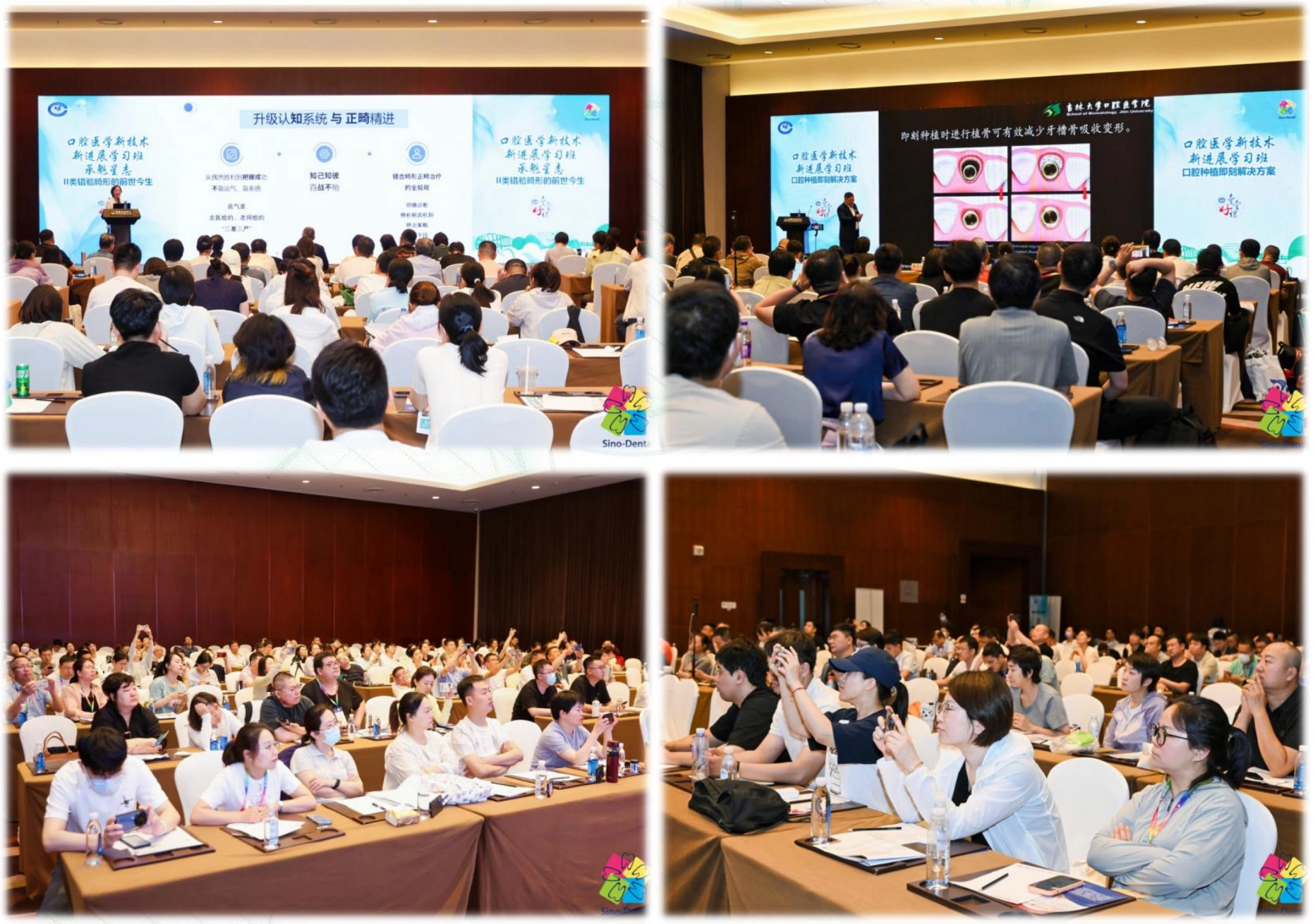 |
| 2025 Academic Event at the Exhibition |
But the truly valuable part is not in the PPTs of the main venue—those PPTs will become public materials within two weeks, and AI can directly capture them. The truly valuable part often appears in three invisible positions: the half-sentence the speaker drops after being pressed to the third question during the Q&A session; the clinical observation not yet written into any paper that two chief physicians casually mention over coffee cups during a break; the low-voiced remark a senior clinician makes to a colleague in the corridor, pointing at another booth, "This company wasn't doing it this way two years ago."
This kind of judgment with a temporal depth only circulates in physical presence. Experienced practitioners say you should listen to ten lectures, but the judgments you remember often come from two encounters in the corridor.
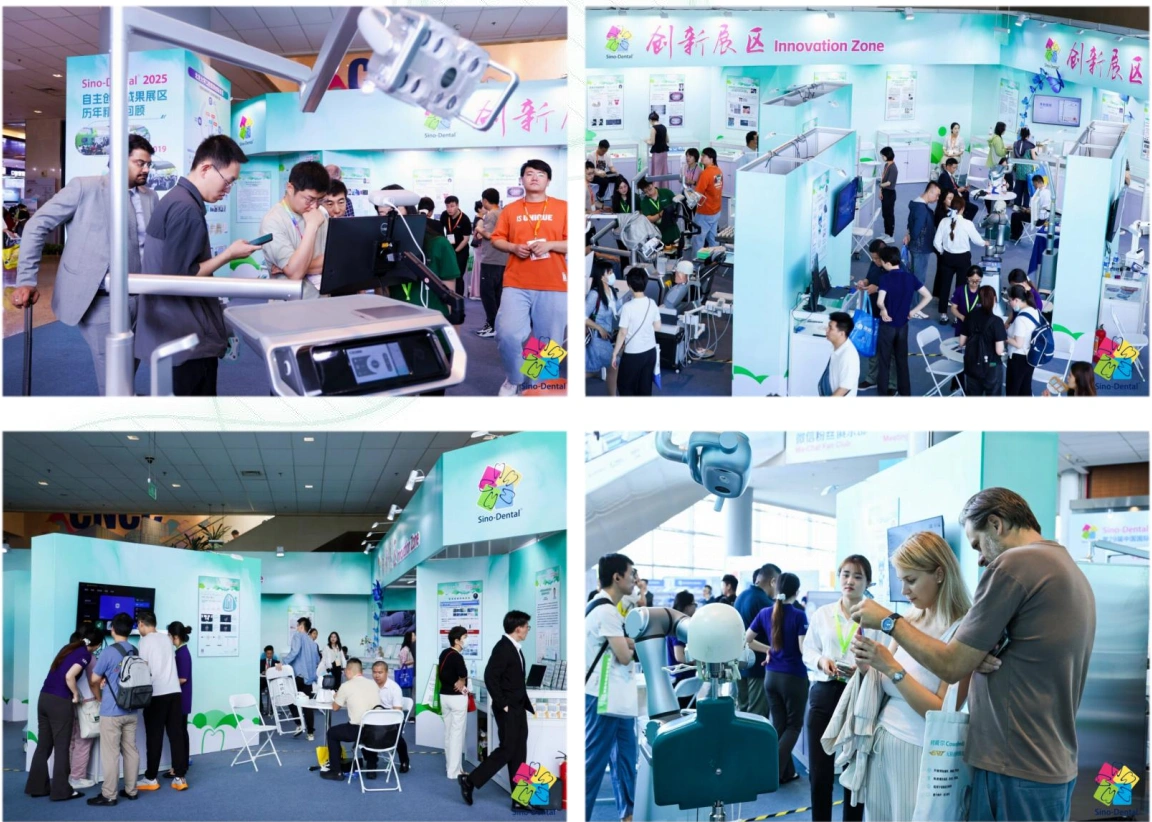 |
| 2025 Innovation Series Themed Exhibition Area |
The third type is the on-site docking of demand and achievements. The Innovation Series themed exhibition area, in collaboration with top domestic dental colleges, showcases technological innovation models in the dental field in recent years. The on-site asset form of this type of exhibition area is the most concrete—it directly places new materials, new instruments, and new surgical techniques that have not yet left the paper stage from university labs in front of industry players. The one-second hesitation of a chain owner picking up a prototype still in the engineering sample stage may be the starting point for months of subsequent business promotion. This moment of "the first handshake between the demand side and the achievement side in the same physical space" is irreplaceable by any remote docking of technology transfer offices.
These three types of samples are the three main forms of on-site assets at Sino-Dental® 2026. In addition, this exhibition has one more type of content that does not enter the analytical framework of "on-site assets" but is worth mentioning separately here—the "Mountain Daisy, Dreaming Together" Children's Oral Health Charity Project (Daisy Project), focusing on the oral health of children in rural China. This is not an asset for practitioners to capture, but a position the exhibition reserves for rural children within its most prosperous exhibition hall.
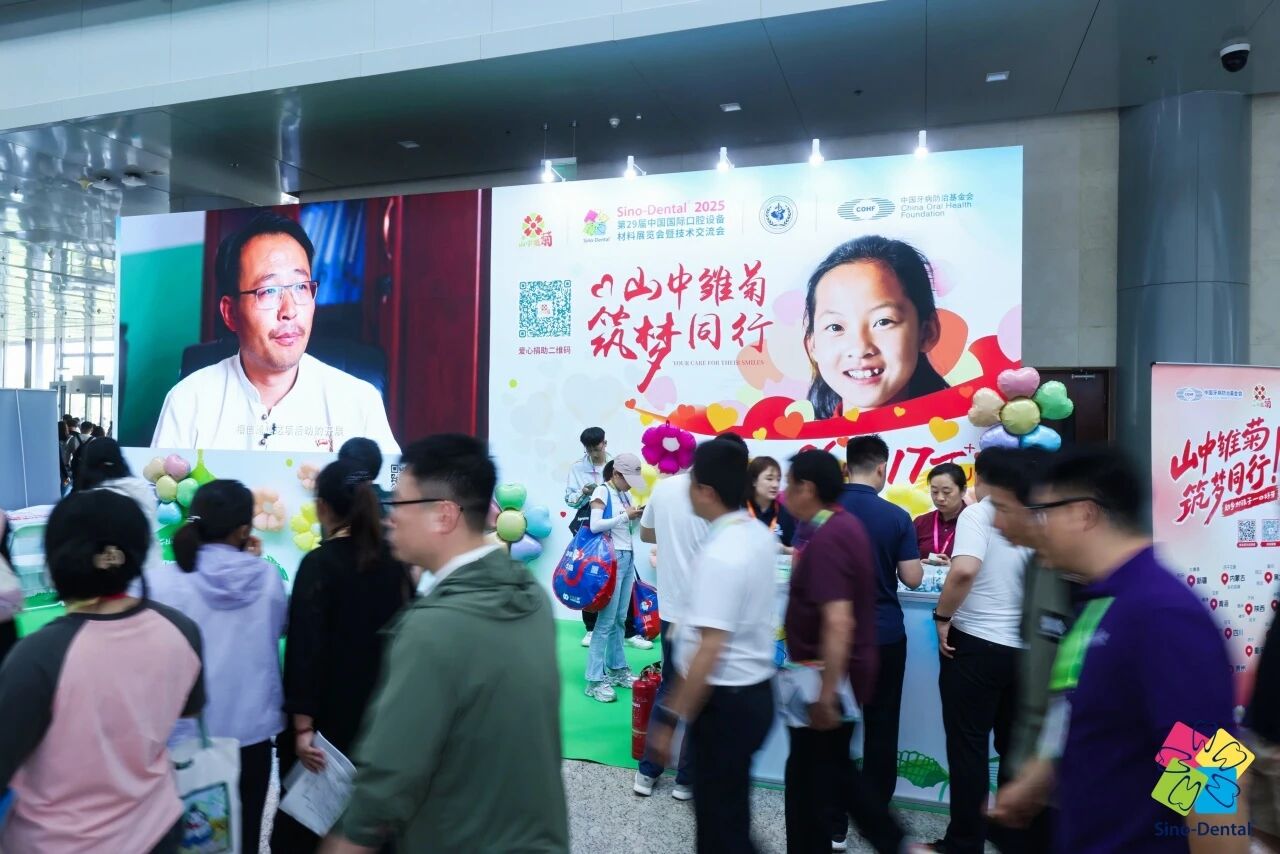 |
| 2025 "Mountain Daisy, Dream Building Together" Charity Project Site |
An industry return point that can stably produce on-site assets is usually a place where such long-cycle projects can take root. But there is a more structural question: why Sino-Dental®? Why does the concentration of this on-site asset stably gather every June, at the China National Convention Center, at this exhibition?
## 03 A Coordinate
In the view of many long-term observers of the exhibition industry, most industry exhibitions find it difficult to maintain a stable cycle for more than ten years. They either disappear due to the contraction of the industry itself, are replaced by the rise of competitive exhibitions, or lose stability due to changes in the organizer. But in every mature industry, there will always be one or two exhibitions that break out of this cycle—practitioners regard them as a physical coordinate to which they return annually in their careers. This kind of coordinate can be named an industry return point. Its formation requires two conditions to be met simultaneously: sufficiently broad sector coverage and a sufficiently stable academic axis.
The sector width must be broad enough. The function of an "industry return point" is to serve as the "intergenerational return of the entire industry," requiring the sector structure to simultaneously accommodate five roles: production, research, academia, application, and commerce—this width is not a standard for measuring the quality of an exhibition, but a structural threshold for the specific function of an "industry return point." The seven sectors of Sino-Dental®—exhibition, academia, innovation, public welfare, interaction, live streaming, and marketplace—constitute a structure where the five dimensions of production, research, academia, application, and commerce are simultaneously present. This width allows practitioners of different roles to find their place here, forming the physical foundation for the formation of an industry return point.
The academic axis must be sufficiently stable. The commercial part can fluctuate, but the academic axis cannot break. This edition of the exhibition is co-hosted by the International Exchange and Cooperation Center, National Health Commission of the P. R. China and the Chinese Stomatological Association (CSA), with academic support from Peking University School of Stomatology—the structure of three parties standing together on the host platform allows the academic axis to transcend the rise and fall of any single organization. This design of "shared responsibility among institutions" is the underlying stabilizer for traversing industry cycles.
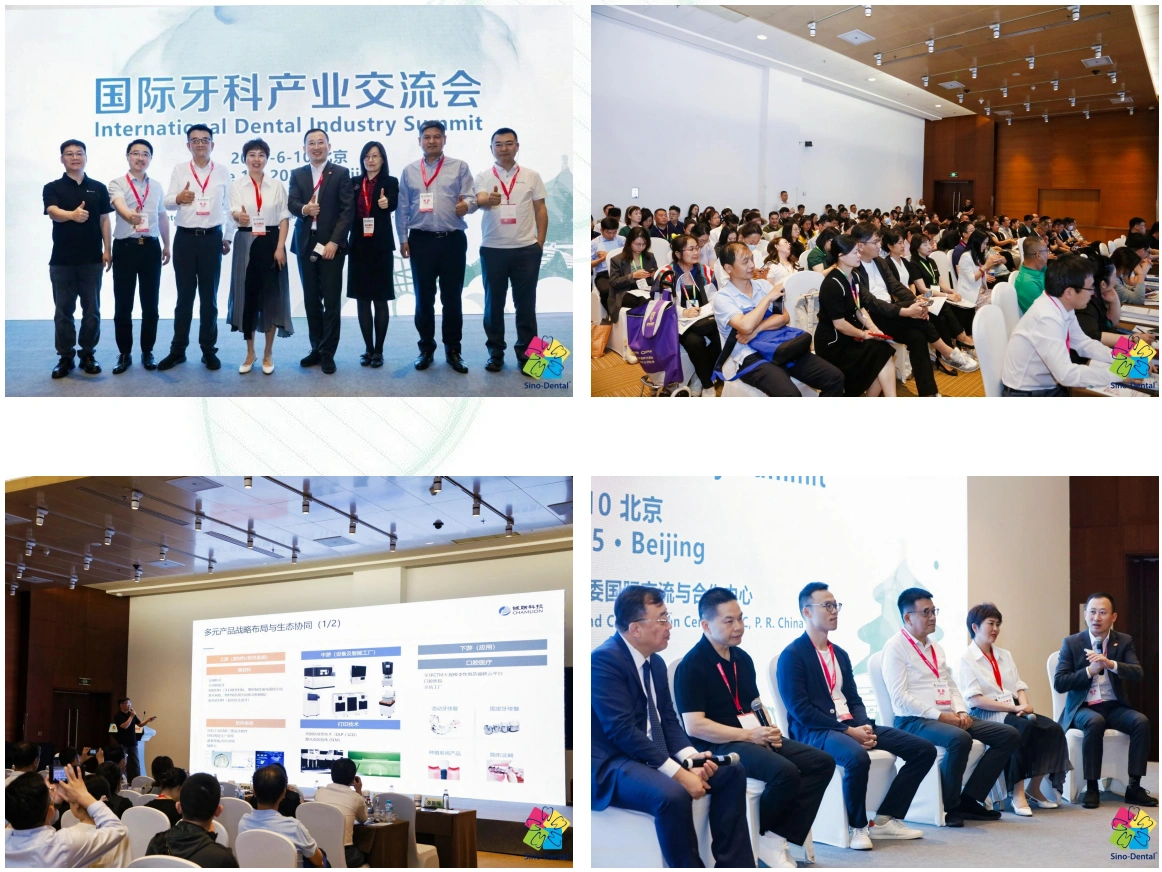 |
| 2025 Exhibition Event Site |
When an exhibition simultaneously meets the conditions of sector width and a stable academic axis, it will naturally traverse industry cycles and be regarded by generations of practitioners as an annual return point—this is the result, not the cause. Sino-Dental® reaching its 30th anniversary is a verification of this structure: a practitioner who first exhibited in 1996, if still in the industry this year, will most likely appear again at the China National Convention Center in June 2026. This is not an individual decision, but a tacit understanding between industry generations.
At least at the current stage, the number of exhibitions in China's dental industry that simultaneously meet these two conditions is countable. An "industry return point" is not a form "superior to other exhibitions," but a product of a specific structure—it, along with sub-category exhibitions, regional thematic exhibitions, and enterprise self-organized activities, each occupies an irreplaceable position in the practitioner's annual on-site coordinate system.
For a long-term practitioner, whether the four days from June 9 to 12, 2026, are worth a special trip to Beijing depends on one thing—whether the content of this edition can address the specific issues you are facing this year: the new material you are considering, the supplier negotiation you haven't decided on, the new clinical trend you want to confirm, the new surgical technique you are hesitating to promote. These issues are precisely the kind that should be answered at an industry return point.
# Afterword
Ultimately, it comes back to the boundary at the beginning—AI can optimize output, but it cannot replace first-hand input. This boundary is not a choice between "which is more important, exhibitions or AI," but a finer division of labor: leave what has been verbalized to AI; keep what has not yet been verbalized on-site.
"On-site assets" and "industry return points" do not describe the particularity of Sino-Dental® alone, but a more structural fact—in the AI era, the physical presence of the industry has not been eliminated; its function has been redefined: no longer a channel for obtaining information, but a scarce window for replenishing the human brain with first-hand input and multimodal corpora.
Of course, this is not a final conclusion. An early sign is that practitioners who have adjusted their annual fixed exhibitions from "optional" to "must-attend annually" are putting "first-hand input" back on their annual schedules.
And this boundary is ultimately drawn at the feet of each individual.
 |
Exhibition Dates: June 9-12, 2026
Exhibition Venue: China National Convention Center, Beijing (No. 7 Tianchen East Road, Chaoyang District, Beijing)
| About DGN:DentalGoodNews (DGN) is a trusted professional media platform dedicated to the global dental industry. We deliver in-depth coverage of corporate news, policy & regulation, investment & funding, and clinical frontiers — serving dental institutions, device manufacturers, investors, and industry researchers worldwide. Contact us: haodeya@dongxizixun.com |

;)