From Shelf to Clinic: Haleon and the “Professionalization” Test of Oral Care
 |
According to Frost & Sullivan data, the retail sales of China's oral care products market in 2025 were approximately RMB 77.9 billion, and are projected to climb to RMB 97.3 billion by 2030; toothpaste remains the core category, with retail sales of approximately RMB 56.6 billion. Beyond scale, what is more noteworthy is the shift in the logic of growth.
According to the "2025–2026 China Oral Care Industry Development White Paper," functional toothpaste (including whitening, stain removal, anti-halitosis, dental calculus removal, and other efficacy claims) has reached a market share of 57.8%, and over 72.3% of respondents stated they would proactively research ingredient lists, efficacy mechanisms, and authoritative testing reports. Toothpaste is moving from "basic cleaning" toward "precision efficacy."
This is a new era.
Competition in oral care is shifting from whose selling points are louder to who better understands clinical science and can produce evidence. The new era has also brought to the surface a set of genuine needs long obscured by marketing rhetoric: the unmet clinical needs of doctors and patients both inside and outside the clinic. When consumers are all starting to read ingredient lists, doctors' professional judgment becomes a higher-level endorsement. Anti-sensitivity, gum care, Dental Prosthesis care—every category of product ultimately faces the same questioner: the doctor. The next leg of a brand's journey is moving from the shelf to the clinic.
 |
| CDS 2025 Live |
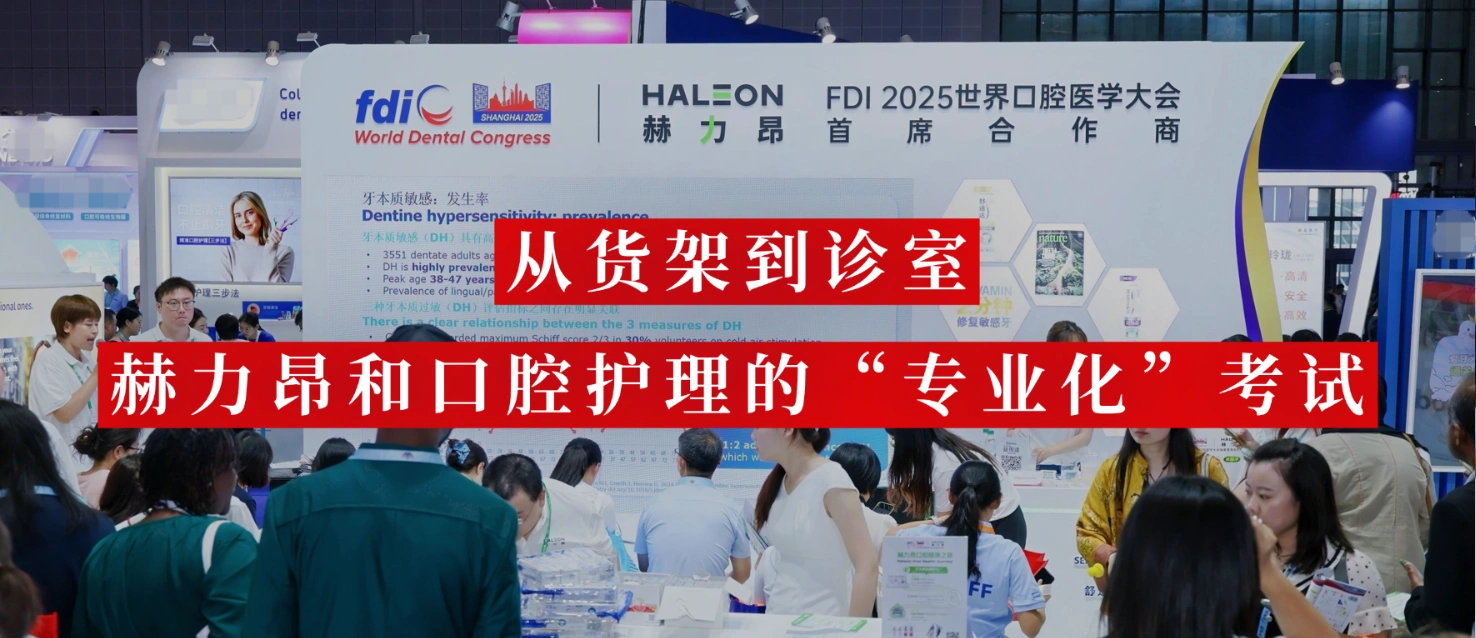
From October 13–16, 2026, CDS, co-hosted by the Chinese Stomatological Association (CSA) and Reed Sinopharm Exhibitions (RSE), will be held at the National Exhibition and Convention Center (Shanghai), and Haleon will be there with Sensodyne, parodontax, and Polident. For Haleon, this is a response to "new era · genuine needs": in a new era of evidence-based practice and professionalization, can it truly meet the real needs of doctors and patients? More important than whether it shows up is what evidence it can present before doctors.
01 The market has changed: toothpaste enters "evidence-based competition"
Growth continues, but the manner has changed. According to Frost & Sullivan market data and the "2025–2026 China Oral Care Industry Development White Paper," oral care is in a stage of iteration from "basic cleaning" toward "precision efficacy, smart hardware, and full-cycle health management." Toothpaste remains the fundamental base, with growth trending toward stability; what can release more elasticity are peripheral categories such as dental floss, mouthwash, and remineralization agents, as well as premiumization and professional efficacy within the toothpaste category itself.
Synchronized with consumption upgrading is tightening regulation. The national standards for toothpaste testing methods (5 items, effective from March 2026) and the "Toothpaste Classification Catalog" are being rolled out successively, and the "General Safety Technical Requirements for Toothpaste" has also entered the public consultation stage. Efficacy claims are being required to be more rigorous and more verifiable. The room for marketing rhetoric to skirt the edges is shrinking, and the weight of product strength and evidence is rising accordingly.
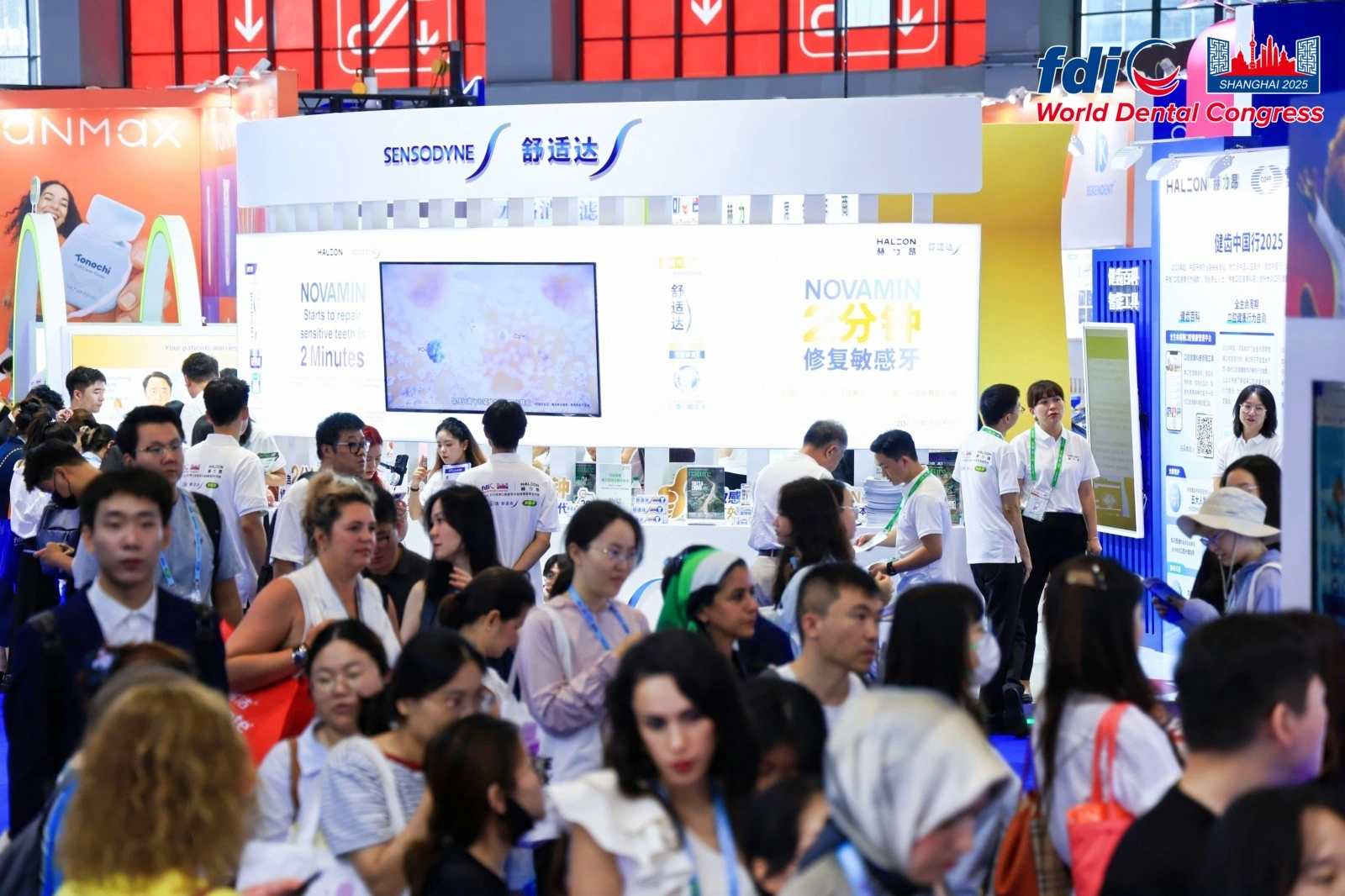
The landscape of subcategories better explains why Haleon must "speak professionally." According to a Southwest Securities research report, anti-sensitivity is a relatively niche market, with a scale of approximately RMB 2 billion; Sensodyne entered China in 2008, has深耕 the anti-sensitivity toothpaste field for years, and has become one of the leading brands in this field.
 |
| CDS 2025 Live |
Gum care is the largest subcategory of toothpaste, with a scale exceeding RMB 7 billion; parodontax was launched in mainland China in September 2024, directly competing with the national brand Yunnan Baiyao. Haleon has both a category to defend and a new territory to capture, and both cannot avoid a professional demographic that understands products better.
02 What doctors want: evidence, boundaries, and tools they can hand to patients
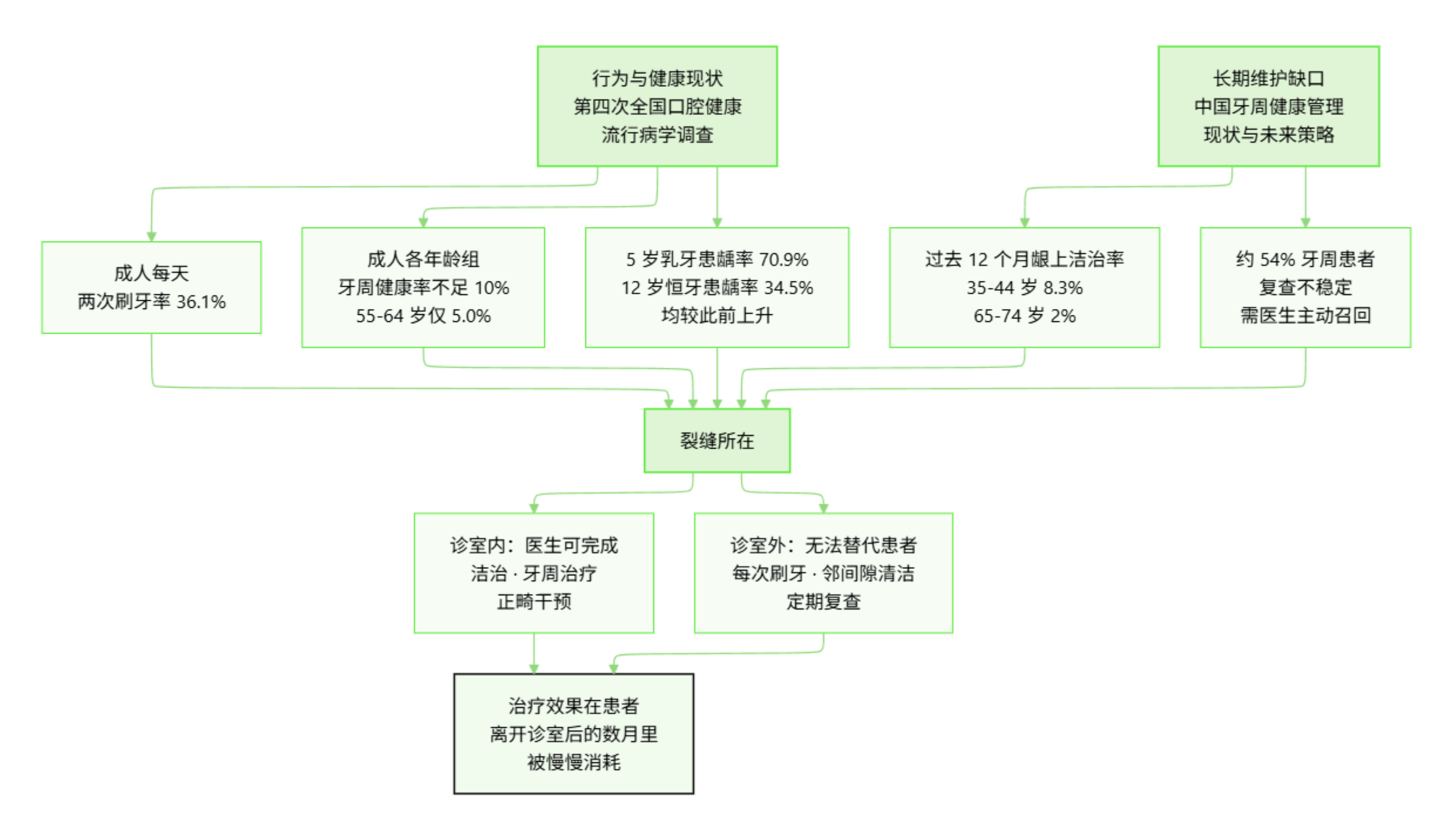
If the new era has changed the logic of competition, genuine needs are hidden in these numbers. According to the National Health and Family Planning Commission's "Fourth National Oral Health Epidemiological Survey," the rate of adults brushing twice daily in China is 36.1%; the periodontal health rate among all adult age groups (35–44, 55–64, and 65–74) is below 10%, with the 55–64 age group having a periodontal health rate of only 5.0%; the caries rate of deciduous teeth in 5-year-old children is 70.9%, and the caries rate of permanent teeth in 12-year-old children is 34.5%, both having increased compared to previous surveys.
Between these two sets of numbers lies a gap familiar to the clinical side: doctors can perform Supragingival Scaling, Periodontal treatment, or Orthodontic intervention, but they cannot substitute for every toothbrushing, interdental cleaning, and regular Follow-up visit after the patient goes home.
The "Current Status and Future Strategies of Periodontal Health Management in China" shows that the Supragingival Scaling rate in the past 12 months was only 8.3% for the 35–44 age group and only 2% for the 65–74 age group. The report also mentions that approximately 54% of periodontal patients are in an unstable Follow-up visit state, requiring proactive recall by doctors, and treatment effects are often slowly eroded in the months after patients leave the clinic. (The report does not specify the sample and survey scenario corresponding to this proportion; it is cited here only as an indication of "insufficient long-term maintenance" and should not be extrapolated as a national patient population proportion.)
 |
| Graphic by Good Teeth DataLab |
Doctors' requirements for oral care products go far beyond "whether it works." They need to know clearly: which stage the product corresponds to, what problem it solves, what treatment it cannot replace, how long before evaluation is needed, and whether patients can understand and adhere to it.
The expert consensus on "Strategies and Methods for Oral Health Management of Patients During Orthodontic Treatment" places products into a clinical pathway with strict preconditions: those with abnormal periodontal conditions must first undergo basic periodontal treatment to reduce the full-mouth Dental plaque positive rate to below 20%; only after 3 months of basic periodontal treatment (or 6 months after surgery), when the bleeding on probing positive rate drops below 15%, probing depth does not exceed 4mm, and conditions are stable, can Orthodontics be considered.
The consensus also provides ingredient-level recommendations: for anti-sensitivity, potassium nitrate, strontium acetate, stannous fluoride, and NovaMin (calcium sodium phosphosilicate) are recommended; for controlling Gingival Inflammation, chlorhexidine, sodium bicarbonate, and stannous fluoride are recommended, and it points out that continuous use of toothpaste containing 67% sodium bicarbonate can effectively improve the gingival index and plaque index in patients with gingivitis.
This language is crucial for brands: what doctors are willing to recommend is often a regimen—one with boundaries, that can be combined with dental floss/interdental brushes/Follow-up visits, and that triggers referral when symptoms appear. The product is the starting point; compliance is the ultimate outcome.
03 Returning to three clinical scenarios to examine product evidence
At the product level, doctors read differently from consumers: they first ask which clinical problem this product addresses, then examine whether the evidence holds up, and finally weigh where its boundaries lie. Sensodyne, parodontax, and Polident, which Haleon will bring to CDS, happen to fall into the three most common scenarios in oral clinical practice—Dentin sensitivity, daily control of Gingival Inflammation, and Dental Prosthesis maintenance after tooth loss.
Placing them back into these three scenarios is closer to how doctors make judgments than reciting ingredient lists one by one.
The first scenario is Dentin sensitivity. The mechanism of Sensodyne Repair & Protect toothpaste is NovaMin (calcium sodium phosphosilicate bioactive glass), which upon contact with saliva releases calcium and phosphorus ions, forming a hydroxyapatite-like mineralized layer on the exposed Dentin surface and within tubules, occluding tubules and reducing stimulus transmission.
Multiple published meta-analyses and Sensodyne official scientific materials show that NovaMin has accumulated relatively substantial clinical evidence in relieving Dentin sensitivity, and research on long-term use effects is also ongoing.
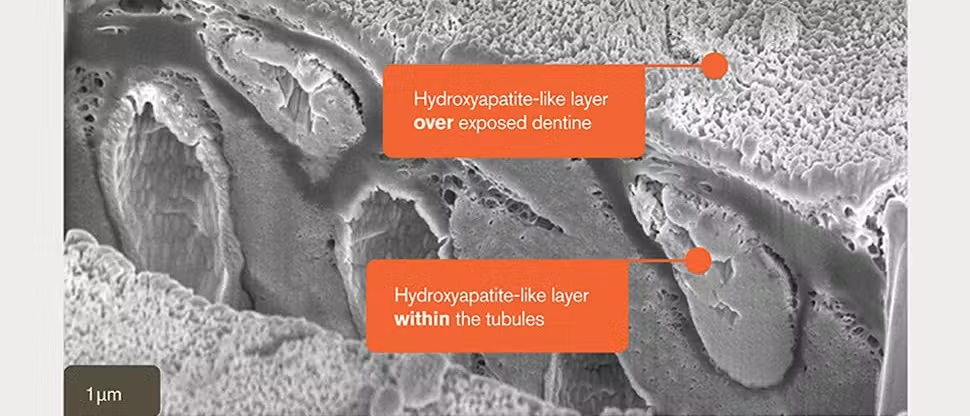 |
| NovaMin forms a robust hydroxyapatite-like layer on exposed dentin surfaces and within dentinal tubules |
The second scenario is daily control of Gingival Inflammation. Some parodontax toothpaste formulations contain 67% sodium bicarbonate. In vitro studies show that it can disrupt the viscous polysaccharide matrix of Dental plaque biofilms, reducing biofilm structural integrity, thereby helping physical removal of Dental plaque during brushing.
According to a six-month randomized controlled study published in the Journal of Clinical Dentistry in 2018, after brushing twice daily, the 67% sodium bicarbonate toothpaste group showed significant improvements in overall and interproximal plaque indicators compared to the 0% sodium bicarbonate control group.
If doctors inquire about study duration, control conditions, and usage frequency, these also need to be explained. In addition, parodontax has reduced saltiness and optimized foam texture to match Chinese consumer habits; such localization changes do not affect the core mechanism but should also be clearly communicated to the professional audience.
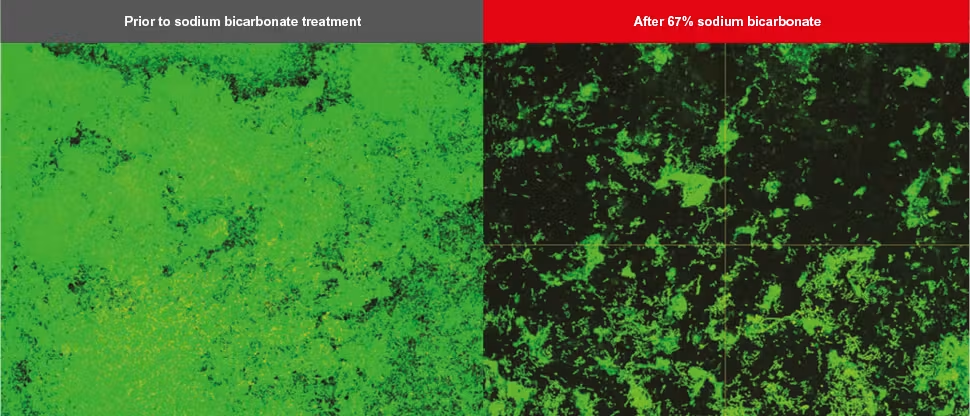 |
| Confocal laser scanning microscopy (CLSM) imaging of 14-day biofilm (green areas in the image) shows that 67% sodium bicarbonate treatment can remove most biofilm growth. |
The third scenario is often overlooked but has the most professional substance—Dental Prosthesis maintenance after tooth loss. A study co-authored by Beijing Chaoyang Hospital, Capital Medical University and Haleon (China), covering 3,568 elderly removable Dental Prosthesis wearers, shows that the number of missing teeth, type of Dental Prosthesis, wearing duration, and cleaning and maintenance methods are independent factors affecting wearers' oral health-related quality of life (OHIP); regular cleaners had significantly better quality of life than irregular cleaners, and auxiliary products such as denture adhesives can improve retention and comfort.
Placed against the epidemiological background that "only 18.3% of elderly aged 65–74 have complete dentition," Polident corresponds to a vast and genuine silver-haired need.
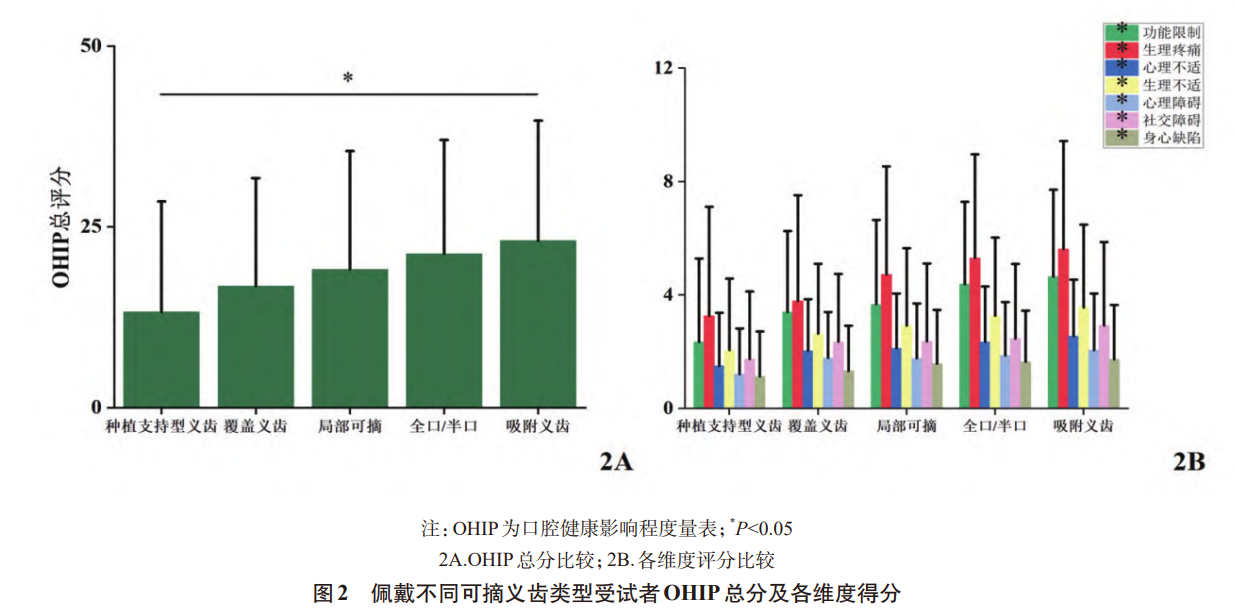 |
| Source: "Analysis of Oral Health-Related Quality of Life and Influencing Factors in 3,568 Elderly Removable Denture Wearers" |
The three scenarios ultimately point to the same thing: every product must undergo a "translation." It must clearly state whether the patient is before Periodontal treatment, after treatment, or in the Orthodontic period, how it should be combined with dental floss, interdental brushes, or a Follow-up visit plan, and which symptoms should prompt discontinuation of reliance on daily care and transition to further diagnosis and treatment. Translating evidence into usage that does not cross clinical boundaries may be the answer that consumer brands need to deliver at CDS.
04 Professionalization is not a slogan: the threshold lies in the "ecosystem," not the booth
Consumer brands entering professional channels is nothing new; what is difficult is long-term commitment. The professionalization approaches of some multinational oral care companies can serve as references: international brands typically深耕 professional channels globally over the long term, establish professional oral care departments, launch clinic-exclusive efficacy products, continuously operate dentist continuing education programs, and conduct clinical research with dental associations and universities; this approach to channel building has also gradually extended to the Chinese market, with cooperation with local academic institutions and public welfare foundations.
The logic behind this approach is clear: not only serve consumers' Oral / Dental health, but also support the professionals who truly safeguard oral health. The real threshold of professional channels is whether they can continuously provide evidence, education, and services.
Haleon's actions also point toward "professionalization + localization" advancing together. According to previous disclosures by Haleon, the company has announced an investment of approximately GBP 65 million (nearly RMB 600 million) to build a new production base in Lingang, Shanghai, planned for completion by the end of 2027, and plans to promote parodontax to 30 cities nationwide.
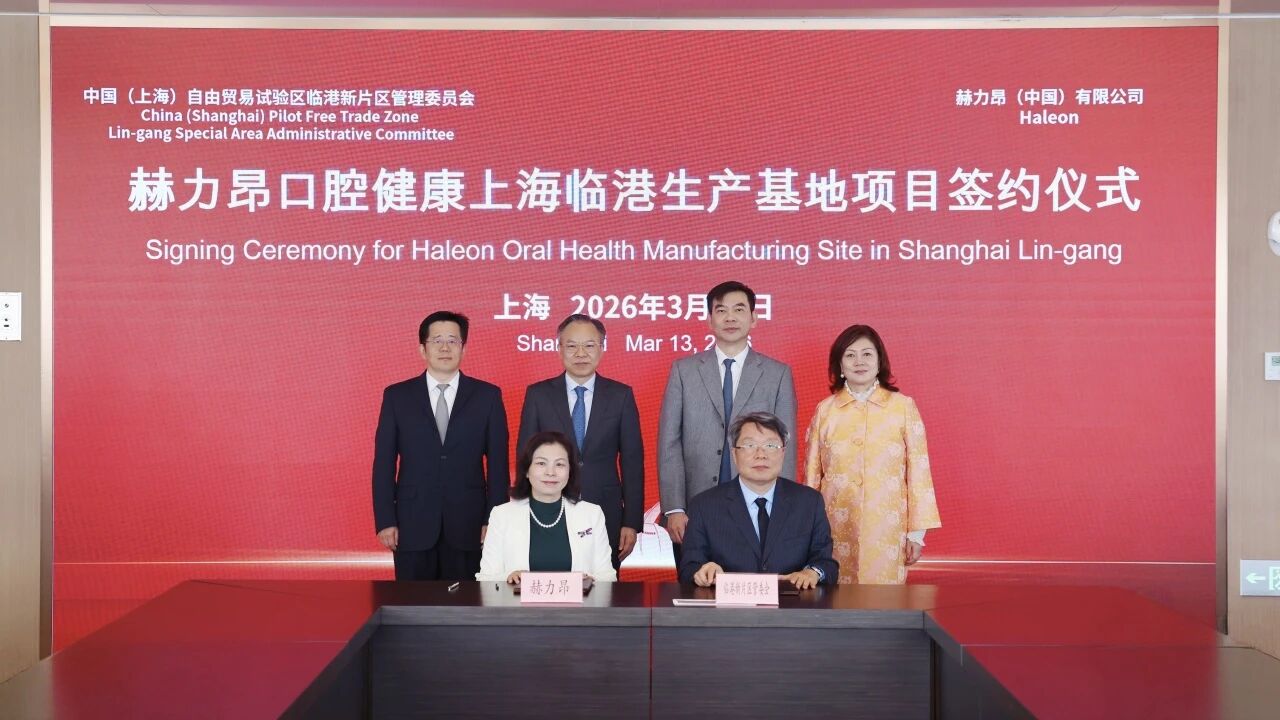 |
| The Lin-gang Special Area Administration and Haleon (China) Co., Ltd. signed a project investment agreement in Shanghai |
Haleon's Global CEO Brian McNamara and General Manager for Mainland China and Hong Kong Gu Haiying also stated in interviews that the oral health business in China has maintained a compound annual growth rate of approximately 15% over the past three years, and this expansion plan is expected to reach approximately 250 million consumers.
In terms of academic engagement, Haleon has participated in the China International Import Expo for consecutive years, setting up interactive experiment zones such as "Sensodyne 2-minute tubule occlusion" and "parodontax simulated Dental plaque removal," co-established a joint laboratory for pain science with Peking University Health Science Center, and released the "China Consumer Proactive Health Insight Report." These are all signals of its heavy investment in China's professional market.
05 What to watch at CDS 2026
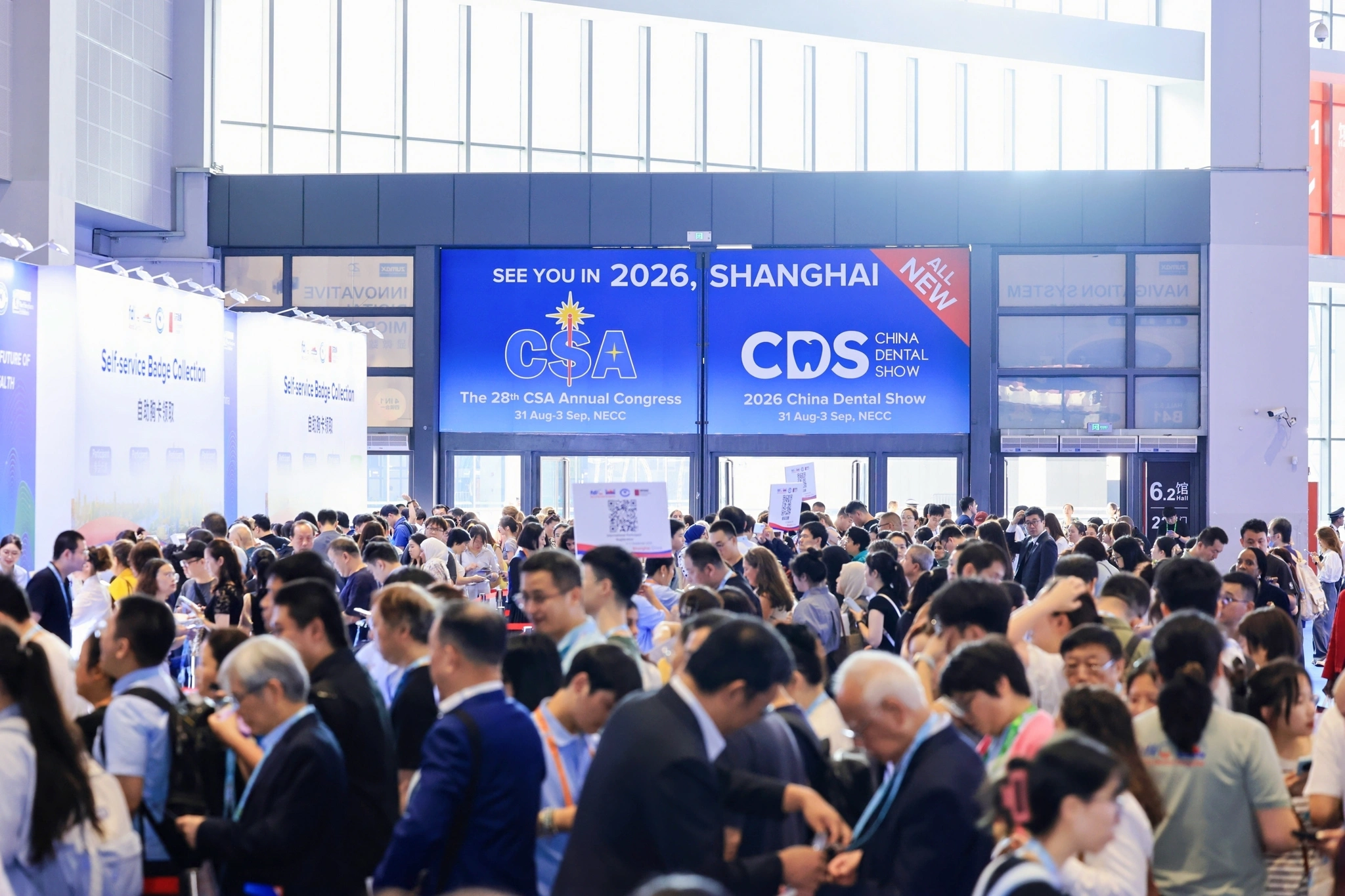
The positioning of CDS determines that it tests "professionalism." CDS 2026 is co-hosted by Reed Sinopharm Exhibitions (RSE) and the Chinese Stomatological Association (CSA), and coincides with the 30th anniversary of the founding of the Chinese Stomatological Association (CSA). The 28th Academic Conference on Stomatology of the Chinese Stomatological Association (CSA) and the 20th Academic Conference on Prosthodontics (Chinese Stomatological Association) of the Prosthodontics Branch of the Chinese Stomatological Association (CSA) will be held at the same venue; the event will also focus on hot topics such as "AI smart scenarios" and large-scale supply of Dental implant robot (DIR)... This allows CDS to serve as a dialogue platform where "academia and industry can see each other," rather than a trade show judged by transaction volume. For a consumer health brand, doctors here will press for evidence, and peers will compare mechanisms.
Haleon's known objectives for participating in 2026 are brand exposure and doctor channel expansion, with a focus on reaching public hospital dental department doctors and primary care clinic doctors. The two groups have different tasks: public hospitals are closer to research, academic consensus, and complex cases, while primary care doctors are closer to daily Follow-up visits, patient education, and behavioral maintenance. A mature professional strategy will ensure that evidence can obtain upstream endorsement, enter patients' lives along doctors' recommendations, and return to clinical feedback through Follow-up visits.
 |
Three things are worth observing at this year's CDS: first, whether Haleon will announce new local research or more complete data boundaries; second, whether it will bring tools that doctors can directly use for patient education; third, whether it will organize Sensodyne, parodontax, and Polident from a "product matrix" into a "care pathway" covering different populations and management stages. These actions are what will reveal the professional foundation the brand has accumulated over the past year.
Whether oral care products can enter the clinic depends on whether they can withstand doctors' scrutiny and translate evidence into daily routines that patients can sustain—booth size is secondary. The overarching theme of "new era · genuine needs" tests brands like Haleon: in a new era where oral care is entering evidence-based practice and professionalization, can they set aside shelf logic and respond to the most genuine clinical needs of doctors and patients? This is Haleon's exam question at CDS 2026, and also a microcosm of the oral care industry's "professionalization."
| About DGN:DentalGoodNews (DGN) is a trusted professional media platform dedicated to the global dental industry. We deliver in-depth coverage of corporate news, policy & regulation, investment & funding, and clinical frontiers — serving dental institutions, device manufacturers, investors, and industry researchers worldwide. Contact us: haodeya@dongxizixun.com |

;)