The U.S. House of Representatives Passes the “Oral Health Action Act,” Allocating $15 Million Annually to Alleviate Dental Talent Shortage.
 |
| Source: CONGRESS.GOV |
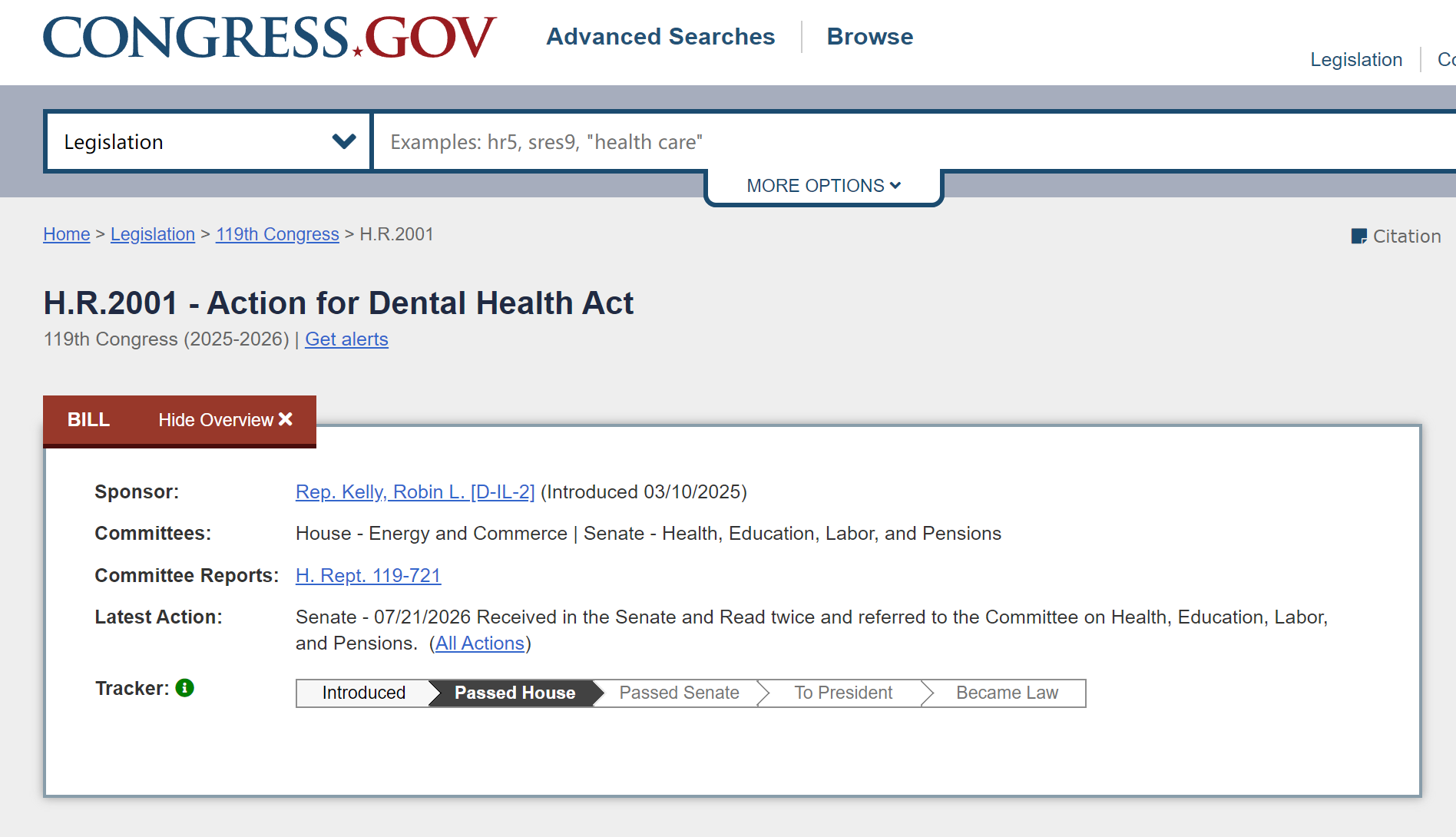
DentalGoodNews|On July 20, 2026, the U.S. House of Representatives passed the bipartisan "Action for Dental Health Act" (H.R. 2001). Senators Cory Booker and Ted Budd subsequently introduced a companion version in the Senate on July 23. The proposed legislation authorizes an annual appropriation of $15 million to continue the Health Resources and Services Administration (HRSA) grant program addressing dental workforce needs, supporting improved oral healthcare access in underserved areas.
According to the House-passed version, the program authorization would extend through fiscal year 2030; the Senate companion version introduced by Booker and Budd proposes extending the authorization through fiscal year 2031. The program will focus on supporting workforce training, recruitment, and retention in dental health professional shortage areas, as well as mobile dental services.
 |
| Source: American Dental Association |
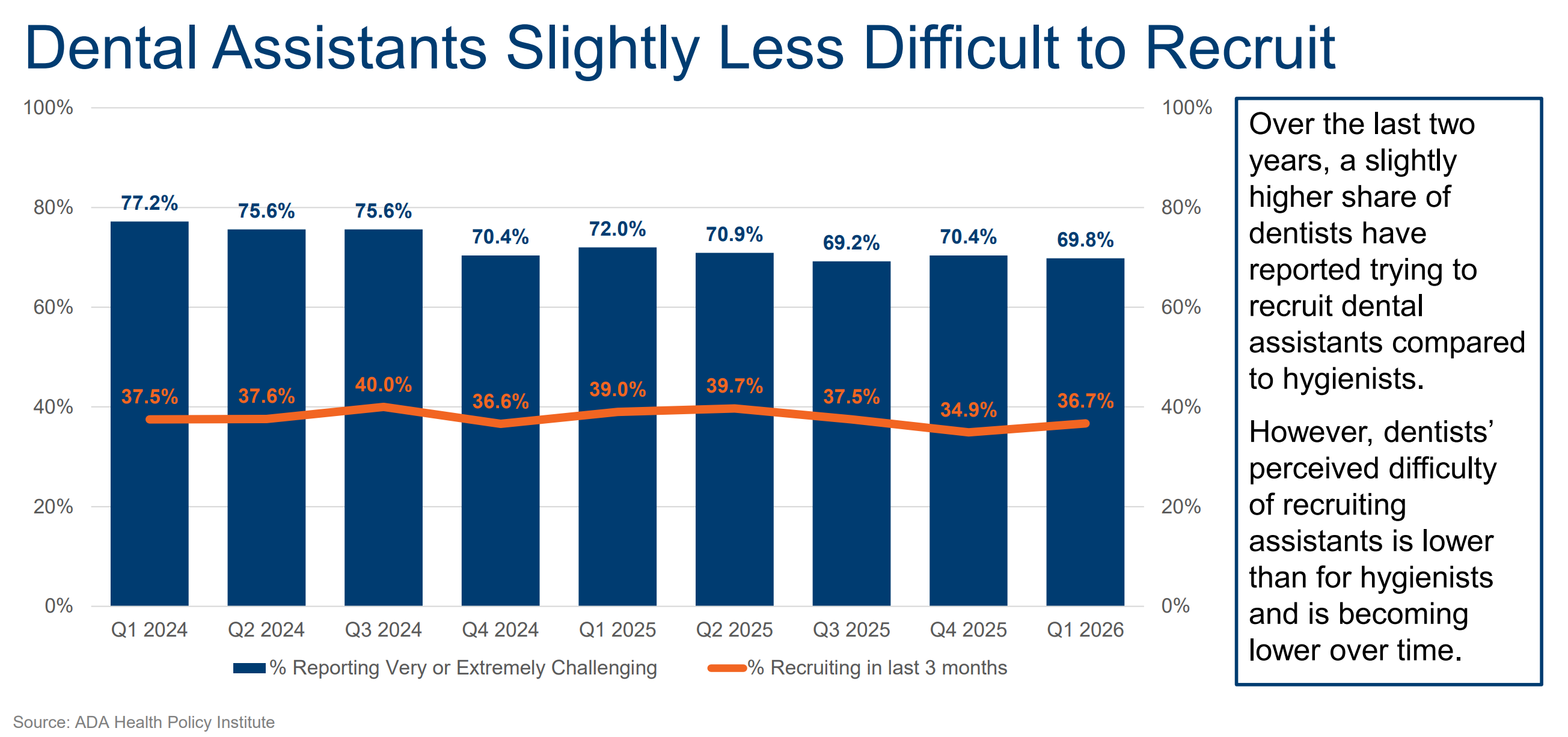
The American Dental Association (ADA) expressed support for the progress of this Act. Its first-quarter 2026 survey showed that over the past three months, 37.6% of surveyed dentists had recruited dental hygienists, and 36.7% had recruited dental assistants; among dentists with hiring needs, more than 90% found recruiting hygienists "extremely challenging," and approximately 70% found recruiting assistants similarly difficult. The ADA stated that dental team staffing shortages can affect clinics' ability to increase patient volume, further impacting patients' access to oral healthcare services.
According to previous reports by DGN (Leading Dental Industry Media, DGN), Mike Simpson and Robin Kelly jointly introduced H.R. 2001 in March 2025, seeking to reauthorize the support mechanisms of the "Action for Dental Health Act" signed into law in 2018. Simpson stated that the relevant programs could improve oral healthcare access in rural and underserved areas through mobile dental services and helping patients establish consistent, stable "dental homes."
Additionally, the grant programs covered by the Act can support oral health education and efforts to reduce geographic, linguistic, and other barriers to care. ADA President Dr. Richard Rosato stated that everyone should have access to oral healthcare services, and this Act helps expand access to care for underserved populations.
Currently, H.R. 2001 has passed the House; the subsequent review process for the Senate companion version remains pending.
| About DGN:DentalGoodNews (DGN) is a trusted professional media platform dedicated to the global dental industry. We deliver in-depth coverage of corporate news, policy & regulation, investment & funding, and clinical frontiers — serving dental institutions, device manufacturers, investors, and industry researchers worldwide. Contact us: haodeya@dongxizixun.com |

;)