New Study: Detecting Salivary Inflammatory Protein Combinations May Distinguish Dental Caries Lesions from Healthy Individuals
 |
| Image source: Ultrasensitive multiplex salivary cytokine profiling reveals distinct immune signatures in dental caries |
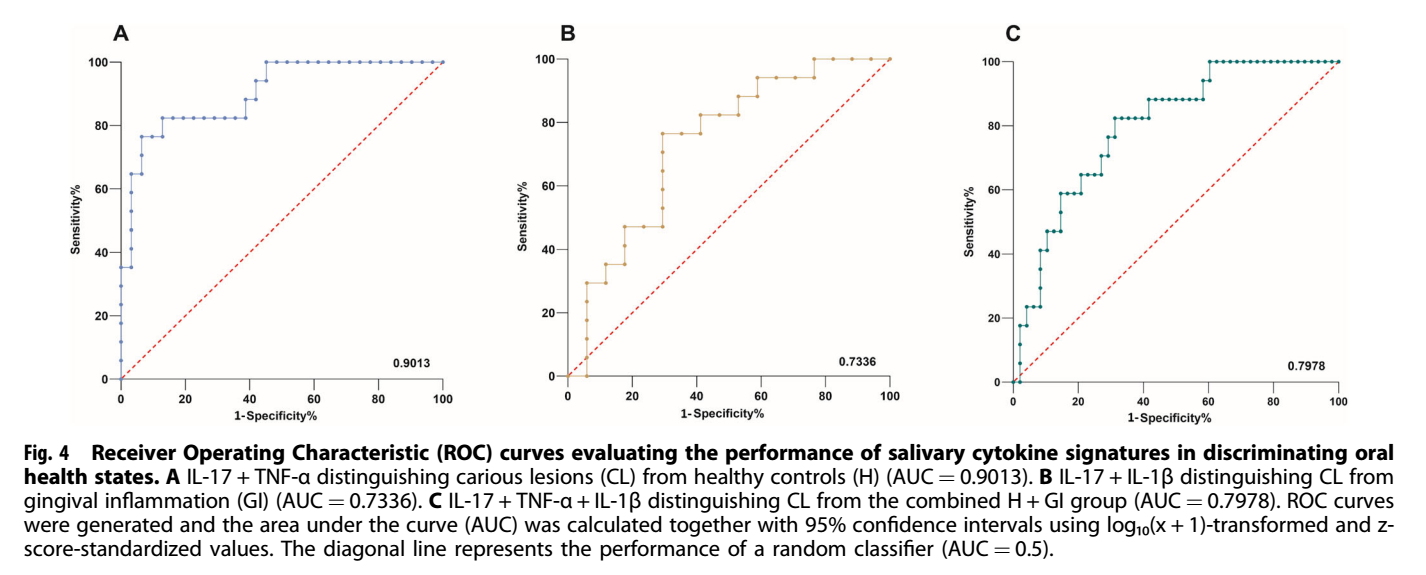
DentalGoodNews|On August 29, 2026, "BDJ Open" published a case-control pilot study. The research team utilized ultra-sensitive S-PLEX technology to detect 9 inflammation-related cytokines in saliva, exploring the feasibility of salivary immune marker combinations in distinguishing dental caries lesions, healthy controls, and non-carious gingival inflammation. Results showed that the TNF-α and IL-17 combination performed best in distinguishing caries lesions from healthy controls, with an AUC of 0.901; while the ability to distinguish caries lesions from gingival inflammation was relatively limited, with the IL-1β and IL-17 combination achieving an AUC of 0.737. The research team emphasized that this is a proof-of-concept study, and the relevant results still require further validation in larger-scale, longitudinal studies, and are not yet sufficient to support clinical diagnostic applications.
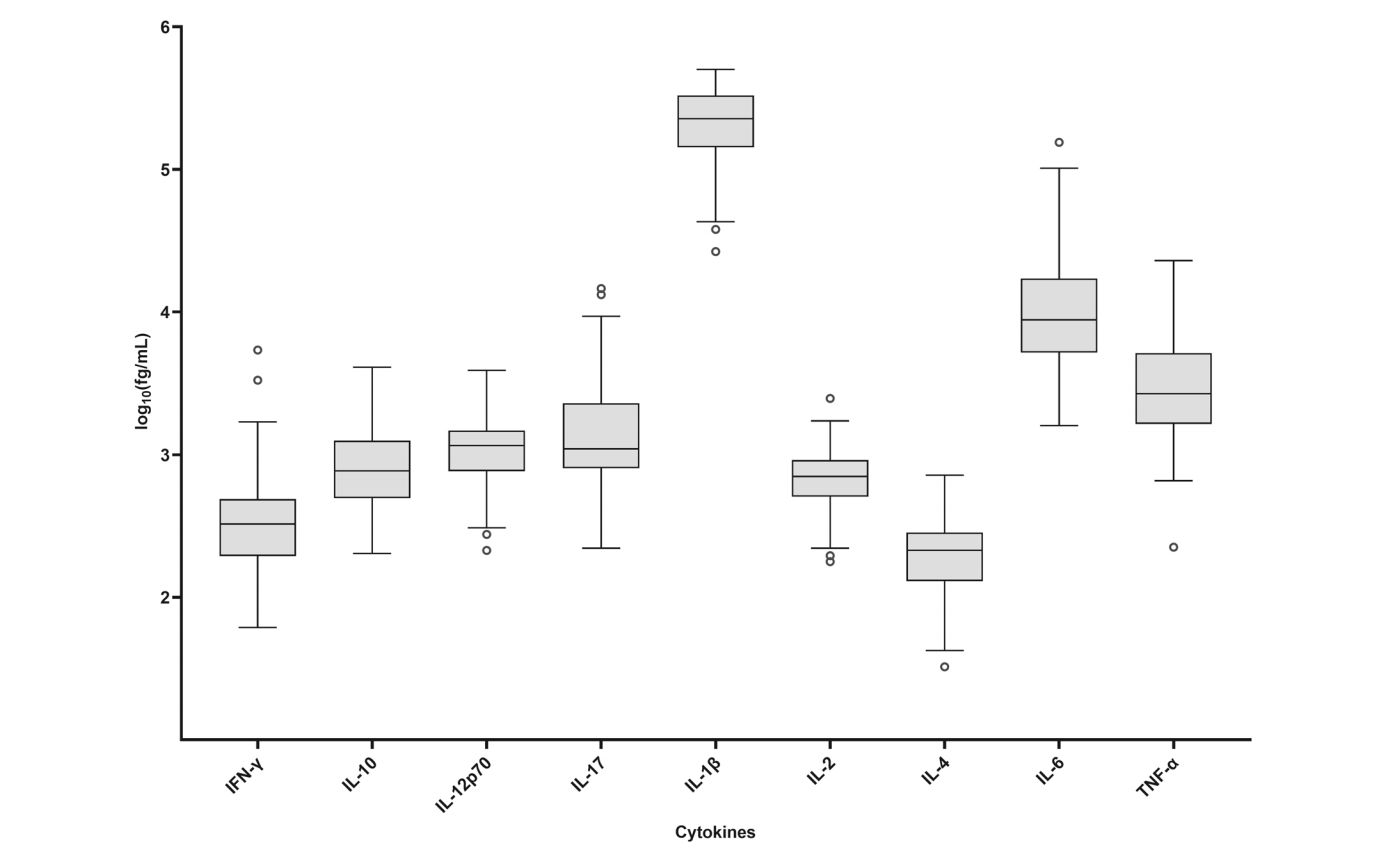
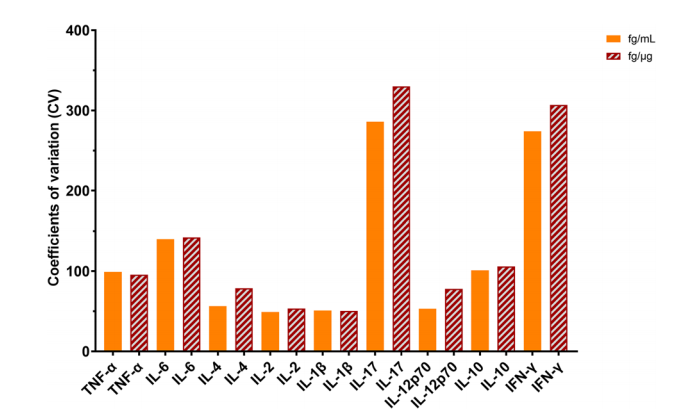
The study was conducted by teams from Université Côte d'Azur and CHU Nice in France. The research employed S-PLEX ultra-sensitive electrochemiluminescence multiplex immunoassay technology to quantify 9 cytokines in saliva: IL-1β, TNF-α, IL-6, IL-4, IL-10, IL-12p70, IFN-γ, IL-17, and IL-2. According to the paper, this technology achieves femtogram-level (fg/mL) detection sensitivity, with detection limits up to 1000 times lower than traditional immunoassay methods, making it suitable for detecting cytokines present at low concentrations in saliva.
 |
| Image source: Ultrasensitive multiplex salivary cytokine profiling reveals distinct immune signatures in dental caries |
Study data were derived from the ongoing ORASPORT cohort. Initially, 79 healthy young adults aged 18-30 were enrolled, of whom 14 had concurrent caries lesions and gingival inflammation. These individuals were excluded to maintain clear oral health status across groups and reduce confounding factors, leaving 65 participants for cytokine combination analysis.
Analysis showed that the TNF-α and IL-17 combination demonstrated the strongest ability to distinguish caries lesions from healthy controls, with an AUC of 0.901 (p<0.001); in the comparison between caries lesions and gingival inflammation, the TNF-α and IL-17 combination showed limited discriminative ability, while the IL-1β and IL-17 combination exhibited moderate discriminative capacity, with an AUC of 0.737 (p=0.004). The study also found that adding more cytokines did not yield significant performance improvements.
 |
| Image source: Ultrasensitive multiplex salivary cytokine profiling reveals distinct immune signatures in dental caries |
The research team noted that this study was not designed to evaluate diagnostic performance across different caries stages or lesion depths, but rather to examine whether salivary inflammatory factor profiles could distinguish different oral health statuses at the population level. Therefore, the results are more suitable as a foundation for further research on salivary host response biomarkers, rather than being directly interpreted as having established a saliva-based detection method ready for clinical diagnosis of dental caries.
The study also has limitations including limited sample size, concentrated age range of participants, and cross-sectional design. Additionally, no radiographic examination was performed, nor was complete periodontal probing conducted, which may result in missed caries lesion detection or imprecise classification of gingival inflammation. The paper suggests that the currently identified cytokine combinations should be regarded as preliminary results for generating research hypotheses, and their clinical application value can only be determined after further validation in larger-scale, independent cohorts and longitudinal studies.
| About DGN:DentalGoodNews (DGN) is a trusted professional media platform dedicated to the global dental industry. We deliver in-depth coverage of corporate news, policy & regulation, investment & funding, and clinical frontiers — serving dental institutions, device manufacturers, investors, and industry researchers worldwide. Contact us: haodeya@dongxizixun.com |

;)