Dental compound K21 can promote mitophagy, potentially offering new insights for treating hard-to-heal wounds.
 |
| Image source: Drug-induced metabolic remodeling promotes antimicrobial activity in macrophages and extends longevity in vivo |
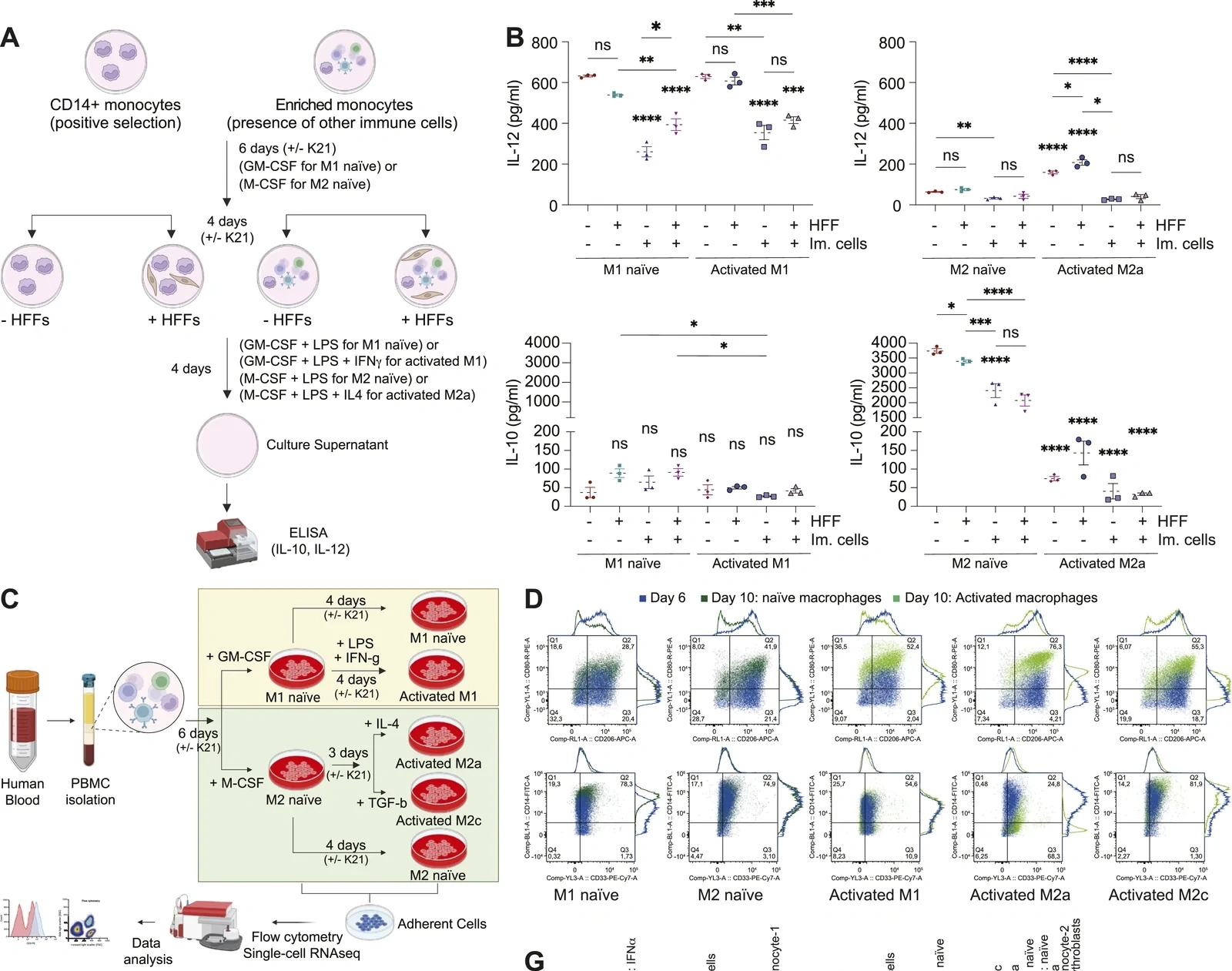
DentalGoodNews|Recently, a study published in Life Science Alliance showed that K21 (a quaternary ammonium silane), an organic compound already used in dentistry, can enhance the ability of human-derived macrophages to control bacterial infection and improve mitochondrial quality by promoting mitophagy. The study also observed in a Caenorhabditis elegans model that K21 induces mitophagy and extends lifespan. The results provide a new research direction for exploring the potential applications of K21 in areas such as hard-to-heal wounds, but there are currently no human wound treatment data.
The study was co-led by Christopher Rongo, Professor of Genetics at Rutgers University, and Bhupesh K. Prusty of the University of Würzburg in Germany and Riga Stradins University in Latvia. Using human monocyte-derived macrophages in experiments, the researchers found that after K21 pretreatment, when macrophages were infected with Enterococcus faecalis, the bacterial infection burden decreased, and the phagocytic and bacterial clearance capacity of macrophages was enhanced. Among these, this effect was particularly evident in a type of M2 macrophages usually associated with tissue repair.
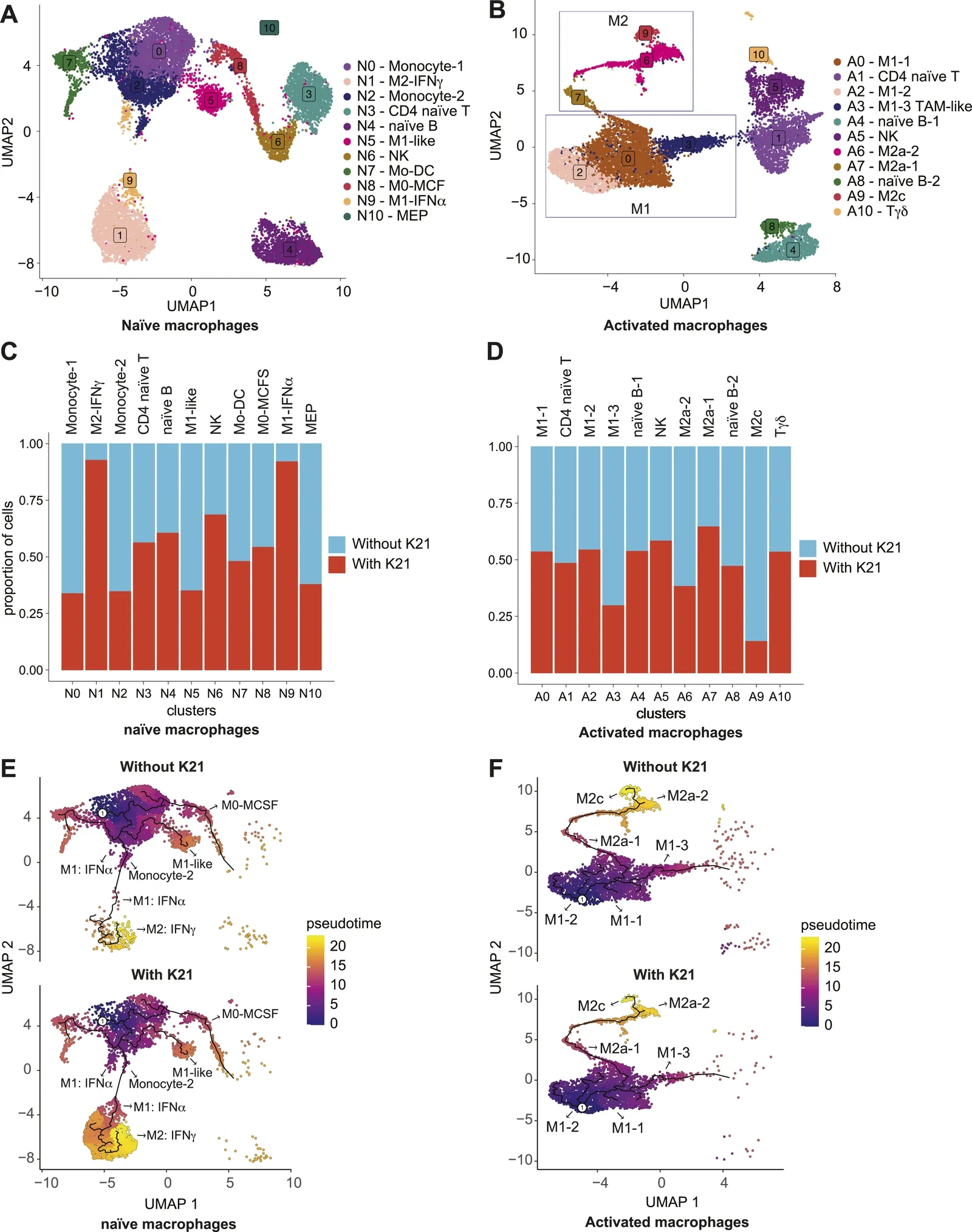
The study further found that K21 can alter the metabolism and gene expression of macrophages and promote mitochondrial fission and mitophagy. The researchers believe that this mitochondrial quality control process may be involved in enhancing the antibacterial capacity of macrophages. However, the study did not prove that K21 can directly drive macrophages to shift from an anti-infection state to a tissue repair state; its specific impact on the wound repair process still requires further research.
 |
| Image source: Drug-induced metabolic remodeling promotes antimicrobial activity in macrophages and extends longevity in vivo |
K21 has previously been used in dental antibacterial products. Previous studies have shown that the C₁₈H₃₇ lipophilic alkyl chain in its molecule can enter bacterial cell membranes and disrupt membrane structure, thereby producing a "contact killing" effect. In 2020, FiteBac® Antimicrobial Cavity Cleanser containing 2% K21 obtained U.S. Food and Drug Administration (FDA) 510(k) clearance (K200614); FDA documents show that the product is used for cleaning and wetting/rewetting after cavity preparation and before sealing dentinal tubules.
In this study, the researchers observed in the Caenorhabditis elegans model that K21 can promote mitochondrial fission and mitophagy, while no obvious effects on the growth, development, or reproduction of the nematodes were found. The study also found that nematodes receiving a single K21 treatment during early development had a lifespan extended by about 36%. However, the researchers said that although this result can support the potential link between mitochondrial quality control and lifespan, it does not mean that K21 has the effect of extending human lifespan.
At present, the study is still at the experimental stage, and no clinical research has yet been conducted on K21 for human wound treatment. Christopher Rongo said that K21 is currently used in dental cleansers that have obtained FDA 510(k) clearance, but it has not yet been approved for wound treatment; its safety and efficacy still need to be verified through further research.
The study was partially funded by the National Institutes of Health (NIH) and received research grant support from FiteBac.
| About DGN:DentalGoodNews (DGN) is a trusted professional media platform dedicated to the global dental industry. We deliver in-depth coverage of corporate news, policy & regulation, investment & funding, and clinical frontiers — serving dental institutions, device manufacturers, investors, and industry researchers worldwide. Contact us: haodeya@dongxizixun.com |

;)