The Dental Service Organization (DSO) Association of the United States has filed a lawsuit against the Colorado Dental Board, seeking to overturn new regulations that restrict DSO ownership of dental…
 |
| Source: American Dental Support Organization Association |
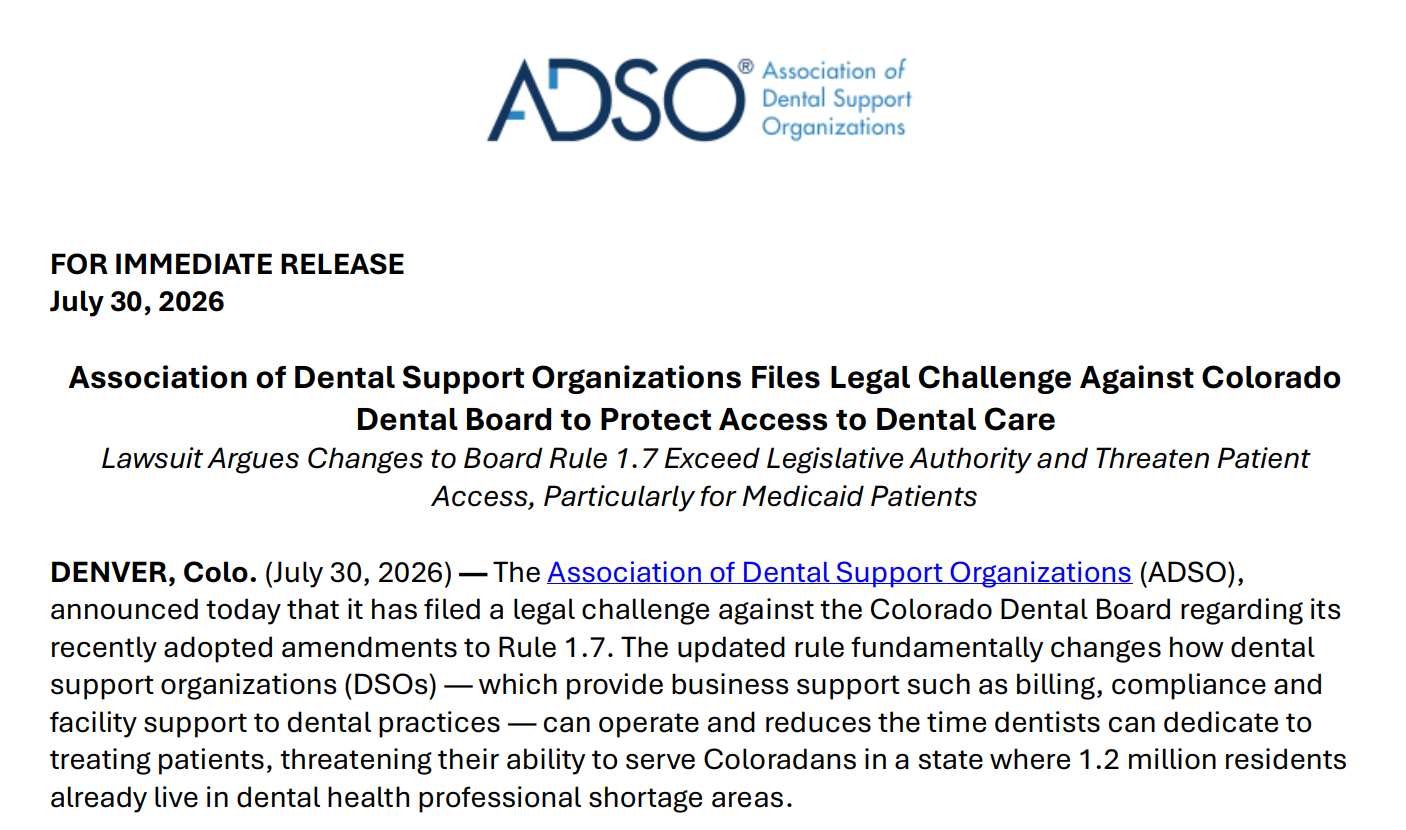
DentalGoodNews|On July 30, 2026, local time, the Association of Dental Support Organizations (ADSO) announced that it has filed a lawsuit challenging the recent Rule 1.7 regulatory amendments adopted by the Colorado Dental Board, seeking to have the relevant rule provisions overturned. ADSO argues that the new regulations impose additional restrictions on the operating model of Dental Service Organizations (DSOs), which may affect patients' access to oral care services, particularly those covered by Medicaid.
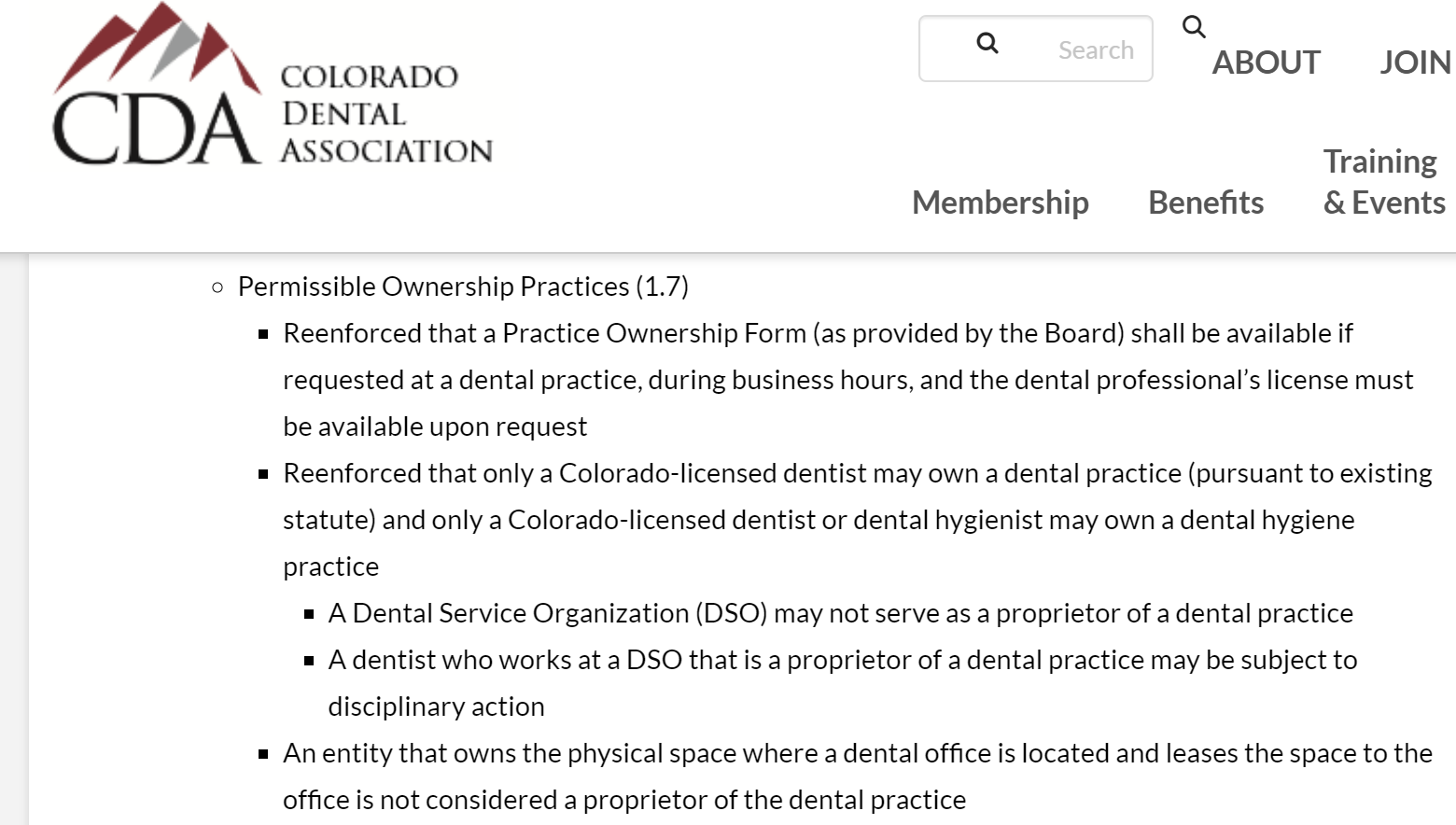
The core of the dispute lies in Rule 1.7, adopted by the Colorado Dental Board, which further clarifies the qualification requirements for dental practice proprietors. Under this rule, ownership and operational control of dental practices must be held by qualified licensed dental professionals, and DSOs are not permitted to hold relevant interests as practice proprietors. ADSO contends that this provision alters the long-standing model in which DSOs participate in dental service delivery through management, operations, and resource support.
 |
| Source: Colorado State Board of Dental Examiners |
Beyond restrictions on proprietor qualifications, Rule 1.7 also imposes limitations on business arrangements between DSOs and supported practices, including requirements related to practice control and allocation of operational resources, and requires relevant entities to provide financial and business records to regulatory authorities. The Colorado Dental Board stated that the measure is intended to ensure independence in clinical decision-making and to prevent non-practicing entities from influencing dentists' professional judgment. Licensed dentists operating under DSO support models that do not comply with the rules may face disciplinary action from the Board.
ADSO CEO Andrew Smith stated that the Dental Board exceeded its regulatory authority in formulating this rule, which may affect Colorado patients' access to oral care services, particularly in communities requiring greater accessibility and affordability. He believes that DSOs can help improve service efficiency and reduce costs through operational support and technology investment, while the new rule may increase healthcare costs and weaken service coverage in certain areas.
Furthermore, ADSO noted that Medicaid patients have long faced challenges in accessing oral healthcare services, with some DSO-supported practices serving low-income communities. The organization believes that the new rule may lead some practices to adjust their service scale due to increased compliance requirements and operational costs, thereby affecting the relevant patient populations.
The Rule 1.7 amendment stems from the implementation of Colorado's SB25-194, the "Sunset Dental Practice Act." This legislation extended the Colorado Dental Board's regulatory authorization through 2034 and updated provisions related to practice definitions, regulatory scope, and disciplinary procedures. Although SB25-194 does not directly impose DSO ownership restrictions, Rule 1.7, adopted by the Colorado Dental Board under its delegated authority, further constrains the ways in which DSOs may participate in dental practice operations.
In recent years, the U.S. dental DSO industry has continued to undergo expansion and compliance adjustments. According to previous reports by DENTALGOODNEWS (Leading Dental Industry Media, DGN), the U.S. DSO M&A market completed over 175 practice transactions in the first half of 2026, with industry consolidation trends continuing to advance.
Currently, ADSO stated that it has requested the court to suspend enforcement of the relevant rule provisions during the litigation process, in order to avoid what it believes could be an impact on service networks.
| About DGN:DentalGoodNews (DGN) is a trusted professional media platform dedicated to the global dental industry. We deliver in-depth coverage of corporate news, policy & regulation, investment & funding, and clinical frontiers — serving dental institutions, device manufacturers, investors, and industry researchers worldwide. Contact us: haodeya@dongxizixun.com |

;)