New Study: Dental Pulp Stem Cell Secretome May Reduce Cerebral Infarct Volume and Aid Stroke Recovery
 |
| Source: Chonnam National University, South Korea |
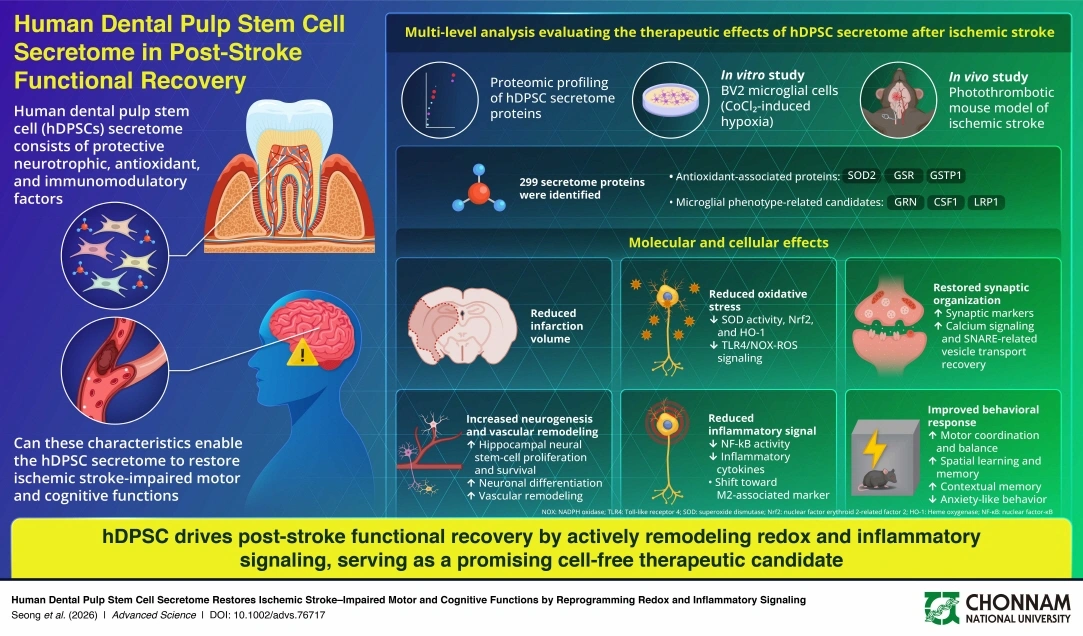
DentalGoodNews|Recently, "Advanced Science" published a mouse ischemic stroke study: after administration of human dental pulp stem cell (hDPSC) secretome, mouse cerebral infarct volume decreased, motor and cognition-related behavioral performance improved, and synapse-related indicators also showed changes. The study was completed by the team of Professor Won-Jae Kim at the Stem Cell Secretome Research Center, Department of Oral Physiology, School of Dentistry, Chonnam National University, South Korea, but the study was only completed in cell and mouse models, with no human data yet.
The research team performed proteomic analysis of the hDPSC secretome and found that 299 proteins were found only in the secretome, with functions involving extracellular vesicles, immune regulation, neuroprotection, angiogenesis, apoptosis regulation, and antioxidant stress. Among them, SOD2, GSR, and GSTP1 are antioxidant-related proteins, while GRN, CSF1, and LRP1 are candidate molecules related to microglial phenotype.
In BV2 microglial cells induced into hypoxia by CoCl₂, treatment with human dental pulp stem cell secretome increased cell survival rate, reduced oxidative stress, and restored mitochondrial function; the treatment was also accompanied by decreased HIF-1α expression and a shift in microglial markers toward an M2-related phenotype. However, existing experiments have not proven that human dental pulp stem cell secretome directly inhibits HIF-1α, and the specific causal pathway still awaits verification.
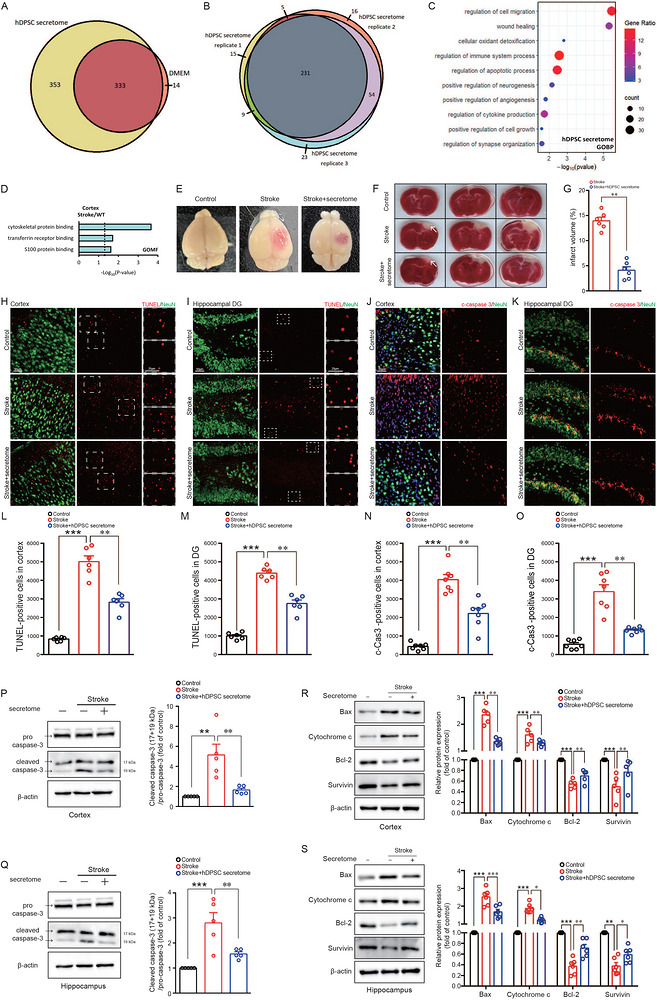 |
| Source: Human Dental Pulp Stem Cell Secretome Restores Ischemic Stroke–Impaired Motor and Cognitive Functions by Reprogramming Redox and Inflammatory Signaling |
In a photothrombotic mouse ischemic stroke model, after administration of the secretome, mouse cerebral infarct volume was reduced, and neuronal apoptosis in the cortex and hippocampus decreased. At the molecular level, the Nrf2/HO-1 pathway was activated, while TLR4, NOX1–NOX4, and NF-κB-related signaling decreased. The secretome was also accompanied by improvements in hippocampal neurogenesis and vascular remodeling, as well as upregulation of the synaptic proteins synaptophysin and PSD95, suggesting some recovery in synapse organization-related indicators.
Behavioral tests showed that in the pole test, rotarod, and negative geotaxis test, mouse motor coordination improved; in the Barnes maze, cross maze, novel object location, and conditioned fear experiments, spatial learning, working memory, and associative memory performance improved, and anxiety-like behavior after stroke decreased. However, the researchers also pointed out that the above molecular and cellular changes were associated with behavioral improvement, but a causal relationship was not established.
| About DGN:DentalGoodNews (DGN) is a trusted professional media platform dedicated to the global dental industry. We deliver in-depth coverage of corporate news, policy & regulation, investment & funding, and clinical frontiers — serving dental institutions, device manufacturers, investors, and industry researchers worldwide. Contact us: haodeya@dongxizixun.com |

;)