New Data: U.S. Dentist Economic Confidence Drops to 26% in Q3 2026, Lowest Since 2024
 |
| Source: "The State of the U.S. Dental Economy" |
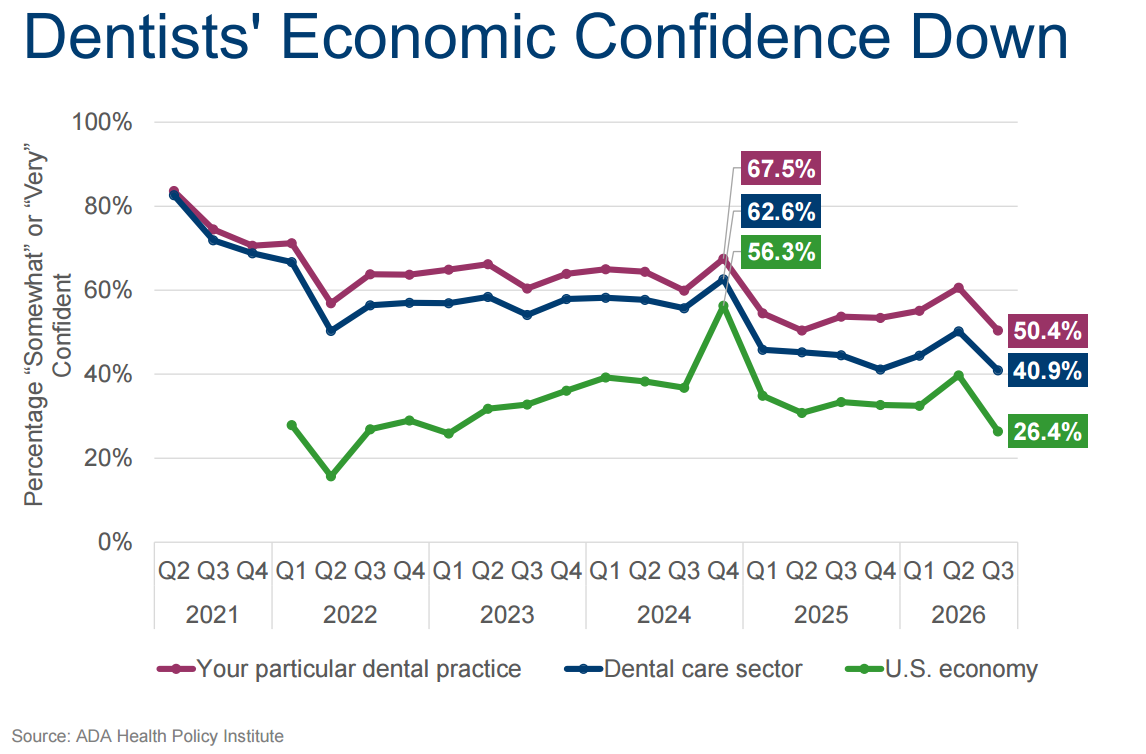
DentalGoodNews|The American Dental Association Health Policy Institute (ADA Health Policy Institute) released the "The State of the U.S. Dental Economy" Q3 2026 update report. The report shows that in Q3 2026, U.S. dentists' confidence in the overall U.S. economy was 26.4%, the lowest level in several years.
During the same period, dentists' confidence in their own practice economic conditions was 50.4%, and confidence in the dental care industry was 40.9%. The ADA stated that these two indicators had rebounded somewhat since the beginning of the year, but turned downward in the third quarter.
Regarding judgments on the dental care industry, 40.9% of dentists held a confident attitude, while 36.9% held a skeptical attitude, with the former exceeding the latter by 4.0 percentage points. Reasons for holding a confident attitude include: dental services always have demand, strong demand and busy practices, optimism about the overall economic outlook, patients' awareness of the value of oral health, and the economic resilience of the dental industry.
The top five reasons why dentists held a skeptical attitude toward the dental care industry were, in order: low reimbursement and insurance pressure, rising practice operating costs and inflation, patients unable or unwilling to prioritize dental treatment, U.S. economic downturn, and uncertainties related to the current administration.
 |
| Source: "The State of the U.S. Dental Economy" |
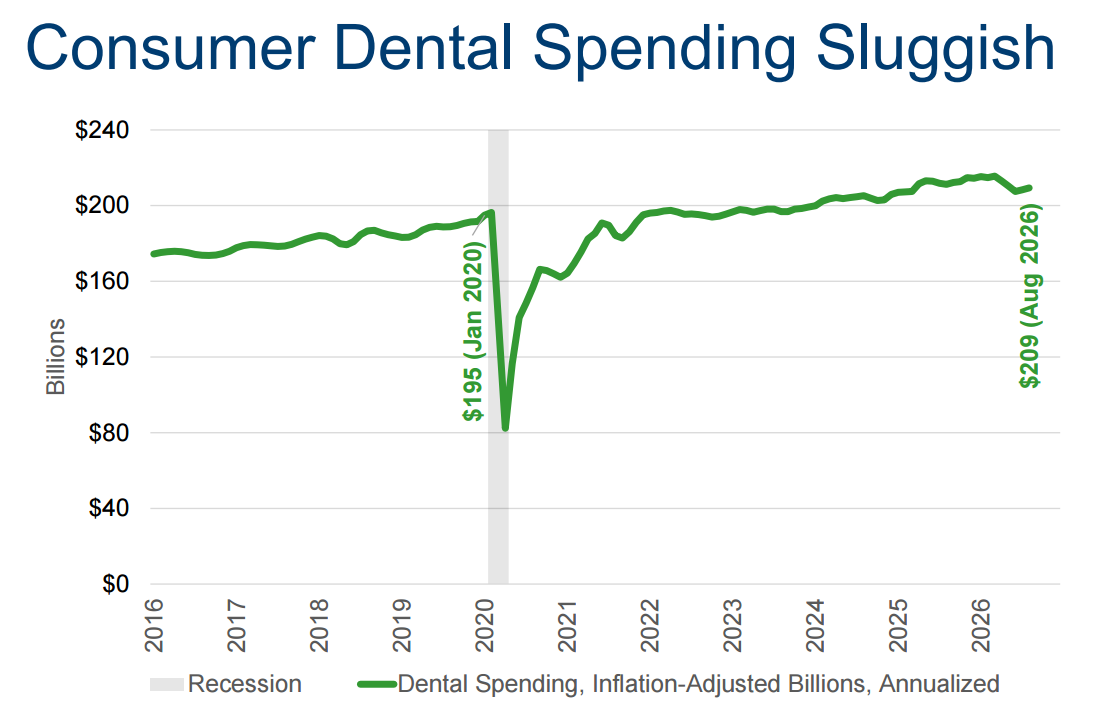
In terms of consumer spending, after inflation adjustment, U.S. consumer dental spending in August 2026 increased 0.5% from the previous month, decreased 2.4% year to date, and decreased 0.9% from 12 months earlier. Using January 2016 as the base period, over the ten years through August 2026, consumer spending on dental services grew 20%, physician services grew 51%, and overall healthcare grew 43%.
 |
| Source: "The State of the U.S. Dental Economy" |
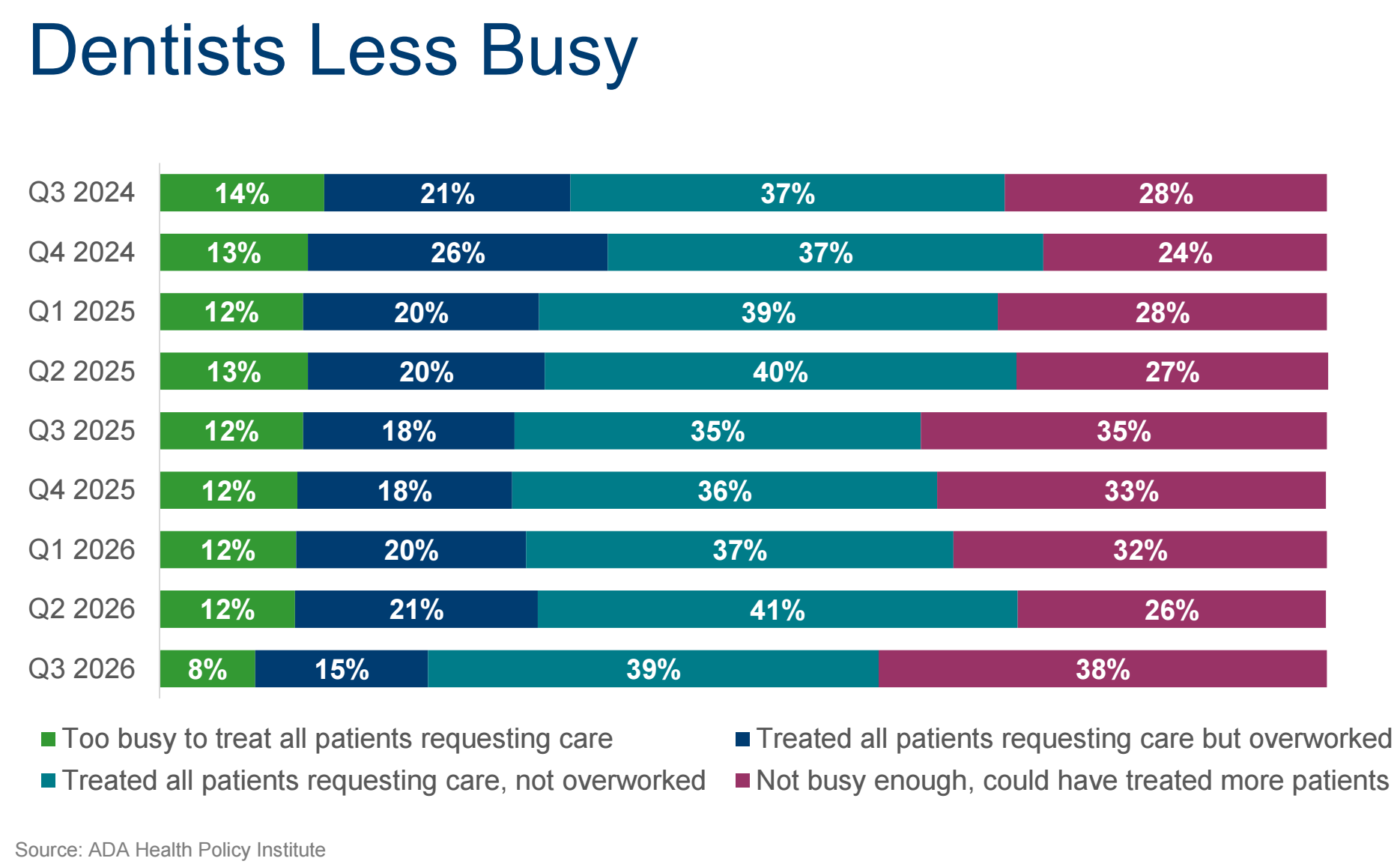
At the practice operations level, in Q3 2026, 38% of dentists said they were "not busy enough and could see more patients," up 12 percentage points from 26% in the second quarter; 8% said they were "too busy to see all patients seeking care," the lowest among all quarters listed in the report since Q3 2024. Among practice owners accepting new patients, the average wait time for new patients to schedule an initial appointment was 12 days, lower than 12.4 days in Q3 2025 and 14.3 days in Q3 2024, marking a new low since Q1 2024 among the quarters listed in the report.
 |
| Source: "The State of the U.S. Dental Economy" |
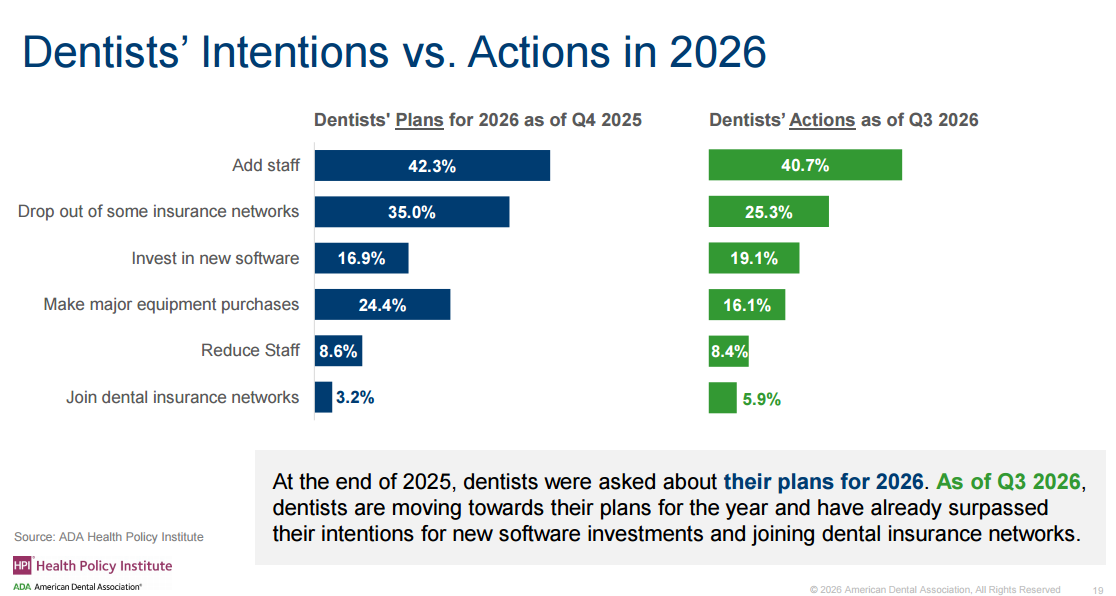
In terms of investments and business actions, ADA HPI compared practice owners' plans for 2026 made in Q4 2025 with actual actions through Q3 2026: two items, investment in new software and joining dental insurance networks, exceeded the intentions at the beginning of the year: 19.1% invested in new software (planned 16.9%), and 5.9% joined insurance networks (planned 3.2%).
The other four items were below or roughly on par with plans: increasing staff 40.7% (planned 42.3%), exiting some insurance networks 25.3% (planned 35.0%, 9.7 percentage points lower), major equipment purchases 16.1% (planned 24.4%, 8.3 percentage points lower), and reducing staff 8.4% (planned 8.6%).
ADA HPI stated that it will continue tracking the data to observe whether a rebound occurs in the fourth quarter.
| About DGN:DentalGoodNews (DGN) is a trusted professional media platform dedicated to the global dental industry. We deliver in-depth coverage of corporate news, policy & regulation, investment & funding, and clinical frontiers — serving dental institutions, device manufacturers, investors, and industry researchers worldwide. Contact us: haodeya@dongxizixun.com |

;)