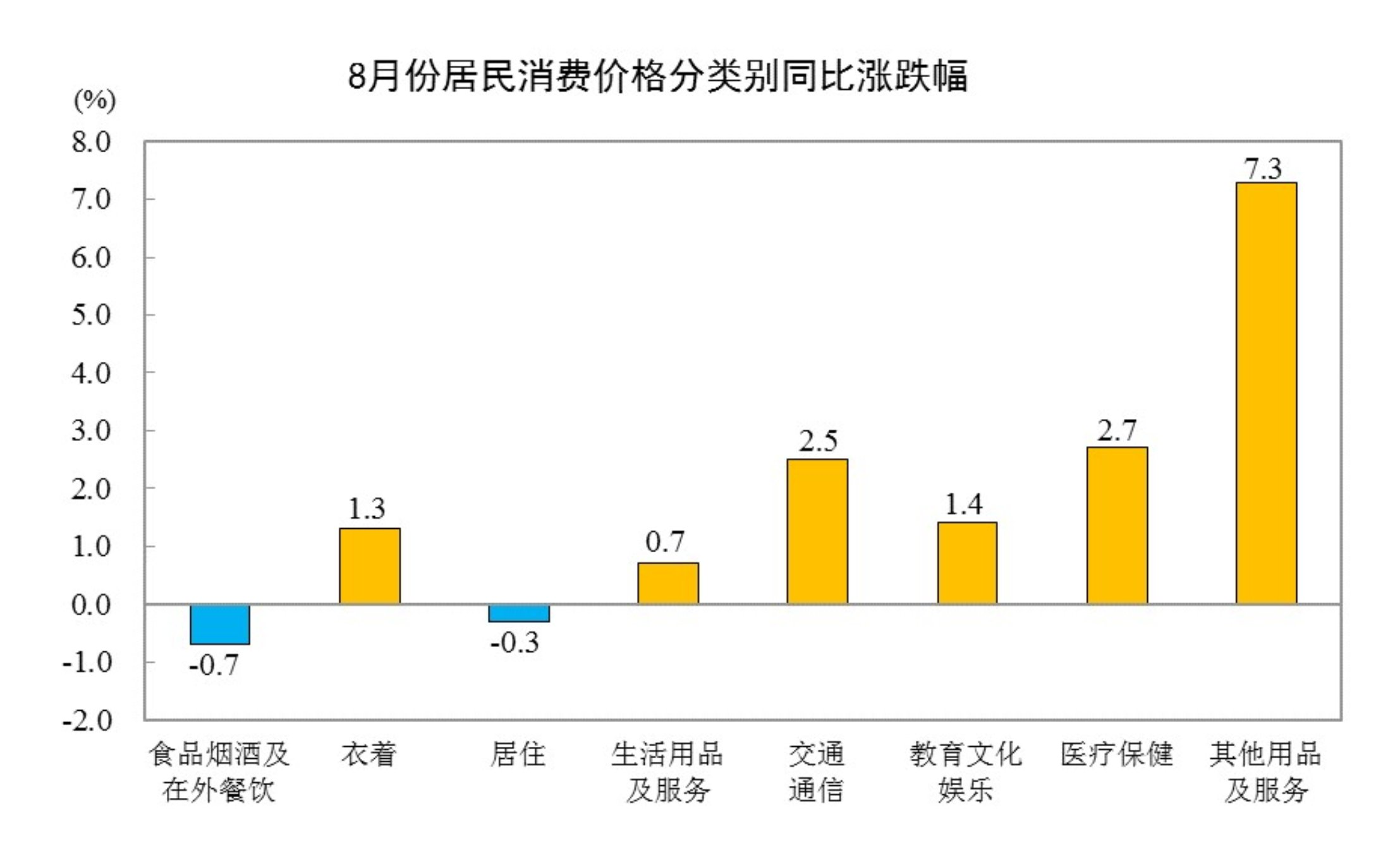
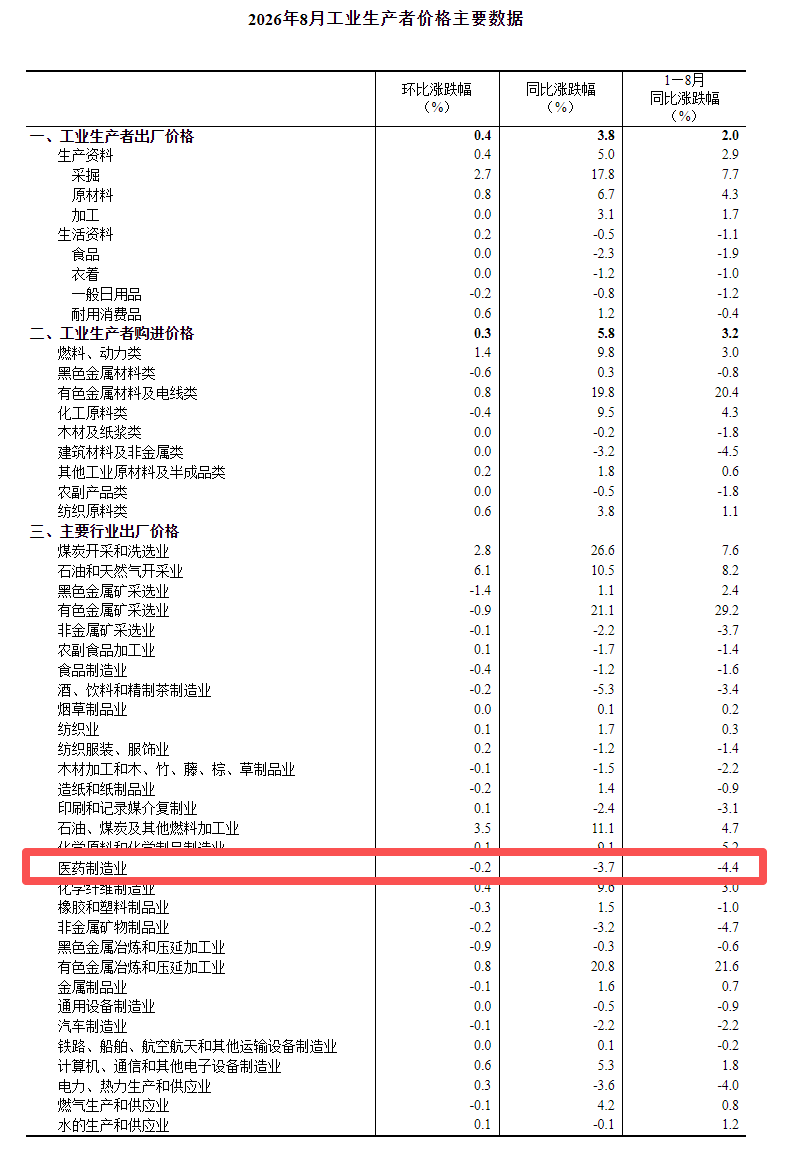
National Bureau of Statistics: In August, CPI healthcare prices rose 2.7% year-on-year, while PPI pharmaceutical manufacturing ex-factory prices fell 3.7% year-on-year.
 |
| Source: National Bureau of Statistics |
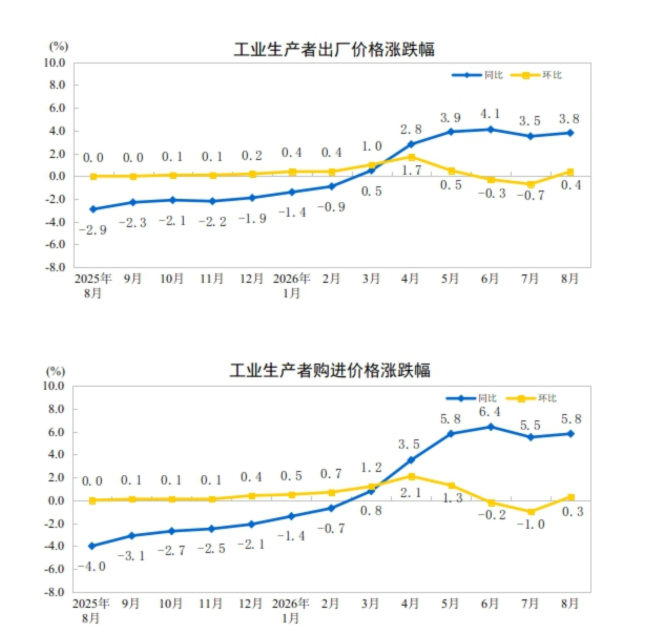
DentalGoodNews|On September 9, 2026, data released by the National Bureau of Statistics showed that in August, the national Consumer Price Index (CPI) rose 0.8% year-on-year, and turned from a 0.1% month-on-month decline in the previous month to a 0.4% increase; the Producer Price Index (PPI) for industrial products rose 3.8% year-on-year and 0.4% month-on-month.
Regarding CPI, in August, urban prices rose 0.8% year-on-year, while rural prices rose 0.7%; food prices fell 1.4% year-on-year, while non-food prices rose 1.2%; consumer goods prices rose 0.8%, and service prices rose 0.8%; the core CPI, excluding food and energy prices, rebounded to a 1.0% year-on-year increase. On average from January to August, the national CPI rose 0.9% year-on-year.
According to Dong Lijuan, chief statistician of the Urban Department of the National Bureau of Statistics, the month-on-month turnaround in CPI in August was mainly affected by changes in international market prices and seasonal increases in food prices. Medical and healthcare prices rose 2.7% year-on-year, remained flat month-on-month, and rose 2.2% year-on-year from January to August; by segment, medical service prices rose 4.0% year-on-year, Western medicine prices fell 1.6% year-on-year, and traditional Chinese medicine prices fell 0.6% year-on-year.
 |
| Source: National Bureau of Statistics |
Regarding PPI, in August, the national PPI turned from a 0.7% month-on-month decline in the previous month to a 0.4% increase, with the year-on-year increase expanding by 0.3 percentage points from the previous month to 3.8%; the purchasing price index for industrial producers rose 5.8% year-on-year and 0.3% month-on-month. On average from January to August, PPI rose 2.0% year-on-year, and purchasing prices rose 3.2%. According to Dong Lijuan's interpretation, the expanded PPI increase this month was mainly affected by factors such as the upward transmission of international bulk commodity prices and increased demand in some industries driven by domestic industrial transformation and upgrading.
Among the six industries most affected by price declines, the pharmaceutical manufacturing industry saw its prices fall 0.2% month-on-month and 3.7% year-on-year, with a 4.4% year-on-year decline from January to August; this industry, together with the electricity and heat production and supply industry, automobile manufacturing industry, non-metallic mineral products industry, alcohol, beverage and refined tea manufacturing industry, and agricultural and sideline food processing industry — six industries in total — jointly contributed approximately 0.74 percentage points to the year-on-year decline in PPI.
 |
| Source: National Bureau of Statistics |
| About DGN:DentalGoodNews (DGN) is a trusted professional media platform dedicated to the global dental industry. We deliver in-depth coverage of corporate news, policy & regulation, investment & funding, and clinical frontiers — serving dental institutions, device manufacturers, investors, and industry researchers worldwide. Contact us: haodeya@dongxizixun.com |

;)