New Study: Denture Wearing May Improve Glycemic Control in Diabetic Patients
 |
| Source: Impact of dental prostheses on glycemic, nutritional, and oral health outcomes in patients with diabetes: A scoping review |
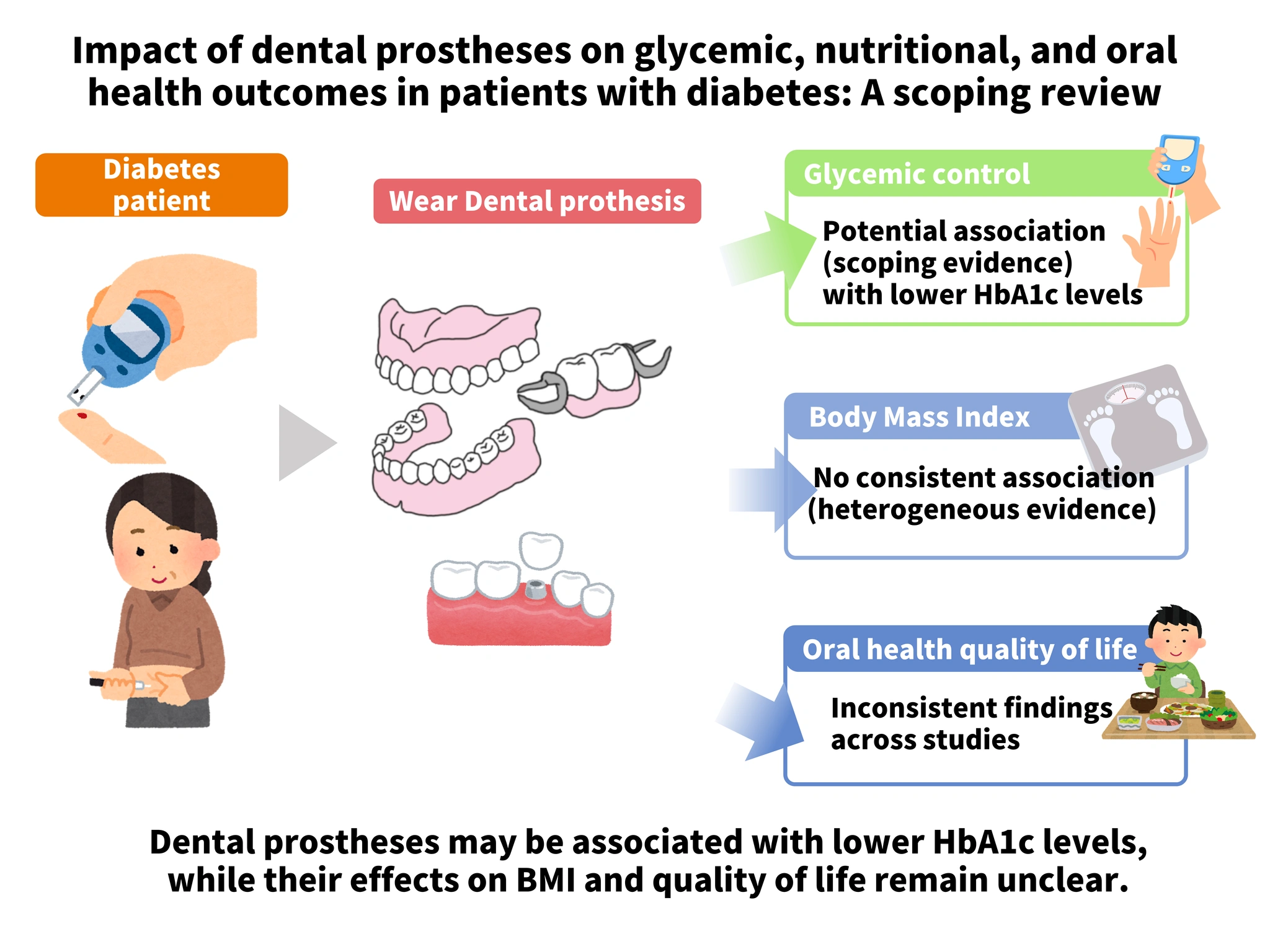
DentalGoodNews|Recently, a scoping review published in the "Journal of Prosthodontic Research" showed that diabetic patients wearing dental restorations (dentures) experienced an average reduction in glycated hemoglobin (HbA1c) levels of 0.65 percentage points. The researchers believe that this result reveals the potential value of prosthodontics in comprehensive diabetes management.
The study was jointly completed by multiple scholars from Japan, Indonesia, and the Philippines, systematically searching PubMed and Google Scholar databases up to November 10, 2024. The study included observational and interventional studies of diabetic patients wearing removable dentures, fixed dentures, or implant-supported dentures.
The study pointed out that tooth loss can lead to decreased chewing ability in diabetic patients, thereby limiting the intake of fibrous healthy foods, shifting the diet toward softer, more processed carbohydrates, which may affect blood glucose control. In this context, dental restorations may serve as an intervention to improve oral function.
The researchers stated that by restoring the chewing function associated with missing teeth, dental restorations may help patients maintain a healthier, more balanced diet. In addition, timely restoration of missing teeth can also help maintain oral function and related health conditions.
Furthermore, among the 6 studies on blood glucose management, 5 reported an association between the use of dental restorations and more favorable blood glucose control outcomes. Exploratory quantitative synthesis showed a pooled mean difference in glycated hemoglobin (HbA1c) of -0.65 percentage points (95% CI: -0.89 to -0.40). However, regarding body mass index (BMI, 1 study, mean difference 0.58 kg/m², 95% CI: -0.29 to 1.45) and oral health-related quality of life (OHRQoL, 5 studies), the results remain unclear due to high heterogeneity among studies. Overall, the study provides preliminary, hypothesis-generating evidence that prosthodontics is associated with lower HbA1c levels.
The researchers emphasized that this association remains early-stage, hypothesis-generating evidence and is not yet sufficient to determine that dental restorations can improve blood glucose control in diabetic patients. However, for prosthodontics and diabetes management teams, the relationship between prosthetic intervention in patients with missing teeth and changes in blood glucose is a direction worthy of further attention, and its clinical application value still requires more research for verification.
| About DGN:DentalGoodNews (DGN) is a trusted professional media platform dedicated to the global dental industry. We deliver in-depth coverage of corporate news, policy & regulation, investment & funding, and clinical frontiers — serving dental institutions, device manufacturers, investors, and industry researchers worldwide. Contact us: haodeya@dongxizixun.com |

;)