New Study: Universal Adhesive Stored at 35°C for Over 14 Days After Opening Shows More Than 30% Drop in Zirconia Bond Strength
 |
| Source: Post-opening storage temperature and its impact on zirconia bonding performance of a universal adhesive system |
DentalGoodNews|In September 2026, an in vitro experiment (n=100) published in The Journal of Prosthetic Dentistry showed that the storage temperature of a universal adhesive system after opening had a statistically significant effect on its zirconia bonding performance (the article reported a statistically significant difference, P<.05).
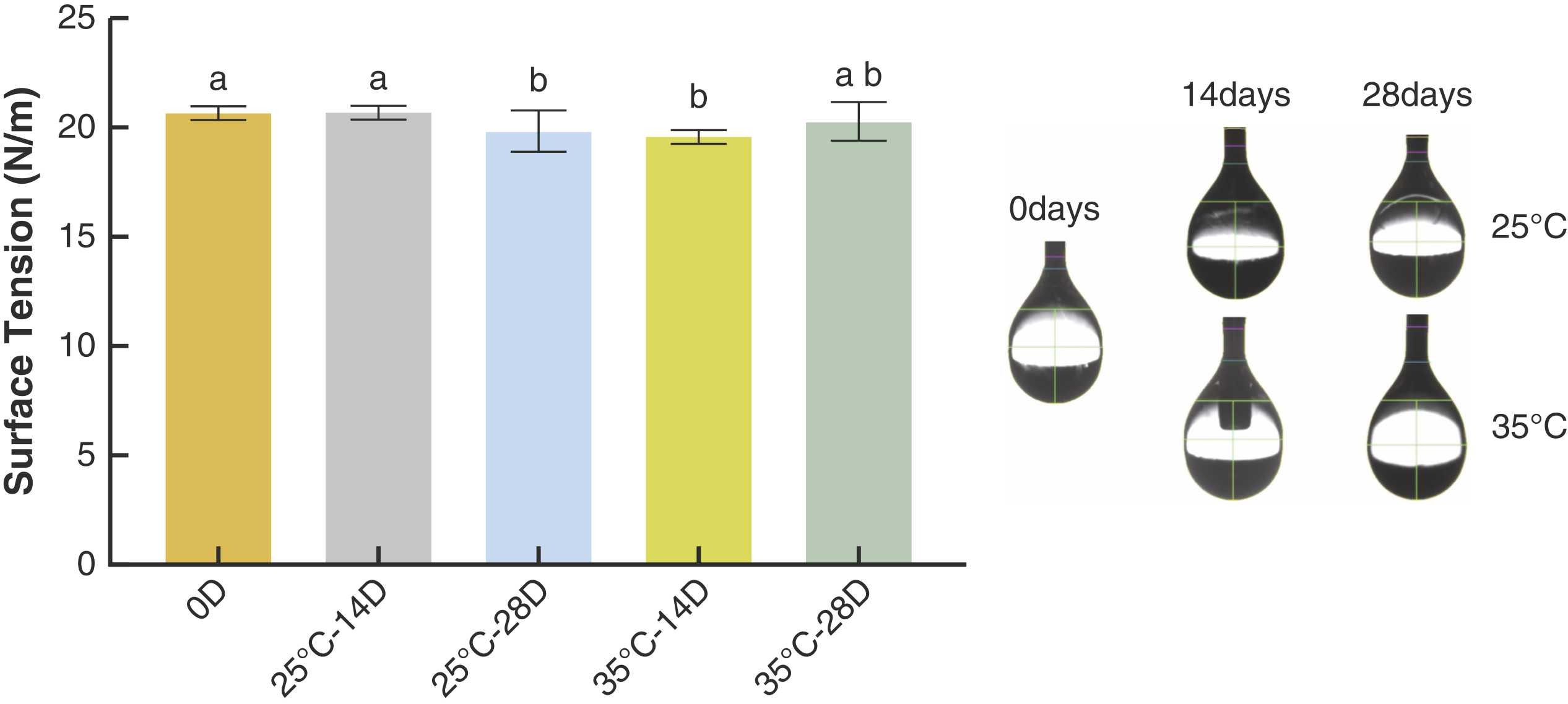
The study selected Scotchbond Universal Plus from 3M/Solventum Corporation | NYSE: SOLV as a single-bottle universal adhesive, combined with RelyX Universal Resin Cement | RC, to evaluate the system's performance after storage at 25°C and 35°C for different durations (0, 14, and 28 days). The experimental results showed that although the surface tension of the adhesive (19.41–22.81 N/m) fluctuated only slightly during storage, its contact angle on the zirconia surface increased significantly with storage time and temperature, reaching a maximum of 19.96°.
 |
| Source: Post-opening storage temperature and its impact on zirconia bonding performance of a universal adhesive system |
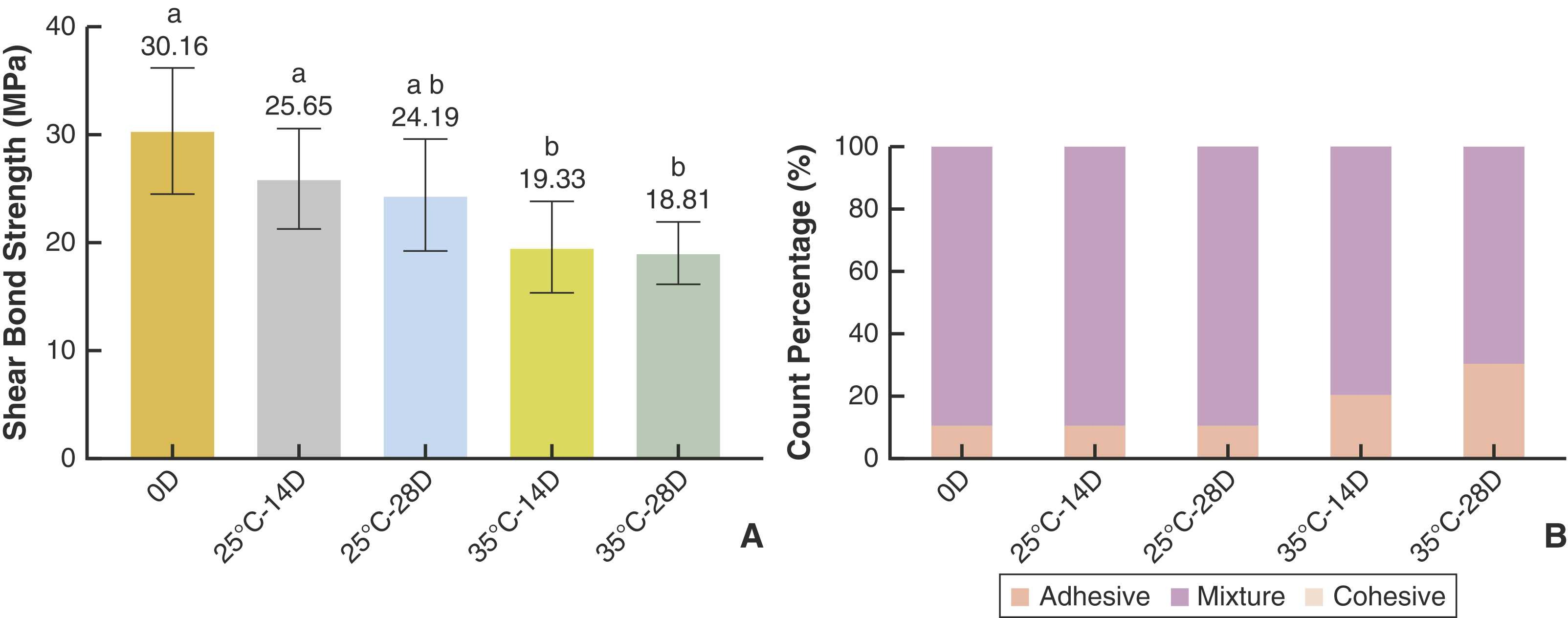
The corresponding shear bond strength (SBS) decreased as wettability declined. The data showed that the immediate-use group had a higher SBS (approximately 30.16 MPa); after 28 days of storage at 35°C, this value was 18.81 MPa. Statistical analysis indicated a moderate negative correlation between contact angle and SBS (r = -0.35, P = 0.013), suggesting that changes in wettability may be one of the mechanisms underlying the performance decline.
Failure mode observation showed that under 25°C storage conditions, mixed failure was dominant (90%); in the 35°C high-temperature group, the proportion of adhesive failure was higher.
 |
| Source: Post-opening storage temperature and its impact on zirconia bonding performance of a universal adhesive system |
The researchers pointed out that the zirconia shear bond strength obtained with Scotchbond Universal Plus adhesive was higher when used immediately after opening; after 28 days of storage at approximately 25°C room temperature, SBS showed no significant decrease; however, after 14 or 28 days of storage at 35°C, SBS decreased and the proportion of adhesive failure was higher.
In addition, the researchers noted that the study has certain limitations: the experiment was conducted on only a single adhesive system with short-term (28-day) observation, and did not include aging protocols such as long-term water storage or thermocycling. Relevant conclusions should be extrapolated to other materials or long-term clinical performance with caution, and the results still require clinical human trials for verification.
| About DGN:DentalGoodNews (DGN) is a trusted professional media platform dedicated to the global dental industry. We deliver in-depth coverage of corporate news, policy & regulation, investment & funding, and clinical frontiers — serving dental institutions, device manufacturers, investors, and industry researchers worldwide. Contact us: haodeya@dongxizixun.com |

;)