New Data: About 37% of U.S. Adults Carry Dental Debt
 |
| Source: "How Does Medical Debt Affect U.S. Families?" |
DentalGoodNews|On October 6, 2026, local time, the Robert Wood Johnson Foundation (RWJF) published the brief "How Does Medical Debt Affect U.S. Families?" on its official website. The brief was completed based on December 2025 data from the Urban Institute's Well-Being and Basic Needs Survey (WBNS), with a sample of more than 10,000 adults aged 18 and older.
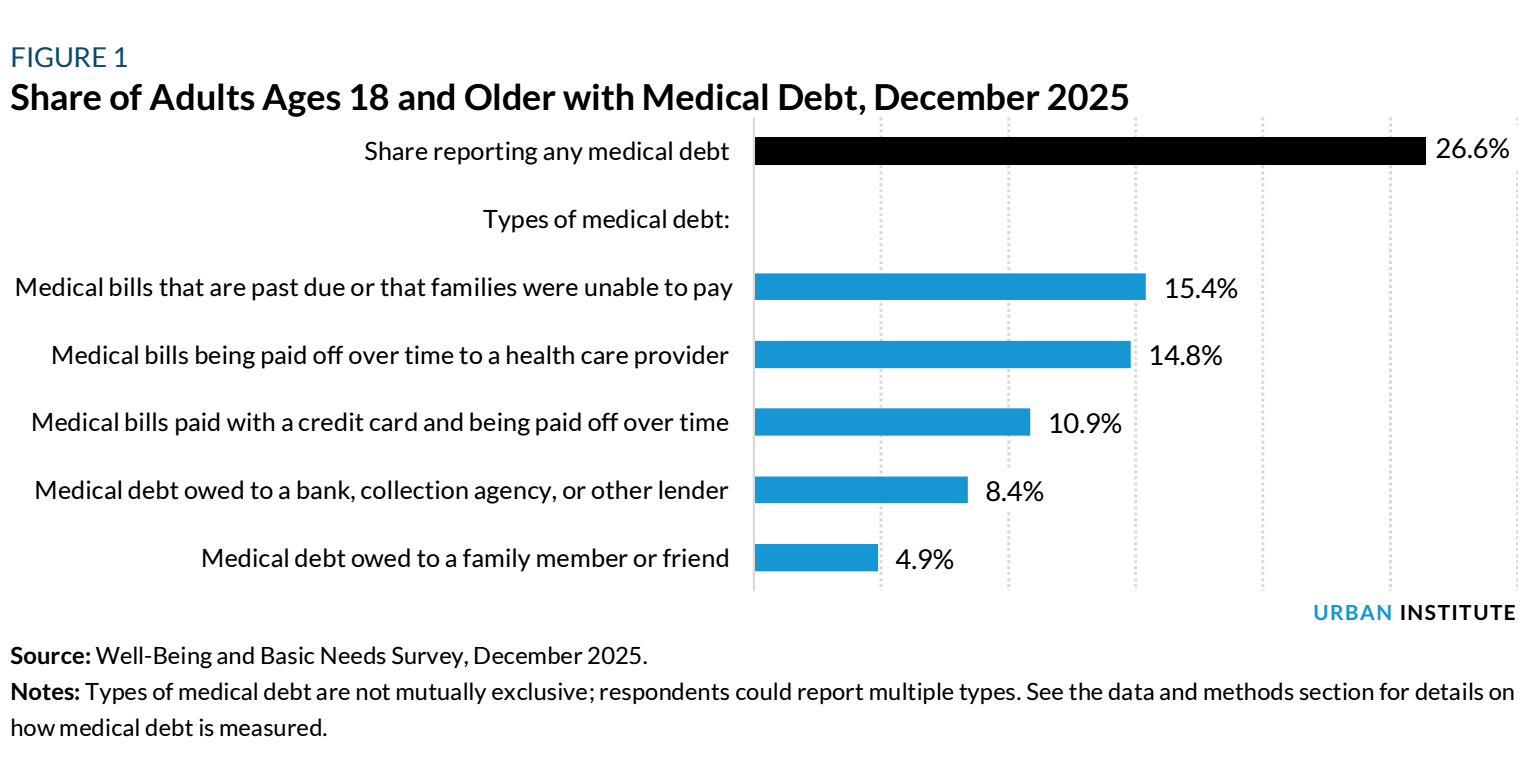
The survey shows that more than one-quarter (26.6%) of U.S. adults reported that they or a family member owed medical or dental bill debt. This proportion consists of five types of debt: 15.4% had household bills that were overdue or unaffordable, 14.8% were making installment payments directly to medical or dental institutions, 10.9% were repaying through credit card installments, 8.4% owed banks or collection agencies, and 4.9% owed friends or relatives.
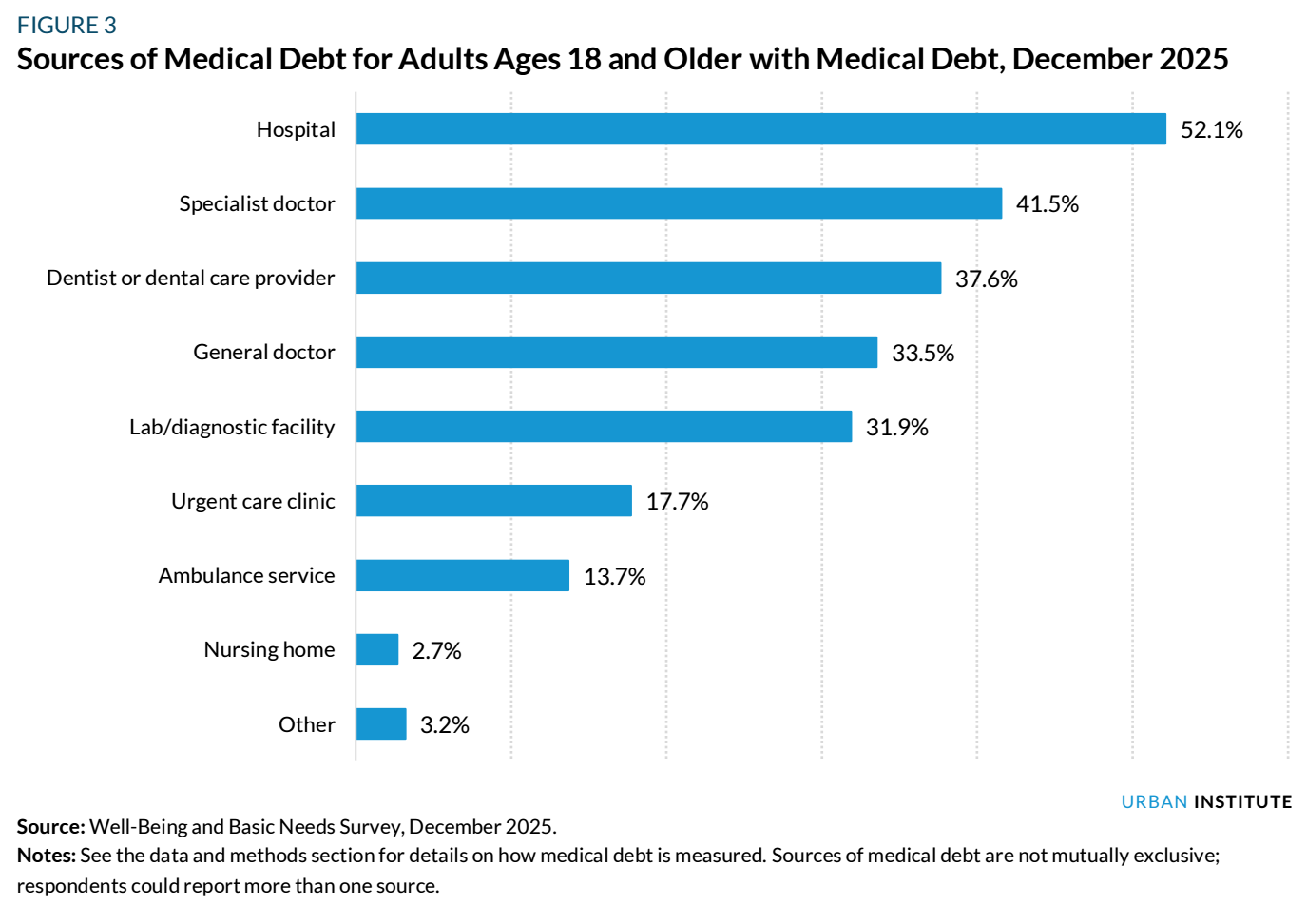
Among adults with medical debt, the sources of debt were not singular: 37.6% listed dental services as one of the sources of debt, second only to hospitals (52.1%) and specialist physicians (41.5%), and higher than general outpatient care (33.5%) and testing/diagnostic institutions (31.9%), making it one of the main components of U.S. household medical debt.
 |
| Source: "How Does Medical Debt Affect U.S. Families?" |
In terms of debt scale, among adults with medical debt, 53.8% reported owing more than $1,000, and 15.5% owed $5,000 or more. For the 14.8% who were making installment payments directly to medical or dental institutions, once bills became overdue, they could face tangible consequences: 35.2% of debtors had been contacted by collection agencies in the past 12 months, and 21.7% reported that the debt lowered their personal credit score, with 18.1% of that occurring in states that had already enacted laws restricting the reporting of medical debt to credit agencies.
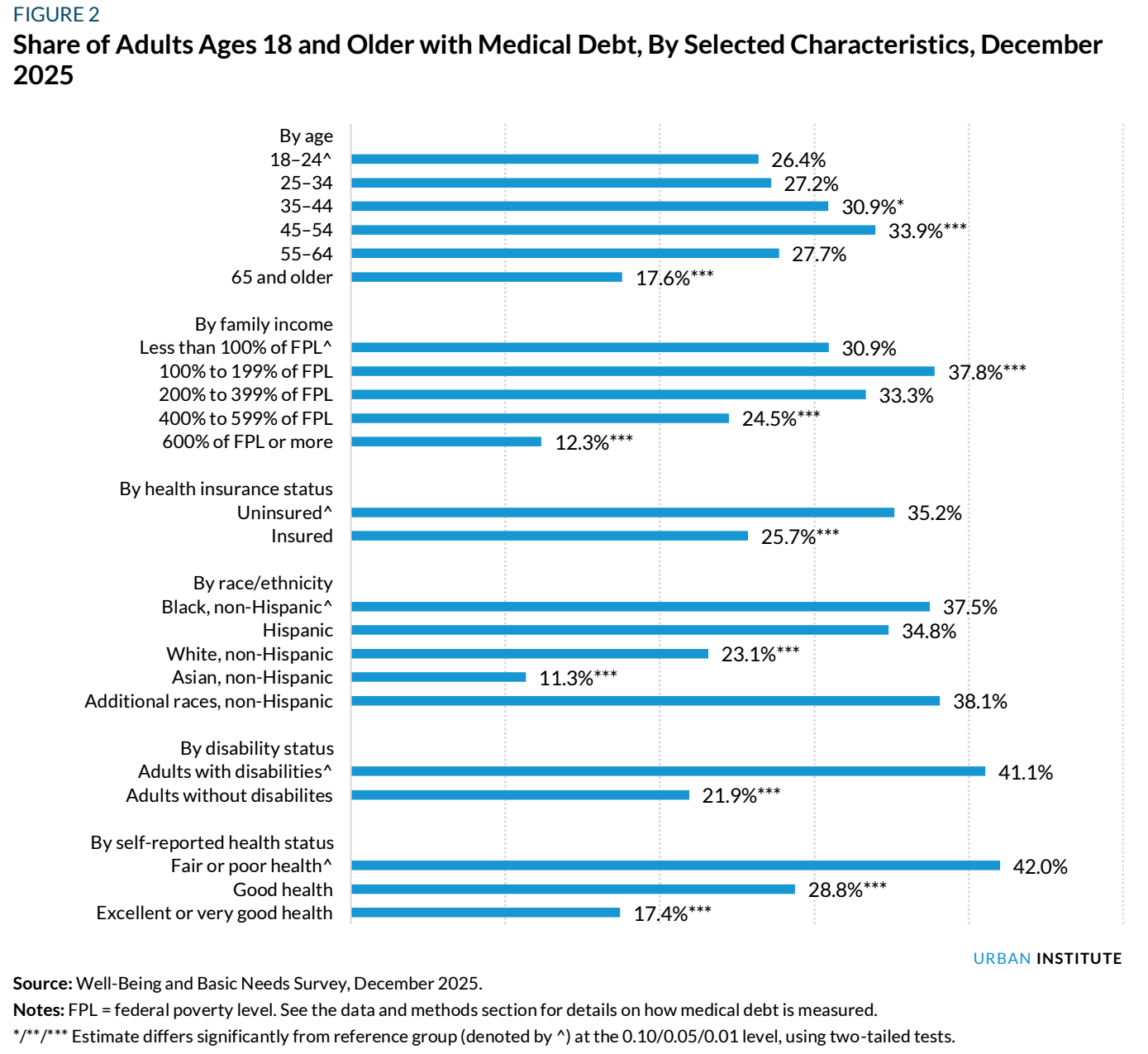
The report also noted that adults aged 65 and older had the lowest incidence of medical debt among all age groups (17.6%), lower than the 33.9% among those aged 45 to 54; RWJF believes that the debt still present among those over 65 may reflect gaps in Medicare coverage, including the lack of coverage for certain services such as dental care.
 |
| Source: "How Does Medical Debt Affect U.S. Families?" |
In addition, the debt incidence rate among uninsured adults (35.2%) was significantly higher than among those with insurance (25.7%), and adults with household incomes between 100% and 200% of the federal poverty line had the highest incidence rate, reaching 37.8%, suggesting that low-income and uninsured populations are groups with a relatively concentrated risk of medical (including dental) debt.
| About DGN:DentalGoodNews (DGN) is a trusted professional media platform dedicated to the global dental industry. We deliver in-depth coverage of corporate news, policy & regulation, investment & funding, and clinical frontiers — serving dental institutions, device manufacturers, investors, and industry researchers worldwide. Contact us: haodeya@dongxizixun.com |

;)