New Data: 22% of Patients Paid More Than Initial Quote, Over 60% Who Encountered Disputes Did Not File Complaints
 |
| Image source: Which? |
DentalGoodNews|On October 6, 2026 (local time), UK consumer advocacy organization Which? released a private dentistry investigation report, identifying gaps in cost transparency and complaint redress for private dental patients, and calling for the establishment of an independent ombudsman body with mandatory clinic participation and the power to make binding decisions.
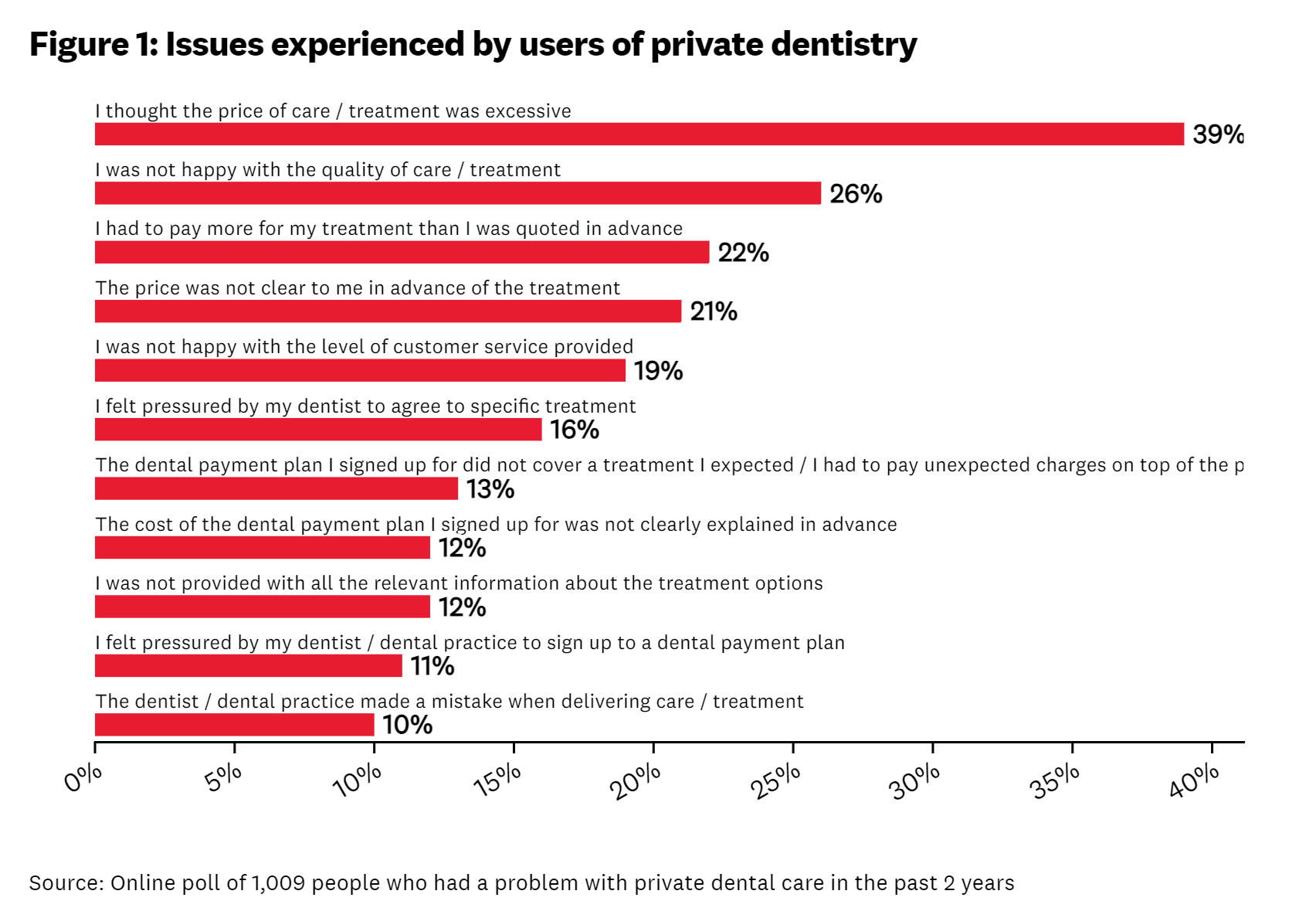
The survey covered 1,009 adults who had experienced problems with private dental treatment for themselves or family members in the past two years, and was conducted in May 2026. Results showed that pricing was the primary source of dissatisfaction: 39% considered costs too high, 22% actually paid more than the initial quote, and 21% said prices were not clear in advance. In addition, 26% of respondents were dissatisfied with treatment quality, of whom 10% reported direct clinical errors by dentists; another 16% felt pressured into accepting specific treatments, and 11% were pushed toward monthly payment dental plans.
The report noted that even when problems arose, most patients did not complain to the clinic: 62% of respondents chose not to complain, with reasons centered on fear of damaging the relationship with their dentist (31%) and belief that complaining would be futile (31%); among those who did complain, 46% received only a verbal apology without financial or clinical remedy.
 |
| Image source: 2025 Statistics Report on Fitness to Practise |
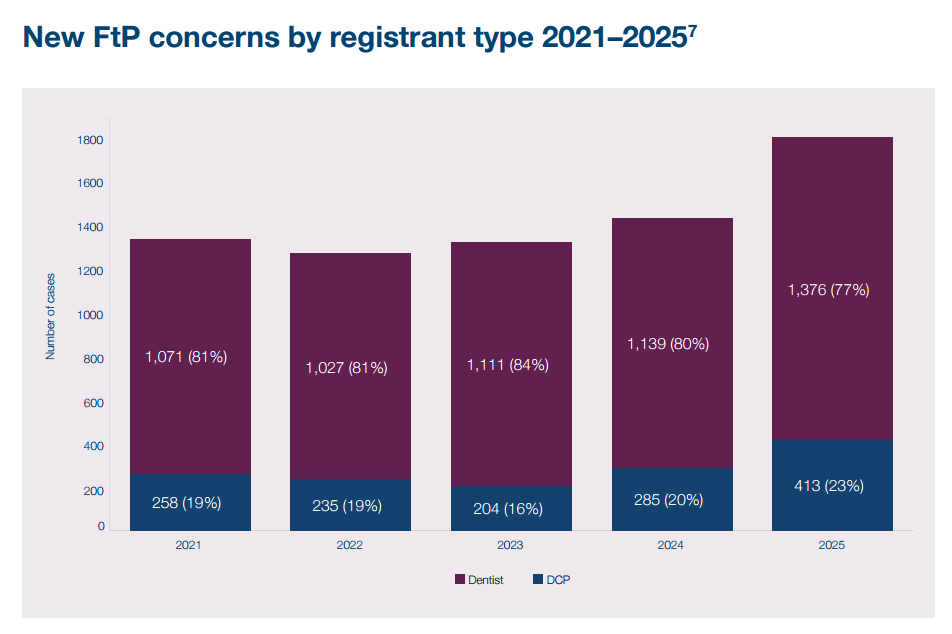
According to previous DGN reporting, the UK dental regulator GDC's "2025 Fitness to Practise Statistical Report" showed that in 2025 the GDC received 1,766 new Fitness to Practise complaints, up 26% year-on-year and a five-year high; among new complaints, those against dental care professionals rose 45% year-on-year, while complaints against dentists increased 21%.
On redress pathways, the report noted that National Health Service (NHS) patients can escalate unresolved complaints to the Parliamentary and Health Service Ombudsman (PHSO), whereas private dental patients have no corresponding independent ombudsman channel. Patients must first complain to the clinic, and if unresolved, can turn to the DCS; the DCS can assist with mediation and make recommendations, but cannot award compensation for pain, distress, or inconvenience, and its recommendations are not legally binding, leaving patients without a route to independent adjudication.
Which? therefore called on the UK government and regulators to establish an ombudsman body requiring mandatory participation by private dental clinics, with the ability to investigate and adjudicate disputes and make binding decisions, and to require all private dental clinics to clearly direct patients to the complaints process.
| About DGN:DentalGoodNews (DGN) is a trusted professional media platform dedicated to the global dental industry. We deliver in-depth coverage of corporate news, policy & regulation, investment & funding, and clinical frontiers — serving dental institutions, device manufacturers, investors, and industry researchers worldwide. Contact us: haodeya@dongxizixun.com |

;)