New Study: Combining Panoramic Radiographs with Periapical Radiographs to Detect Periapical Lesions May Approach the Efficacy of CBCT
 |
| Image source: Influence of Imaging Modality on the Detection of Periapical Lesions in Root-Filled Teeth: A Systematic Review and Meta-Analysis |
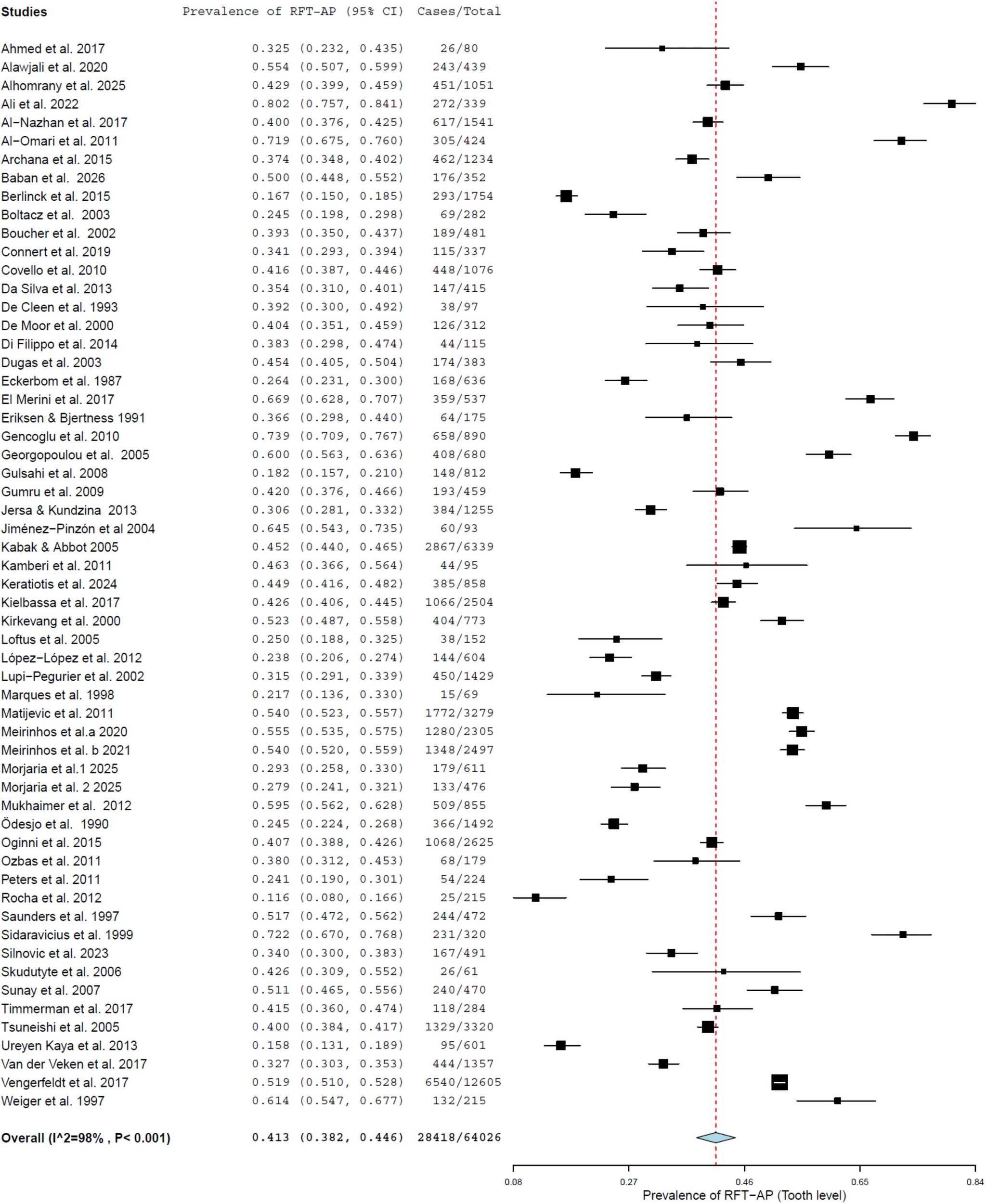
DentalGoodNews|July 30, 2026 - A systematic review and meta-analysis published in the International Endodontic Journal shows that, based on data from a total of 64,026 root-filled teeth (RFT), the combination of panoramic radiography and periapical radiographs yields estimates for detecting periapical lesions comparable to those obtained with Cone Beam Computed Tomography (CBCT).
The study, led by Juan J. Segura-Egea's team from the Faculty of Dentistry at the University of Seville, Spain, aimed to assess the prevalence of periapical lesions in root-filled teeth (RFT) and explore the impact of different imaging modalities on prevalence estimation. The researchers searched major databases including PubMed and Scopus up to February 2026, ultimately including 57 cross-sectional studies across multiple countries and regions, with a total sample covering 35,569 patients and 64,026 root-filled teeth.
 |
| Image source: Influence of Imaging Modality on the Detection of Periapical Lesions in Root-Filled Teeth: A Systematic Review and Meta-Analysis |
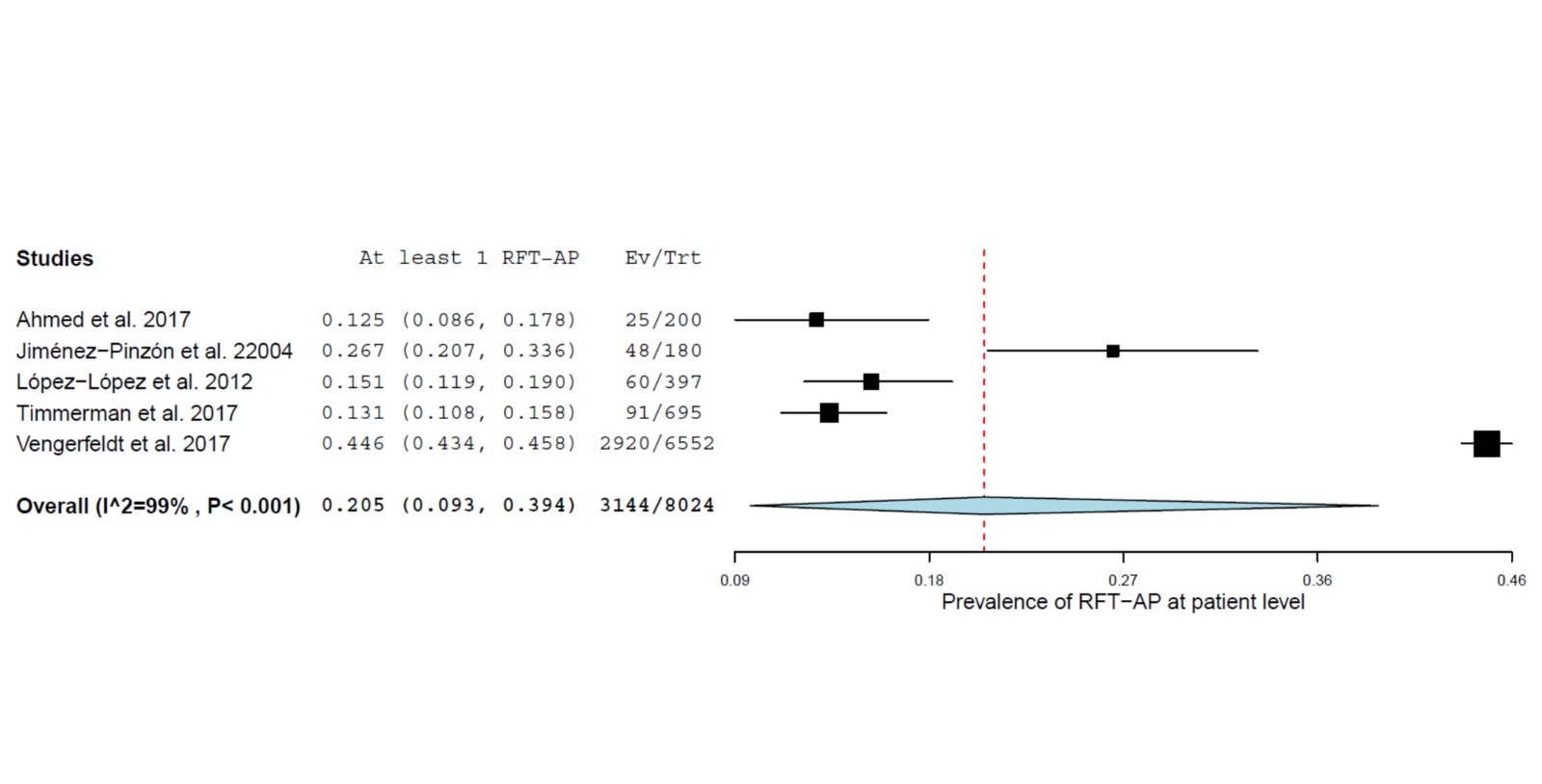
The analysis revealed an overall prevalence of periapical lesions of 41.3% (95% CI: 38.2%–44.6%) at the tooth level and 20.5% (95% CI: 9.3%–39.4%) at the patient level. The study noted that prevalence estimates obtained using CBCT were consistently higher than those from most single two-dimensional (2D) imaging techniques.
However, meta-regression analysis uncovered a key finding: the detection rate produced by the combined use of panoramic and periapical radiographs showed no significant difference compared to CBCT. In contrast, when only panoramic or periapical radiographs were used alone, detection rates were significantly lower. This conclusion suggests that improved detection does not entirely depend on upgrading to 3D imaging; a well-designed combination of diagnostic strategies is equally important.
Stratified analysis revealed a gradient in pooled prevalence across different imaging protocols: panoramic combined with periapical radiographs yielded 52.4% (95% CI: 40.6%–63.9%), CBCT yielded 50.4% (95% CI: 41.5%–59.3%), while panoramic alone, periapical alone, and digital panoramic alone yielded pooled prevalences of 38.8% (95% CI: 35.2%–42.5%), 36.0% (95% CI: 29.4%–43.1%), and 37.6% (95% CI: 20.6%–58.3%), respectively. When categorized overall as 2D versus 3D, the pooled prevalence for CBCT was 50.1% (95% CI: 40.3%–59.9%) and for 2D imaging collectively was 40.8% (95% CI: 36.9%–44.7%), with the difference not reaching statistical significance.
According to previous reports by DGN, the integration of digital imaging and artificial intelligence is emerging as a new trend in oral diagnostics. For instance, Overjet, a US-based dental AI company, has received FDA clearance for its CBCT Assist platform, designed to aid diagnosis through automated identification and quantification of anatomical structures. This latest study, however, offers clinicians another perspective on imaging equipment selection: when CBCT is unavailable or cost-prohibitive, optimized 2D imaging combinations may still hold considerable diagnostic reference value.
The research team emphasized that since relying solely on a single 2D imaging modality may substantially underestimate the true burden of periapical lesions, clinical practice should prioritize the complementary role of panoramic and periapical radiographs. Additionally, despite the large sample size, the study has certain limitations. Most included studies relied on convenience samples from dental schools, hospitals, or imaging databases, and the representativeness of the conclusions in broader populations requires further validation.
| About DGN:DentalGoodNews (DGN) is a trusted professional media platform dedicated to the global dental industry. We deliver in-depth coverage of corporate news, policy & regulation, investment & funding, and clinical frontiers — serving dental institutions, device manufacturers, investors, and industry researchers worldwide. Contact us: haodeya@dongxizixun.com |

;)