New Study: 100% Pure Cranberry Juice Mouthwash May Inhibit Dental Plaque Regrowth and Acid Production
 |
| Source: In vivo exposure to cranberry juice suppresses dental plaque regrowth and acid production in adults and children: a PGRM study |
DentalGoodNews|On October 20, 22026, the University of Illinois Chicago (UIC) announced that a small-sample randomized crossover trial by Christine D. Wu's team at the UIC College of Dentistry found that brief exposure to 100% unsweetened pure cranberry juice inhibited subsequent regrowth and acid-production-related indicators of dental plaque in both adults and children.
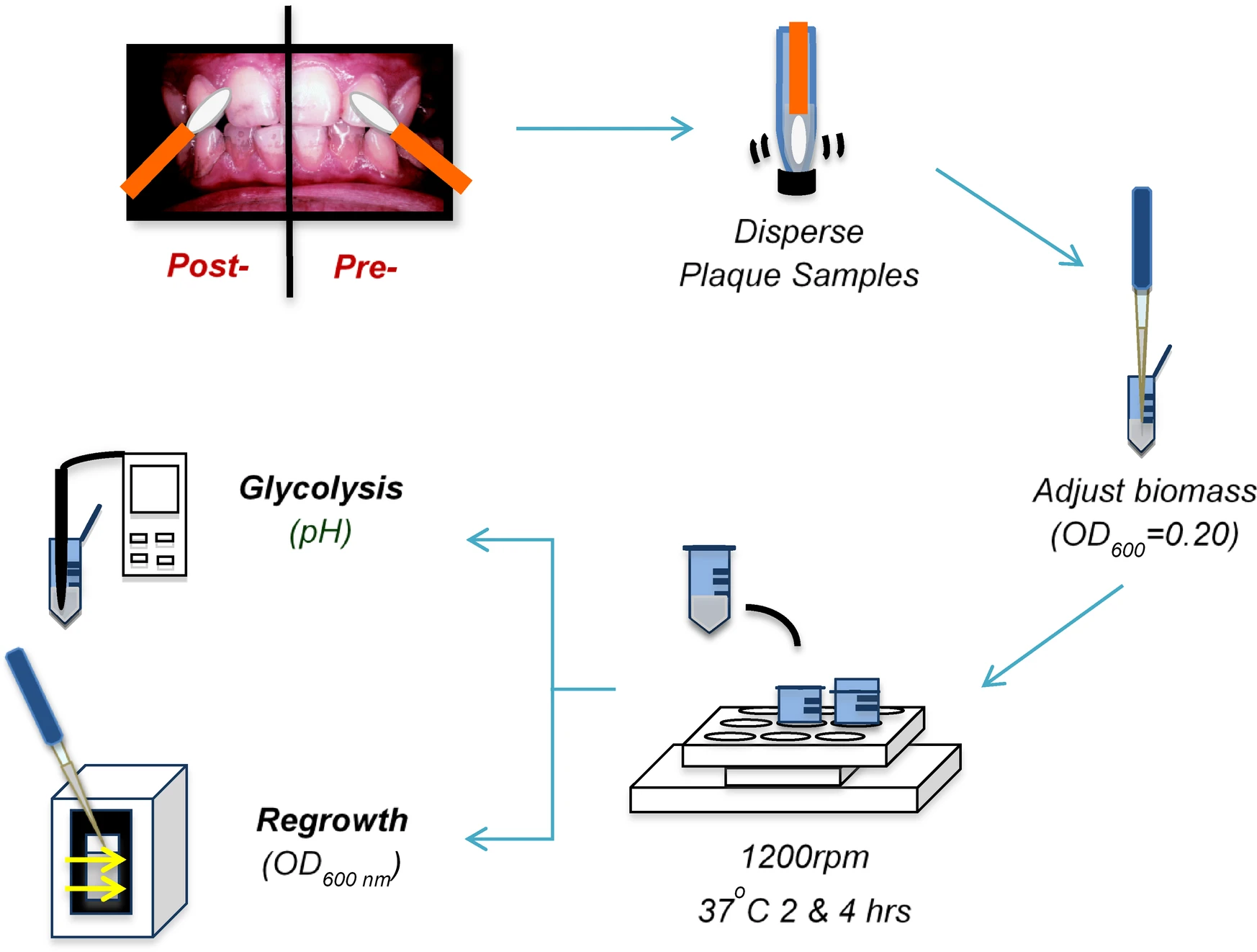
The study conducted two separate trials in adults and children, enrolling 8 adults (18–64 years) and 14 children (7–12 years), with data from the two groups analyzed separately. Participants were exposed to three beverages: 100% unsweetened pure cranberry juice (CJ-100), a cranberry juice beverage containing 27% cranberry juice with added sugar (CJC-27), and water. Researchers first collected overnight supragingival plaque as pre-exposure samples; subsequently, participants held 10 mL of each test beverage in their mouths, swished for 30 seconds, and swallowed, repeating this 3 times with 30-second intervals between each. After 30 minutes, plaque was collected from contralateral teeth as post-exposure samples.
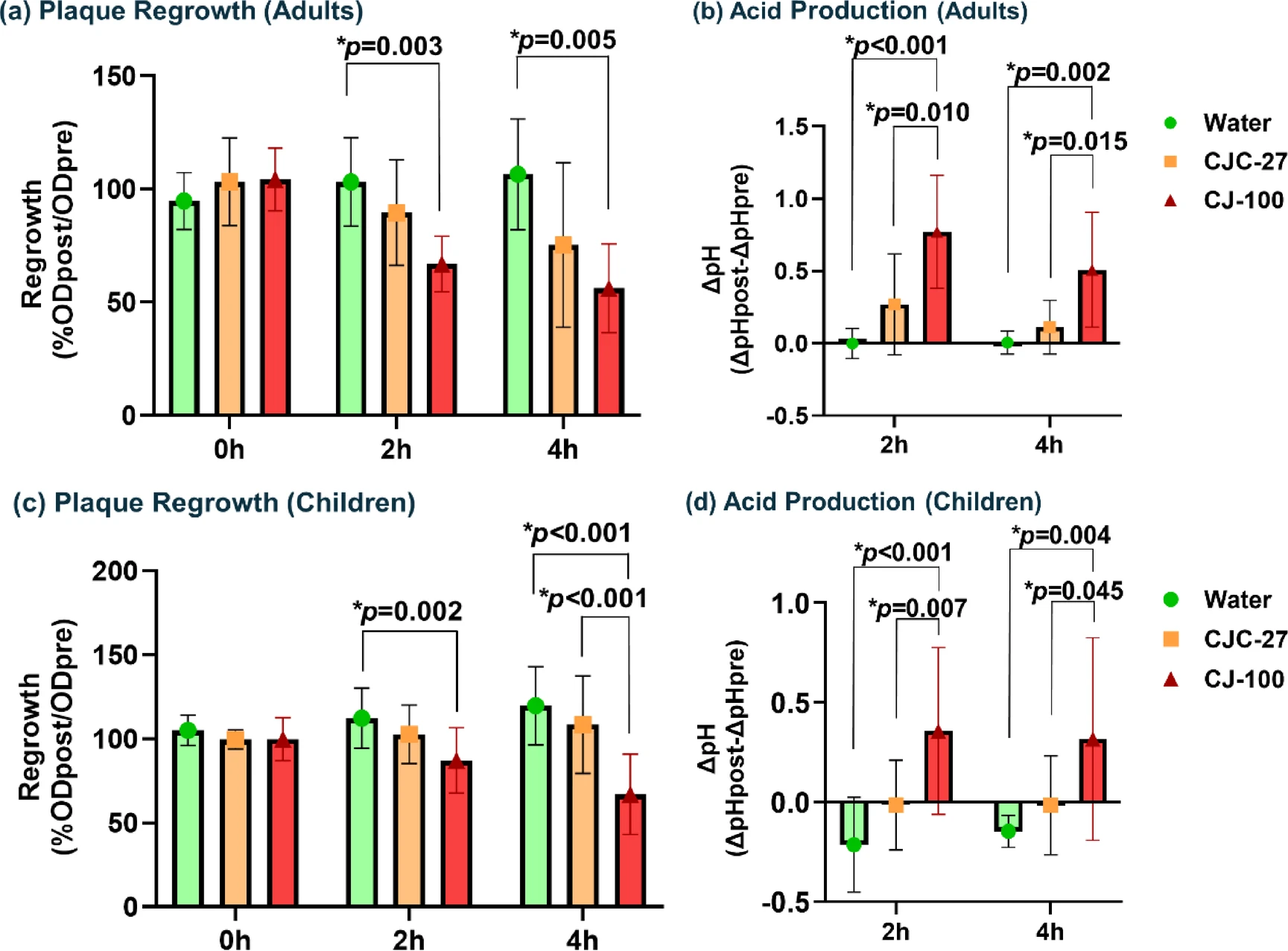
The researchers then used the Plaque Glycolysis and Regrowth Method (PGRM) to test pre- and post-exposure plaque samples, assessing plaque bacterial regrowth and acid production, respectively. Results showed that compared with pre-exposure samples, after CJ-100 exposure, mean adult plaque regrowth decreased by 43.93% (±19.67%), with a ΔpH of 0.56 (±0.25); mean pediatric plaque regrowth decreased by 33.04% (±23.88%), with a ΔpH of 0.36 (±0.24%). The percentage indicator reflects changes in plaque regrowth, while ΔpH reflects acid-production-related changes in plaque before and after exposure; the two represent different indicators and cannot be combined as the same "reduction magnitude."
 |
| Source: In vivo exposure to cranberry juice suppresses dental plaque regrowth and acid production in adults and children: a PGRM study |
From the specific test results, after CJ-100 exposure, the 4-hour regrowth rate of adult plaque was 56.1%, i.e., approximately 43.9% lower than before exposure; the 4-hour regrowth rate in children was 66.96%, corresponding to a decrease of approximately 33.0%. Regarding acid production, after CJ-100 exposure, the pH decline in both adult and pediatric plaque was small, suggesting that acid production was inhibited. In contrast, no statistically significant inhibition was observed with CJC-27 or water.
In addition, the researchers noted that previous studies have found that proanthocyanidins (PACs) in cranberries can inhibit the growth of certain oral pathogens and biofilm formation. This study further examined the effects of brief exposure to commercially available pure cranberry juice on bacterial regrowth and acid production in natural dental plaque. The research team believes that 100% pure cranberry juice may have potential as an alternative to sugary beverages, and that PGRM can be used to screen natural foods or beverages for anti-plaque effects.
The researcher stated that she holds a positive view of pure cranberry juice as a "functional beverage" that may benefit oral health, and noted that common fruit juices such as orange juice and apple juice did not show the same effects. However, it should be noted that the study had a small sample size, with only 22 participants in total across the adult and pediatric trials; the study observed plaque regrowth and acid-production-related indicators after a single brief exposure and did not directly assess clinical disease outcomes such as dental caries or periodontitis. Therefore, it cannot be inferred from these findings that drinking pure cranberry juice can reduce the risk of dental caries or periodontal disease; pure cranberry juice itself is highly acidic, so its long-term and frequent exposure to tooth surfaces and its oral health impact still require further evaluation.
| About DGN:DentalGoodNews (DGN) is a trusted professional media platform dedicated to the global dental industry. We deliver in-depth coverage of corporate news, policy & regulation, investment & funding, and clinical frontiers — serving dental institutions, device manufacturers, investors, and industry researchers worldwide. Contact us: haodeya@dongxizixun.com |

;)